How to Use Freeform Draping in Fashion Design
TL;DR
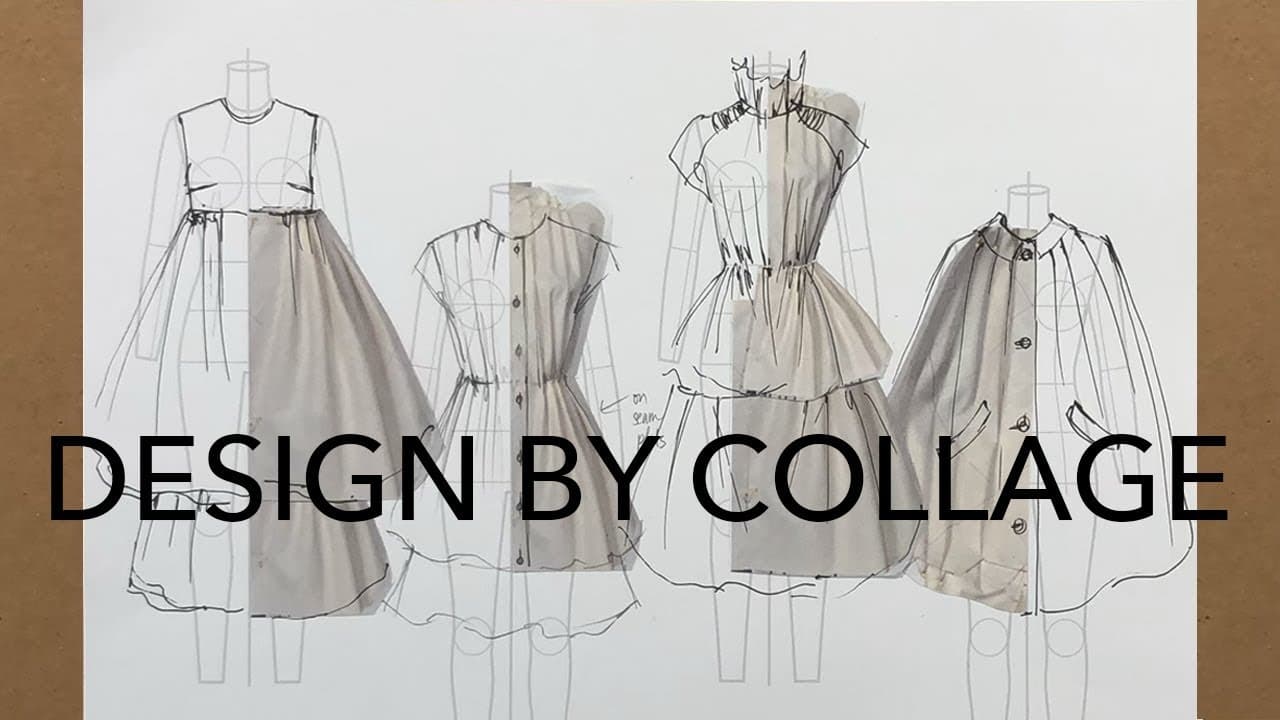
To integrate freeform draping into your fashion design process, start by experimenting with muslin or other inexpensive fabrics to explore drape characteristics. Capture photos of the drapes, print them in various sizes, and use them to create collages on flat templates, which helps in developing cohesive collections while maintaining a variety of looks.
Transcript
hey hey party people this video is not going to be a video on how to drape on a dress form this video is going to be about how to use freeform draping experiments and incorporating that as part of your fashion design process and how to use it possibly as part of your final fashion illustration I've started by taking some muslin I have steamed it I'... Read More
Key Insights
- 💁 Utilize muslin or cheap materials to experiment with draping forms on a dress form.
- 🫓 Take photos of drapes and collage them onto flat templates for design exploration.
- 👀 Incorporate drapes from the form into 2D sketches to develop cohesive collections with varied looks.
- 🤗 Understanding fabric properties through hands-on experimentation enhances the design process.
- 💁 Collaging drapes onto flat templates aids in visualizing 3D forms in 2D sketches for accurate design communication.
- 🫓 Experiment with different sizes and placements of drapes on flat templates to explore design possibilities.
- 👀 Incorporating design elements like drapes into various bodies and shapes creates collections with a cohesive yet diverse look.
Install to Summarize YouTube Videos and Get Transcripts
Explore YouTube Video Summarizer or Get YouTube Transcript Extractor
Questions & Answers
Q: How should one choose the fabric for initial drape experiments?
Select a cheap material that mirrors the drape of your final fabric, such as muslin for denim or silk charmeuse for silk jersey, to practice effectively.
Q: What is the benefit of collaging drapes onto flat templates for design exploration?
Collaging allows designers to visualize 3D forms in 2D sketches, helping communicate designs accurately and explore various garment shapes and sizes.
Q: How does incorporating drapes from the form into 2D sketches aid in developing collections?
By moving drapes into different shapes and bodies in sketches, designers can create a cohesive collection with diverse looks and experiment with scale and fabrication.
Q: Why is it essential for designers to work with fabric hands-on?
Fabric is the final medium for fashion designers, so understanding its properties through physical manipulation aids in material selection and design process efficiency.
Summary & Key Takeaways
-
Experiment with freeform draping on a dress form using muslin and cheap materials to reflect final fabrics' drape ability.
-
Take photos of drapes on the dress form, print them in different sizes, and collage them onto flat templates for design exploration.
-
Incorporate drapes created on the form into 2D sketches to develop cohesive collections with varied looks.
Read in Other Languages (beta)
Share This Summary 📚
Summarize YouTube Videos and Get Video Transcripts with 1-Click
Try YouTube Summary with ChatGPT & Claude or YouTube Transcript Generator
Explore More Summaries from Zoe Hong 📚

Summarize YouTube Videos and Get Video Transcripts with 1-Click
Try YouTube Summary with ChatGPT & Claude or YouTube Transcript Generator