Why Is Everyone Getting Involved in the Niger? | Economics Explained
TL;DR
Niger's coup impacts global economics due to its resources and geopolitical ties.
Transcript
This is Niger, a landlocked country in West Africa which is home to just over 25 million people with amongst the worst levels of human development in the world. In terms of living standards only neighbouring Chad and South Sudan are measurably worse than the United Nations Human Development Index, and unfortunately these dire circumstances are only... Read More
Key Insights
- Niger faces severe political instability, with frequent coups and regime changes since gaining independence in the 1960s, impacting its economic development.
- The country's landlocked geography and poor infrastructure significantly hinder trade, making exports costly and imports a luxury for its impoverished population.
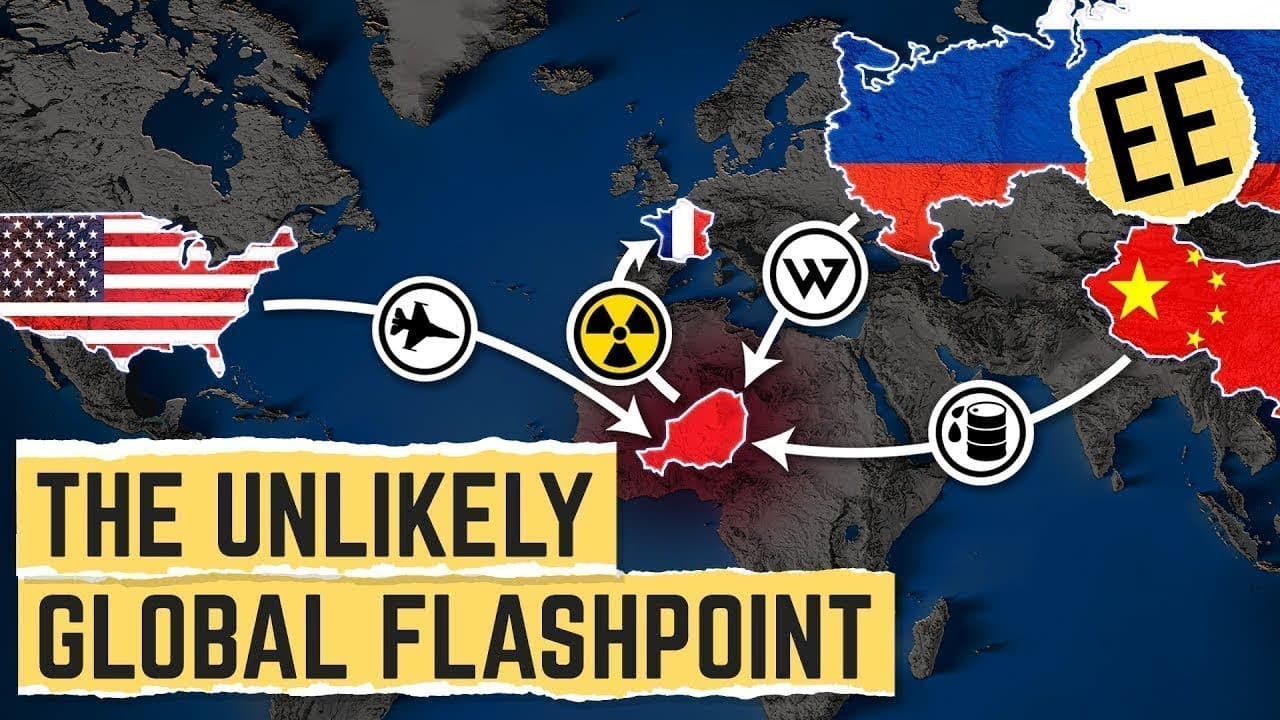
- Niger holds the world's 7th largest reserves of uranium, crucial for countries like France and the EU, especially amidst energy crises due to geopolitical tensions.
- The country's economic lifeline, the Niger River, is controlled by Nigeria, which can cut off trade access, exacerbating Niger's isolation from global markets.
- ECOWAS, a regional union, has suspended Niger due to the coup, further isolating the country economically and politically by cutting off trade routes.
- Despite having oil reserves, political instability and infrastructural challenges have prevented Niger from fully exploiting its oil industry, limiting economic growth.
- China's Belt and Road Initiative aimed to develop Niger's oil infrastructure, but regional instability has stalled these projects, impacting potential economic gains.
- The presence of militant groups and foreign mercenaries like Russia's Wagner Group complicates Niger's political landscape, posing additional risks to stability and development.
Install to Summarize YouTube Videos and Get Transcripts
Explore YouTube Video Summarizer or Get YouTube Transcript Extractor
Questions & Answers
Q: What are the main economic challenges facing Niger?
Niger's main economic challenges include political instability, poor infrastructure, and its landlocked position, which isolates it from global trade. These factors, combined with a reliance on a few natural resources like uranium and oil, limit its economic growth and development.
Q: How does Niger's political instability affect its economy?
Niger's frequent coups and regime changes disrupt economic policies and deter foreign investment. The instability also affects trade relations with neighboring countries, limiting access to essential markets and resources, thereby stalling economic progress and development.
Q: Why is Niger's uranium significant globally?
Niger holds significant uranium reserves, supplying 25% of the EU's demand. This is crucial as many European countries are seeking alternatives to Russian energy sources. Uranium's role in nuclear energy makes it a strategic resource, influencing global energy markets and geopolitical relations.
Q: What role does ECOWAS play in Niger's current situation?
ECOWAS, a regional political and economic union, has suspended Niger due to the recent coup, cutting off vital trade routes through the Niger River. This isolation exacerbates Niger's economic challenges, limiting access to markets and resources needed for development.
Q: How does Niger's geography impact its trade and economy?
Niger's landlocked position and poor transport infrastructure make trade costly and inefficient. The reliance on neighboring countries for access to global markets adds vulnerability, as political tensions can easily disrupt trade routes, further isolating its economy.
Q: What is the status of Niger's oil industry?
Despite having oil reserves, Niger has struggled to develop its oil industry due to political instability and infrastructural challenges. Planned pipelines funded by China have been stalled, limiting the country's ability to capitalize on its oil resources for economic growth.
Q: How does China's Belt and Road Initiative relate to Niger?
China's Belt and Road Initiative aims to develop Niger's oil infrastructure to facilitate exports. However, regional instability and political tensions have stalled these projects, impacting Niger's potential economic gains and China's strategic interests in the region.
Q: What are the potential global implications of Niger's crisis?
Niger's crisis could destabilize the region, affecting global energy markets, particularly with uranium supplies to Europe. It may also lead to humanitarian issues, with potential refugee flows to Europe, and complicate geopolitical dynamics involving major powers like China and Russia.
Summary & Key Takeaways
-
Niger, one of the world's poorest nations, is plagued by political instability and economic challenges, exacerbated by its landlocked geography and poor infrastructure. The country's rich uranium reserves make it geopolitically significant, impacting global energy markets, especially in Europe.
-
The recent coup in Niger has led to its suspension from ECOWAS, cutting off vital trade routes and isolating it further. Despite having valuable natural resources, the country's economic potential is hindered by instability and infrastructural issues.
-
China's investment plans to develop Niger's oil industry have been stalled due to regional instability, limiting economic opportunities. The involvement of militant groups and foreign mercenaries adds to the complexity of Niger's political and economic landscape.
Read in Other Languages (beta)
Share This Summary 📚
Summarize YouTube Videos and Get Video Transcripts with 1-Click
Try YouTube Summary with ChatGPT & Claude or YouTube Transcript Generator
Explore More Summaries from Economics Explained 📚





Summarize YouTube Videos and Get Video Transcripts with 1-Click
Try YouTube Summary with ChatGPT & Claude or YouTube Transcript Generator