Problems on Derivative Part 2 - Derivatives - Diploma Maths - II
TL;DR
Solving derivative problems involving composite and standard functions with UV rule.
Transcript
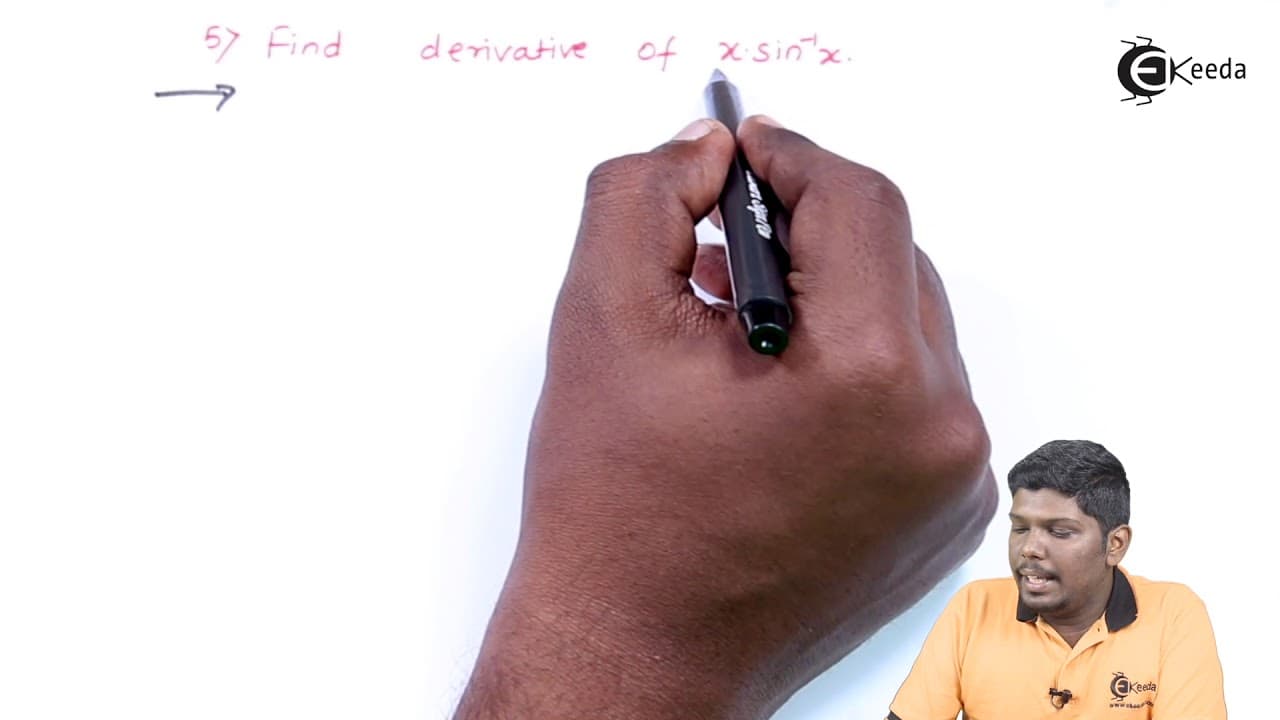
Click the bell icon to get latest videos from Ekeeda Hello friends in this video we are going to continue the last video that is problems based on derivatives we have first problem if f of X is equal to or Y is equal to e raise to 7 X into cos 7x find Dy by Dx now here two functions are getting multiplied so we will find the derivative of this fun... Read More
Key Insights
- 🍳 UV rule breaks down composite functions for efficient differentiation.
- ❓ Standard function derivatives have known formulas for quick calculation.
- 📏 The chain rule is crucial in differentiating functions within functions accurately.
- 📏 Product rule is applied when multiplying two functions in derivatives.
- 🤩 Understanding composite functions and standard functions differentiation is key to solving derivative problems.
- 📏 Derivatives of functions involving trigonometric and exponential functions follow specific rules.
- 📏 Utilizing UV rule and chain rule can simplify the process of finding derivatives.
Install to Summarize YouTube Videos and Get Transcripts
Explore YouTube Video Summarizer or Get YouTube Transcript Extractor
Questions & Answers
Q: How does UV rule help find derivatives of composite functions?
UV rule breaks down composite functions into simpler parts for differentiation, applying the product rule efficiently.
Q: What is the significance of the chain rule in finding derivatives of composite functions?
The chain rule allows for differentiation of functions within functions, crucial in calculating derivatives of composite functions accurately.
Q: How are derivatives of standard functions like sin(x), cos(x) different from composite functions?
Standard function derivatives have established formulas, while composite functions require additional steps like UV rule and chain rule for differentiation.
Q: Why is understanding UV rule essential for solving derivative problems efficiently?
UV rule simplifies complex functions by breaking them into manageable parts, aiding in accurate and efficient derivative calculations.
Summary & Key Takeaways
-
Derivatives of composite functions involve using UV rule, as shown with examples like e^7x * cos(7x).
-
Derivatives of standard functions like sin(x), cos(x) can be directly applied using known formulas.
-
UV rule and chain rule help find derivatives of functions with composite parts efficiently.
Read in Other Languages (beta)
Share This Summary 📚
Summarize YouTube Videos and Get Video Transcripts with 1-Click
Try YouTube Summary with ChatGPT & Claude or YouTube Transcript Generator
Explore More Summaries from Ekeeda 📚

Summarize YouTube Videos and Get Video Transcripts with 1-Click
Try YouTube Summary with ChatGPT & Claude or YouTube Transcript Generator