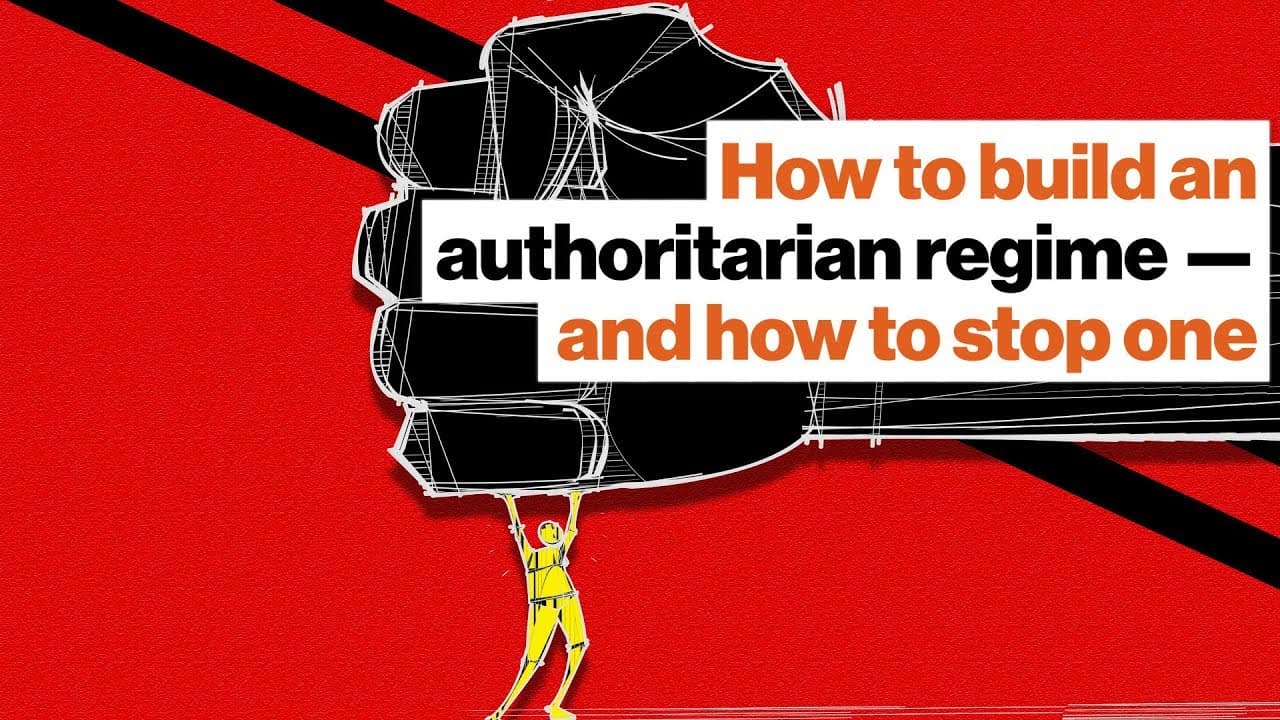
How to build an authoritarian regime — and how to stop one | Timothy Snyder | Big Think
TL;DR
The Internet's impact on factuality and democracy, exploring dangers and solutions.
Transcript
It’s normal that when a new medium comes along, a new communications technology comes along, that this is very disorienting to our own hardware. The same thing was true when the book came along. I mean the book, as compared to the manuscript, was a very powerful technology, and one could even say even in our 21st century world, where we claim that ... Read More
Key Insights
- 🥺 New media disrupts societal norms and can lead to authoritarianism by undermining factuality and democratic processes.
- 🔉 The Internet can reinforce echo chambers, sway public opinion, and erode trust in traditional media sources.
- 📰 Maintaining factuality is crucial for democracy, necessitating support for local news and measures to counter misinformation.
- ❎ Historical lessons highlight the importance of addressing the negative impacts of technology on society to safeguard democracy and freedom.
- 👋 Solutions such as taxing tech companies to fund local news, promoting media literacy, and reclassifying investigative journalism as a public good can help combat misinformation and preserve factuality.
Install to Summarize YouTube Videos and Get Transcripts
Explore YouTube Video Summarizer or Get YouTube Transcript Extractor
Questions & Answers
Q: How does the Internet change societal views, according to the text?
The Internet can challenge traditional beliefs, create echo chambers, and sway public opinion towards emotions rather than facts, potentially leading to authoritarianism.
Q: Why is a factual world crucial for the functioning of a democracy?
A factual world is essential as it enables citizens to make informed decisions, resist authoritarianism, and participate in the democratic process responsibly.
Q: How does historical context help understand the current challenges of the Internet?
History shows the dangers of misinformation, the deteriorating trust in media, and the importance of preserving factuality to prevent societal division and authoritarian control.
Q: What solutions are proposed to combat the negative impacts of the Internet on factuality and democracy?
Solutions include supporting local news, taxing tech companies to fund factual reporting, reclassifying investigative journalism as a public good, and promoting media literacy to counter fake news.
Summary & Key Takeaways
-
New media disrupts society by challenging beliefs, causing conflicts, and potentially leading to authoritarianism.
-
The Internet can either allow new ideas or reinforce existing beliefs, affecting the public sphere crucial for democracy.
-
Maintaining factuality in the digital age is essential for democracy and requires accountability and support for local news.
Read in Other Languages (beta)
Share This Summary 📚
Summarize YouTube Videos and Get Video Transcripts with 1-Click
Try YouTube Summary with ChatGPT & Claude or YouTube Transcript Generator
Explore More Summaries from Big Think 📚




Summarize YouTube Videos and Get Video Transcripts with 1-Click
Try YouTube Summary with ChatGPT & Claude or YouTube Transcript Generator