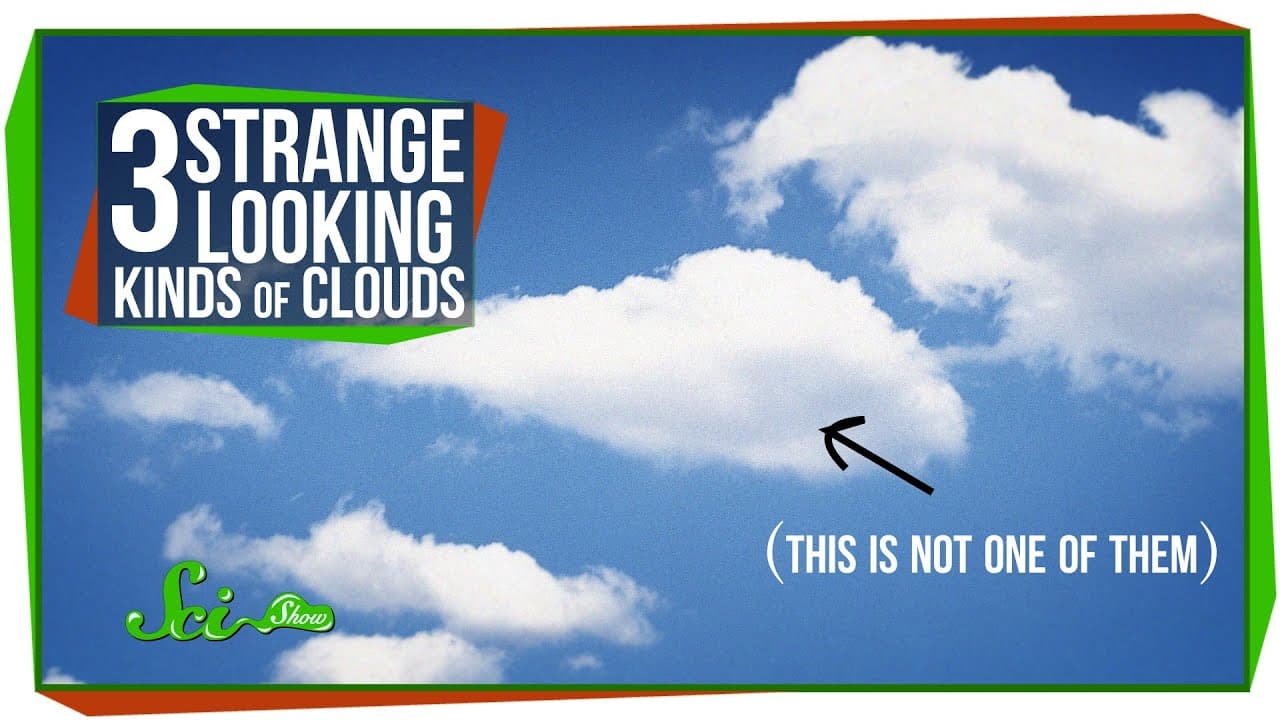
3 Strange-Looking Kinds of Clouds
TL;DR
Clouds are condensed water vapor with varying shapes and compositions, influencing weather patterns and atmospheric conditions.
Transcript
I don't know if you've noticed this, but sometimes, when you go outside, there are these big fluffy white things in the sky. We call them clouds. And even though we think of them as being gaseous, clouds are actually made of condensed water vapor -- so, they’re actually made of droplets of liquid water, or sometimes ice, stuck to tiny bits of dust ... Read More
Key Insights
- 😶🌫️ Clouds are formed of condensed water vapor around dust particles.
- 😶🌫️ Cloud shapes and types vary based on altitude, temperature, and humidity.
- 😶🌫️ Rare cloud types like lenticular and morning glory clouds have unique formations.
- 😶🌫️ Morning glory clouds are specific roll clouds that occur rarely but predictably over certain regions.
- 😶🌫️ Polar stratospheric clouds can contribute to ozone layer depletion by releasing harmful substances.
- 😶🌫️ Environmental conditions play a crucial role in determining the formation of unique cloud types.
- 💁 Cloud formations can have significant impacts on atmospheric conditions and weather patterns.
Install to Summarize YouTube Videos and Get Transcripts
Explore YouTube Video Summarizer or Get YouTube Transcript Extractor
Questions & Answers
Q: How are clouds formed and what are they made of?
Clouds are formed when water vapor in the air condenses around dust particles, creating tiny droplets of liquid water or ice.
Q: What factors determine the shape and type of clouds?
Cloud shape and type are influenced by altitude, temperature, and humidity, resulting in a wide variety of cloud formations.
Q: Why are some cloud types, like morning glory clouds, so rare?
Morning glory clouds are rare due to specific environmental conditions required for their formation, such as unique wind patterns over the Gulf of Carpentaria in Australia.
Q: How do polar stratospheric clouds impact the ozone layer?
Polar stratospheric clouds can contribute to ozone layer depletion by acting as catalysts for chemical reactions that break down ozone molecules, especially over Antarctica.
Summary & Key Takeaways
-
Clouds are made of condensed water vapor and can take different forms based on factors like altitude, temperature, and humidity.
-
There are ten major cloud categories based mostly on altitude, with hundreds of subcategories.
-
Rare cloud types like lenticular and morning glory clouds have unique shapes and formations.
Read in Other Languages (beta)
Share This Summary 📚
Summarize YouTube Videos and Get Video Transcripts with 1-Click
Try YouTube Summary with ChatGPT & Claude or YouTube Transcript Generator
Explore More Summaries from SciShow 📚

Summarize YouTube Videos and Get Video Transcripts with 1-Click
Try YouTube Summary with ChatGPT & Claude or YouTube Transcript Generator