Hydrolysis and Dehydration Synthesis Reactions
TL;DR
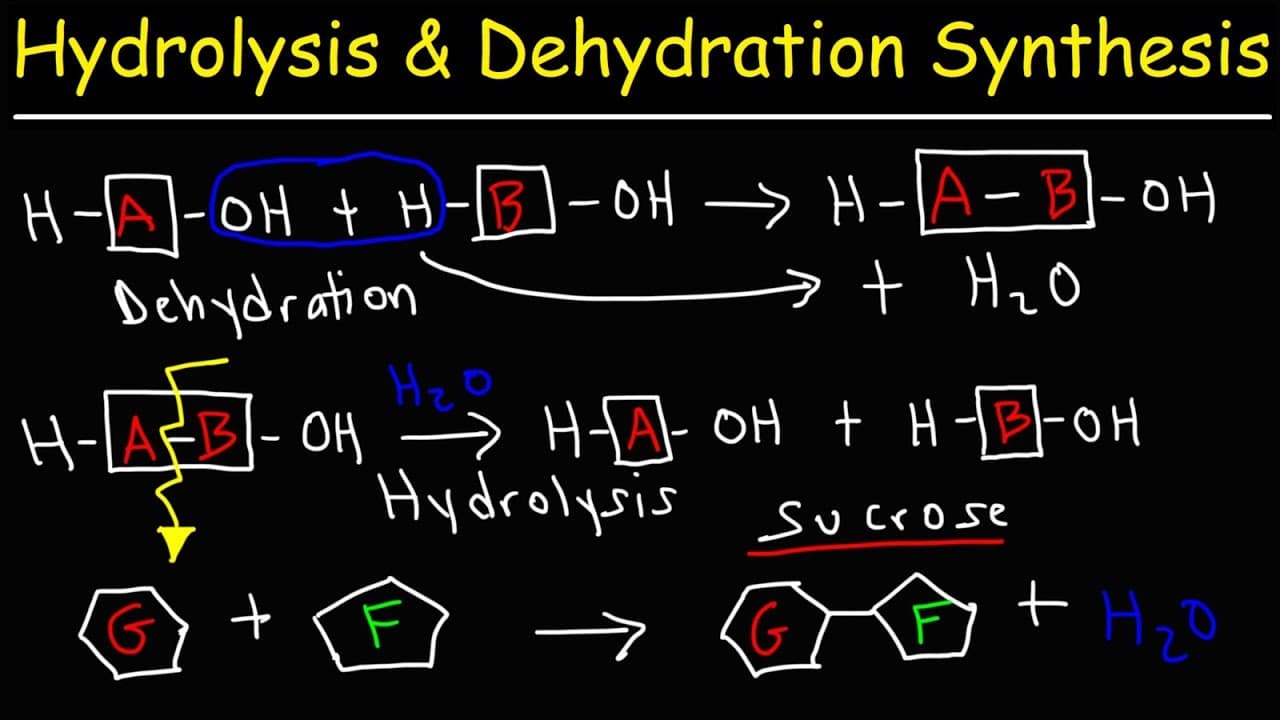
Dehydration synthesis involves combining small molecules to form a larger molecule, while hydrolysis breaks down a large molecule into smaller parts using water.
Transcript
in this video we're going to highlight the differences between a dehydration synthesis reaction and a hydrolysis reaction so let's start with dehydration synthesis so what does that word tell you dehydration hydration has to be water but dehydration involves the loss of water think of let's say if you're jogging and it's hot outside you're dehydrat... Read More
Key Insights
- 💦 Dehydration synthesis involves the loss of water and the synthesis of larger molecules, while hydrolysis uses water to break down larger molecules into smaller parts.
- 🖐️ These reactions play a crucial role in biological processes such as carbohydrate digestion and protein synthesis.
- 💁 Dehydration synthesis is responsible for the formation of complex carbohydrates and proteins, while hydrolysis helps in their breakdown.
- 💦 Adding water to a substance does not always result in hydrolysis; an acid catalyst may be required in some cases.
- 🍳 Glucose and fructose combine through dehydration synthesis to create sucrose, which can be broken down into the individual monosaccharides through hydrolysis.
- 💁 Starch is formed from many glucose monomers through dehydration synthesis, and it can be broken down back into glucose through hydrolysis.
- 💁 Protein synthesis involves dehydration synthesis to form polypeptide chains, and hydrolysis can break down proteins into their constituent amino acids.
Install to Summarize YouTube Videos and Get Transcripts
Explore YouTube Video Summarizer or Get YouTube Transcript Extractor
Questions & Answers
Q: What is the main difference between dehydration synthesis and hydrolysis reactions?
Dehydration synthesis involves combining smaller molecules to form a larger molecule, while hydrolysis breaks down a larger molecule into smaller parts using water.
Q: Can you provide an example of a dehydration synthesis reaction?
Yes, an example is the formation of sucrose (a disaccharide) from glucose and fructose. Water is released during this process.
Q: How does hydrolysis occur in carbohydrate digestion?
Hydrolysis occurs when large carbohydrate molecules, such as starch or sucrose, are broken down into smaller monosaccharides (like glucose) through the addition of water.
Q: What is the significance of dehydration synthesis and hydrolysis in protein synthesis?
Dehydration synthesis is involved in combining amino acids to form polypeptide chains or proteins. Hydrolysis, on the other hand, breaks down proteins into individual amino acids for various biological processes.
Summary & Key Takeaways
-
Dehydration synthesis is a reaction that involves the loss of water and the synthesis or building of a larger molecule.
-
Hydrolysis is the reverse process, where water is used to break down a large molecule into smaller components.
-
Both reactions are essential in various biological processes, such as the formation of complex carbohydrates and proteins.
Read in Other Languages (beta)
Share This Summary 📚
Summarize YouTube Videos and Get Video Transcripts with 1-Click
Try YouTube Summary with ChatGPT & Claude or YouTube Transcript Generator
Explore More Summaries from The Organic Chemistry Tutor 📚


Summarize YouTube Videos and Get Video Transcripts with 1-Click
Try YouTube Summary with ChatGPT & Claude or YouTube Transcript Generator