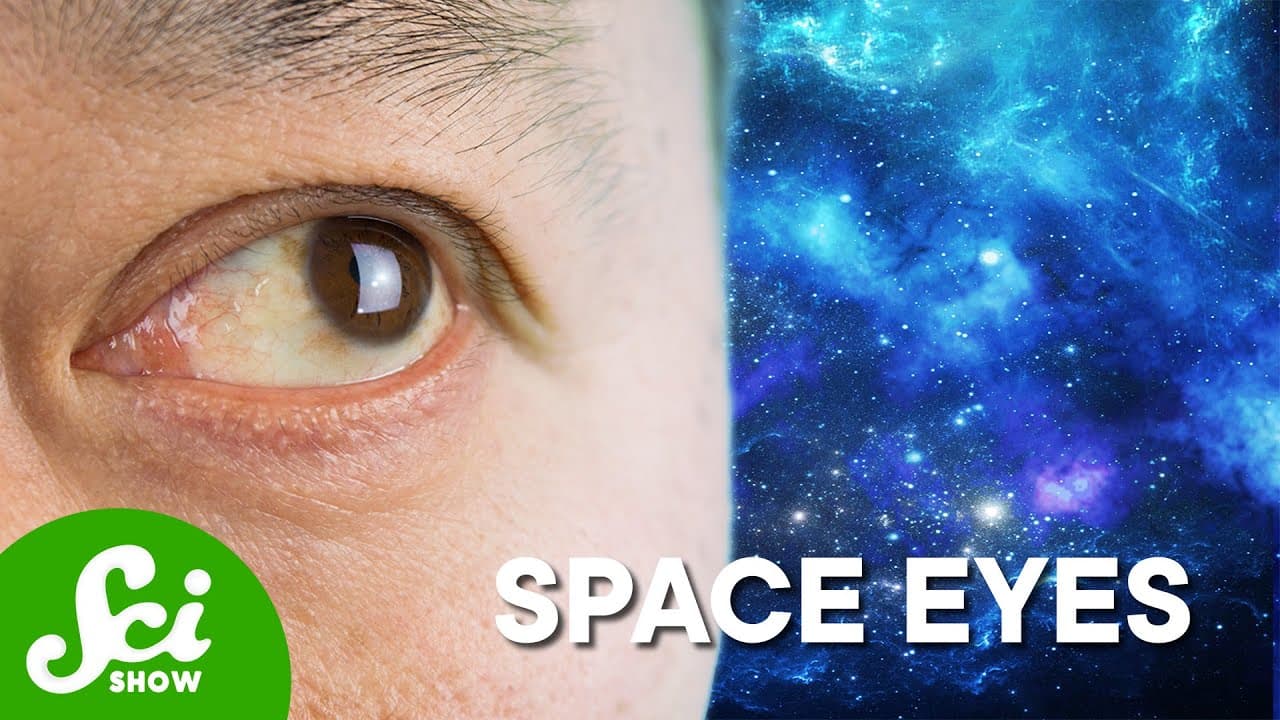
We Don’t Know Why Space is Bad for Our Eyes
TL;DR
Long-term space travel affects astronauts' vision in undefined ways, posing challenges for future missions.
Transcript
This SciShow video is supported by Capital One Shopping. Capital One Shopping is a simple and free way to help you save money while shopping online. To learn more, head to capitaloneshopping.com/scishow. One of the best parts of spaceflight is the view. But if you’re on a long journey to Mars, you might find your eyesight getting worse as you go, t... Read More
Key Insights
- 👨🚀 SANS is a serious concern for long-term space missions due to its impact on astronauts' vision and brain health.
- 👨🔬 Research on SANS involves a variety of testing methods, including MRIs, ultrasound, and simulated microgravity conditions.
- 🎅 Understanding the causes of SANS is crucial for developing effective prevention and treatment strategies.
Install to Summarize YouTube Videos and Get Transcripts
Explore YouTube Video Summarizer or Get YouTube Transcript Extractor
Questions & Answers
Q: What is Spaceflight-Associated Neuro-Ocular Syndrome (SANS)?
SANS is a set of structural changes in astronauts' eyes and brains during long spaceflights, resulting in symptoms like blurry vision and optic nerve swelling.
Q: How do researchers study SANS outside of space?
Researchers simulate microgravity conditions through methods like parabolic flights, bed-rest experiments, and device simulations to study SANS on Earth.
Q: What are the potential causes of SANS?
Possible causes include increased pressure inside the head due to fluid redistribution in microgravity, changes in cerebrospinal fluid function, and genetic predispositions.
Q: How can SANS be prevented or treated?
Potential treatments for SANS include lower body negative pressure devices, vitamin B supplements, and wearing swim goggles, but more research is needed for effective prevention and treatment strategies.
Summary & Key Takeaways
-
Spaceflight-Associated Neuro-Ocular Syndrome (SANS) is a collection of structural changes in astronauts' eyes and brains during long spaceflights.
-
Effects of SANS include alterations in the optic nerve, retina, brain position, and fluid distribution.
-
Research on SANS involves extensive testing and simulations to understand its causes and potential treatments.
Read in Other Languages (beta)
Share This Summary 📚
Summarize YouTube Videos and Get Video Transcripts with 1-Click
Try YouTube Summary with ChatGPT & Claude or YouTube Transcript Generator
Explore More Summaries from SciShow 📚


Summarize YouTube Videos and Get Video Transcripts with 1-Click
Try YouTube Summary with ChatGPT & Claude or YouTube Transcript Generator