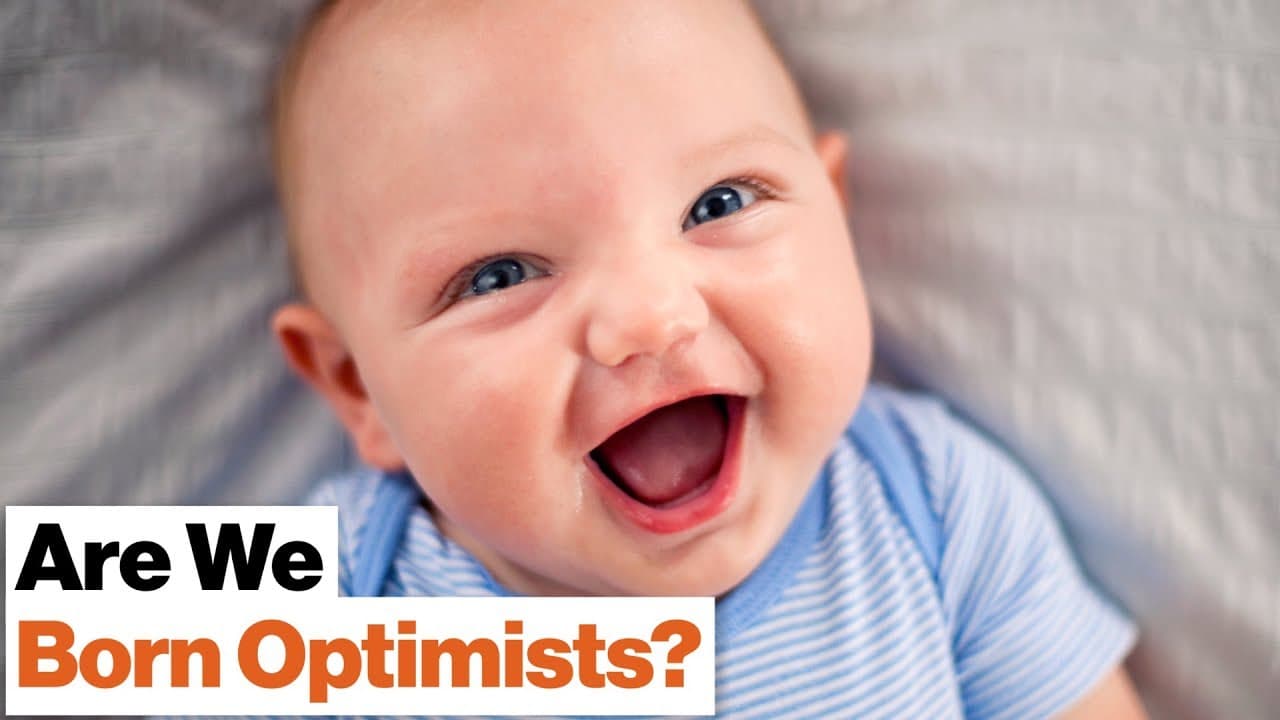
Are We Born Optimistic? Or Is It a Coping Skill We Learn as Adults? | Lori Markson | Big Think
TL;DR
Children show a natural optimism bias, leaning towards positive interpretations and self-assessments in the first few years of life.
Transcript
As a developmental psychologist who studies cognition in children we were really excited to be able to focus on a particular aspect of a cognitive bias, which is the development of optimism in children. So we’re often studying cognitive mechanisms and how children are using these to reason about various aspects of the world around them, including o... Read More
Key Insights
- 🤳 Children exhibit a natural propensity towards optimism in their self-assessments and interpretations.
- 🤳 Optimism development in children involves a bias towards positive outcomes and self-perceptions.
- 👶 Even babies show an understanding of probabilities and likelihoods.
- 👶 Children tend to prefer optimistic individuals to learn from, despite accuracy considerations.
Install to Summarize YouTube Videos and Get Transcripts
Explore YouTube Video Summarizer or Get YouTube Transcript Extractor
Questions & Answers
Q: How does optimism develop in children according to the research?
Optimism in children develops as a bias towards overestimating positive outcomes and underestimating negative outcomes, leading to optimistic self-assessments and interpretations.
Q: Do children tend towards optimism over realism?
Initially, children show a propensity for optimistic views of themselves and situations, but as they grow older, their views tend to align more realistically with their abilities.
Q: Can children understand probability and likelihood?
Yes, even babies as young as one-year-old show an ability to understand probabilities and make estimations based on samples presented to them.
Q: How do children view optimistic versus pessimistic individuals?
Children are more likely to choose and learn from optimistic individuals, even if their responses are not always accurate, suggesting a preference for positivity.
Summary & Key Takeaways
-
Developmental psychologists study optimism development in children.
-
Children tend to have a bias towards overestimating positive outcomes and underestimating negative outcomes.
-
Research indicates that children lean towards optimism in their self-assessments and interpretations.
Read in Other Languages (beta)
Share This Summary 📚
Summarize YouTube Videos and Get Video Transcripts with 1-Click
Try YouTube Summary with ChatGPT & Claude or YouTube Transcript Generator
Explore More Summaries from Big Think 📚



Summarize YouTube Videos and Get Video Transcripts with 1-Click
Try YouTube Summary with ChatGPT & Claude or YouTube Transcript Generator