Why Do We Smile?
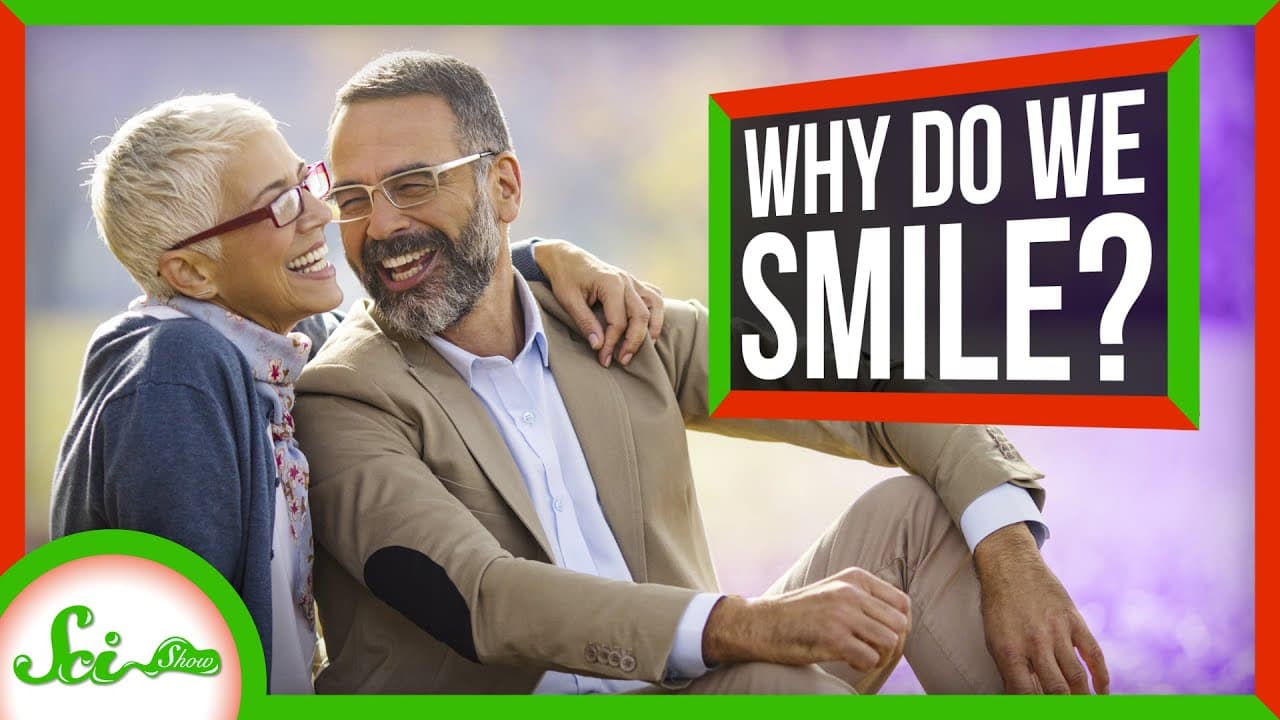
TL;DR
Smiling evolved as a non-aggressive form of communication to signal friendliness and cooperation.
Transcript
[INTRO ♪] One of our species’ trademark expressions is the smile. And smiling is a form of communication—it’s not just about how you feel, but also how you want to make others feel. We use smiles to put each other at ease, to bring people together. So it may seem a little weird that we show off our teeth when we want to be friendly, because teeth a... Read More
Key Insights
- 😀 Smiling evolved from a threat display in other mammals to a non-aggressive signal of friendliness and cooperation.
- 😑 Primates, like rhesus macaques and chimpanzees, use toothy expressions for submission and social bonding.
- 😀 Studies show that smiling enhances trust, generosity, and cooperation in human interactions.
- 😀 Smiling is a universal form of communication that signals a desire for positive social interactions and cooperation.
- 😀 Teeth-baring displays in other mammals contrast with the friendly and cooperative nature of human smiles.
- 😀 Smiling serves as a signal of cooperation and non-aggression, influencing trust and decision-making in social interactions.
- 😀 The amount of smiling during sharing is more related to cooperation than personal emotions like happiness, indicating a desire for collaborative behavior.
Install to Summarize YouTube Videos and Get Transcripts
Explore YouTube Video Summarizer or Get YouTube Transcript Extractor
Questions & Answers
Q: How did smiling evolve from a threatening display in other mammals?
Smiling evolved as a non-aggressive form of communication to signal friendliness and cooperation, contrary to teeth-baring threat displays in other mammals.
Q: What role do toothy expressions play in primate social interactions?
Primate toothy expressions, like the silent bared-teeth display, are used for submission, greeting, grooming, and embracing, enhancing social bonding and cooperation.
Q: How do studies show the impact of smiling on human behavior?
Studies demonstrate that smiling enhances trust, cooperation, and feelings of generosity among humans, influencing decisions in social interactions and cooperative games.
Q: Why do people smile more when sharing, according to research?
People smile more when sharing because it signals cooperation rather than happiness, indicating a desire for mutual benefit and positive social interactions.
Summary & Key Takeaways
-
Smiles are a way to communicate and make others feel at ease, evolving from teeth-baring threat displays in other mammals.
-
Primates, like rhesus macaques and chimpanzees, use toothy expressions for submission and social bonding.
-
Studies show that smiles enhance trust, cooperation, and feelings of generosity among humans.
Read in Other Languages (beta)
Share This Summary 📚
Summarize YouTube Videos and Get Video Transcripts with 1-Click
Try YouTube Summary with ChatGPT & Claude or YouTube Transcript Generator
Explore More Summaries from SciShow 📚


Summarize YouTube Videos and Get Video Transcripts with 1-Click
Try YouTube Summary with ChatGPT & Claude or YouTube Transcript Generator