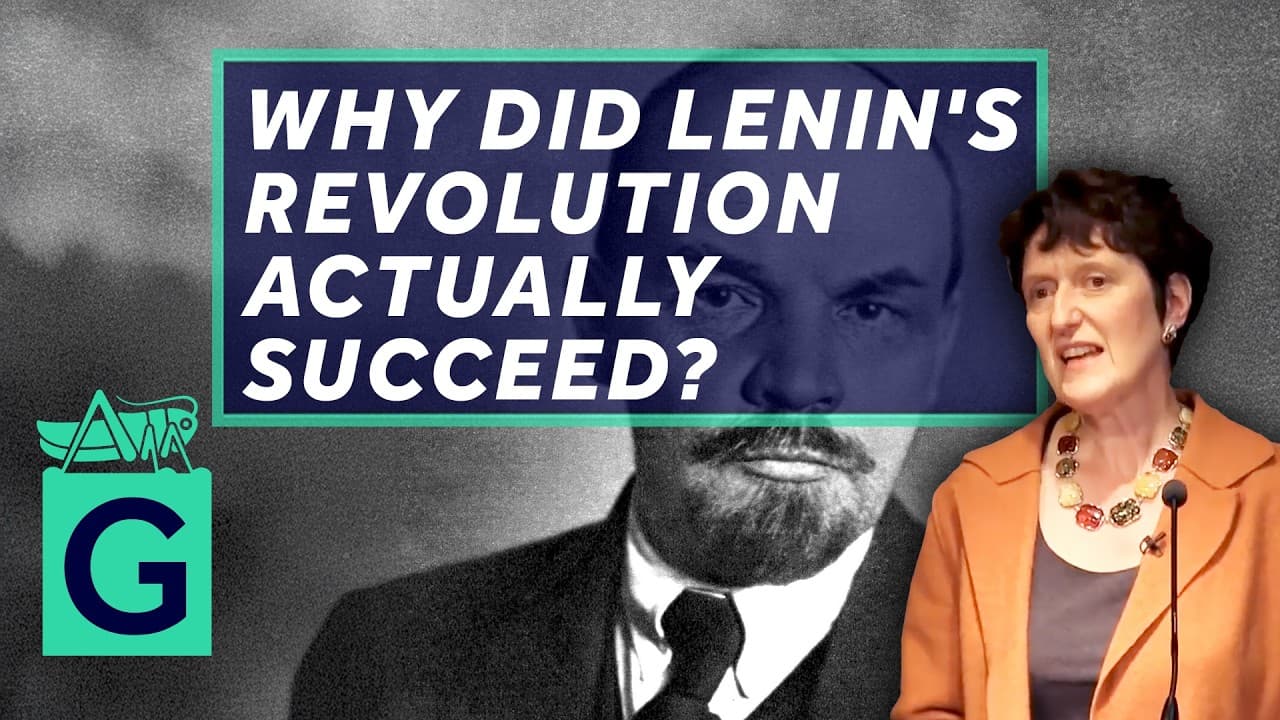
Lenin and the Russian Revolution - Professor Catherine Merridale FBA
TL;DR
A detailed analysis of the factors leading up to the Russian Revolution centenary, highlighting historical events and implications for modern society.
Transcript
I don't need to tell you it's an anniversary now do I I think we've got that just to remind you though the Russian Revolution wasn't a single event no revolution ever is the most heroic moment was not the one we're here to remember tonight but February 1917 and since the revolutionary calendar was thirteen days behind the one that we all use we rem... Read More
Key Insights
- 😮 The Russian Revolution began in February 1917, culminating in the Bolshevik Party's rise to power in November.
- 🖐️ Lenin played a pivotal role in shaping the Bolshevik Party and advocating for immediate peace and transfer of power to the Soviets.
- 💦 The revolution was a result of societal discontent, economic challenges, and demands for political change from the working class.
- 💨 The aftermath of the revolution brought about lasting impacts on Russian society and politics, paving the way for a new regime and ideological conflicts.
- 🤩 Key turning points included the April Theses, July Days, and October Revolution, which reshaped Russia's political landscape.
- ✊ Lenin's strategic interventions and persuasive leadership style contributed to the Bolshevik Party's success in seizing power.
- 🥺 The Russian Revolution had profound effects on Russian society, leading to social upheaval, economic challenges, and enduring consequences for governance.
Install to Summarize YouTube Videos and Get Transcripts
Explore YouTube Video Summarizer or Get YouTube Transcript Extractor
Questions & Answers
Q: What triggered the Russian Revolution in 1917?
The Russian Revolution in 1917 was triggered by a combination of factors, including societal discontent, economic hardships, and the growing demands of the working class for political change. The abdication of the Tsar in February marks the beginning of the revolution.
Q: How did Lenin play a crucial role in the Bolshevik Party's rise to power?
Lenin was instrumental in shaping the Bolshevik Party into an effective revolutionary force, advocating for immediate peace and the transfer of power to the Soviets. His persuasive leadership style and strategic interventions led to the party's success.
Q: What were the key turning points during the Russian Revolution?
Key turning points during the Russian Revolution included the April Theses proposed by Lenin, the July Days, and the October Revolution when the Bolsheviks seized power. These events reshaped the political landscape in Russia and set the stage for significant changes.
Q: How did the Russian Revolution impact Russian society and politics?
The Russian Revolution had a profound impact on Russian society and politics, leading to the establishment of a new regime and ideological conflicts. The aftermath of the revolution brought about social upheaval, economic challenges, and enduring consequences for Russian governance.
Summary & Key Takeaways
-
The Russian Revolution was a complex series of events, starting in February 1917 with the Tsar's abdication and ending with the Bolshevik Party seizing power in November the same year.
-
The revolution was fueled by societal chaos, economic challenges, and the demands of the working class for better conditions.
-
The aftermath of the revolution brought about a new regime, ideological conflicts, and lasting impacts on Russian society and politics.
Read in Other Languages (beta)
Share This Summary 📚
Summarize YouTube Videos and Get Video Transcripts with 1-Click
Try YouTube Summary with ChatGPT & Claude or YouTube Transcript Generator
Explore More Summaries from Gresham College 📚


Summarize YouTube Videos and Get Video Transcripts with 1-Click
Try YouTube Summary with ChatGPT & Claude or YouTube Transcript Generator