What Makes Great White Sharks Exceptional Predators?
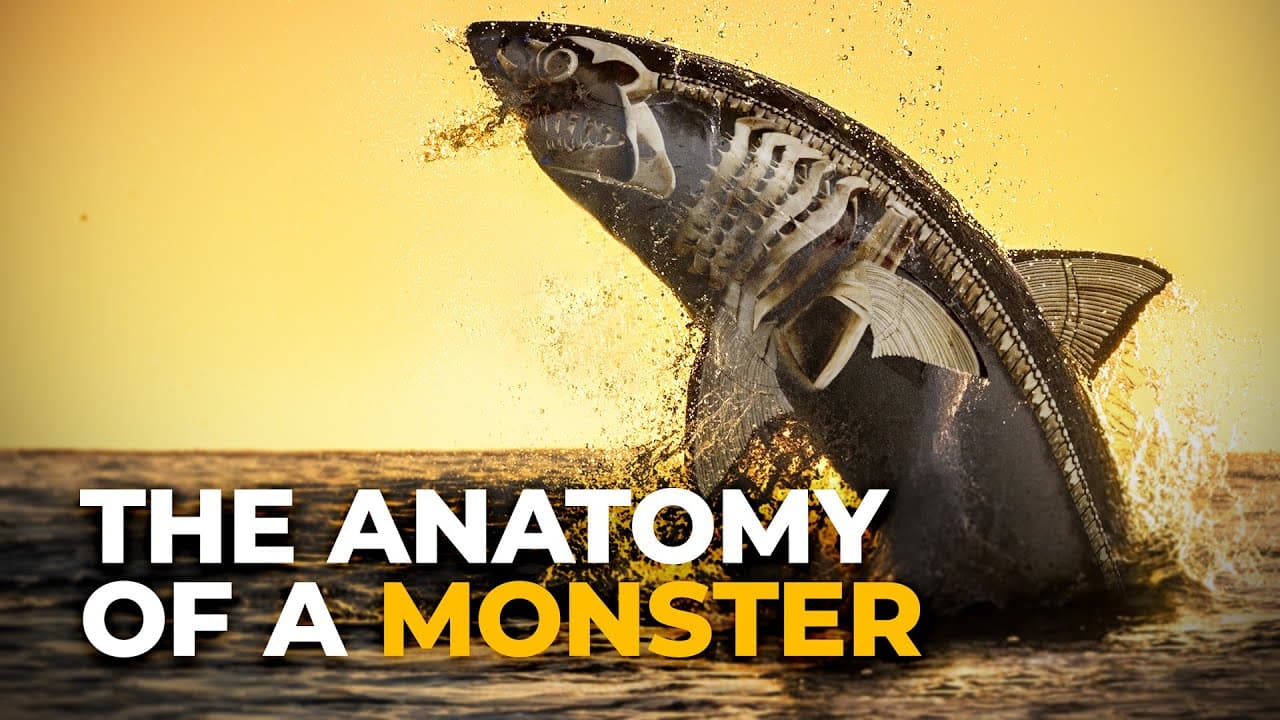
TL;DR
Great white sharks are sophisticated hunters with remarkable vision and a unique hunting strategy that involves ritualistic behaviour. Contrary to popular belief, their attacks on humans are not random but purposeful. These intelligent predators thrive in the ocean but struggle in captivity, revealing just how complex and sensitive they truly are.
Transcript
nothing strikes fear in the heart of humans more than the thought of a great white shark even writing this video gave me some extreme bouts of queasiness in our modern comfortable life we almost never have to think about being hunted ripped apart and eaten but looking into the eyes of a great white shark any comfort we might have felt gets ripped a... Read More
Key Insights
- 🤍 Great white sharks possess a unique combination of characteristics, such as sharp vision, acute sense of smell, and regional endothermy.
- 🫦 Their hunting behavior is purposeful and ritualistic, involving biting, releasing, dragging, and exsanguinating prey.
- ⬜ In captivity, great white sharks have proven difficult to keep due to their large size, need for constant swimming, and preference for live prey.
Install to Summarize YouTube Videos and Get Transcripts
Explore YouTube Video Summarizer or Get YouTube Transcript Extractor
Questions & Answers
Q: How powerful is a great white shark's bite force and how does its skeleton affect it?
While the exact bite force is debated, researchers estimate that the largest great white shark can exert a bite force of over 18,000 Newtons. Surprisingly, great white sharks have a cartilage skeleton, which is less stiff than bone but allows for faster swimming with less energy expenditure.
Q: How do great white sharks regulate their body temperature and what advantage does it provide?
Great white sharks have regional endothermy, which allows them to keep critical regions such as their swimming muscles warm. This adaptation enables them to live in colder waters, dive deeper, and move faster, possibly contributing to their large size and hunting capabilities.
Q: What motivates a great white shark to attack and how do they choose their prey?
Great white sharks are visual hunters with excellent color vision. They primarily hunt during daylight hours and prefer fatty prey such as seals and whales. They bite humans to determine if they have enough blubber and focus on muscly prey for energy and rapid growth. Their hunting technique involves biting, releasing, and waiting for the prey to die before consumption.
Q: How do great white sharks communicate and assert dominance over food?
When multiple sharks are present near a prey animal, they engage in tail-slapping displays at the surface. This non-violent behavior determines the dominant shark, which gets to eat the prey. Great white sharks are sensitive creatures and may be hurt by a punch to the face, making this a useful defense strategy.
Summary & Key Takeaways
-
Great white sharks are formidable predators, reaching up to 20 ft in length and 2,270 kg in weight, with rows of serrated teeth that are designed to tear through flesh and bone.
-
Contrary to popular belief, great white shark attacks on humans are purposeful and follow patterns in space and time. Not all commonly heard advice about avoiding attacks is necessarily true.
-
These intelligent predators possess sharp vision, the keenest sense of smell of any shark, and may be far more intelligent and delicate than previously believed. They have proven difficult to keep in captivity, despite numerous attempts by aquariums worldwide.
Read in Other Languages (beta)
Share This Summary 📚
Summarize YouTube Videos and Get Video Transcripts with 1-Click
Try YouTube Summary with ChatGPT & Claude or YouTube Transcript Generator
Explore More Summaries from Real Science 📚






Summarize YouTube Videos and Get Video Transcripts with 1-Click
Try YouTube Summary with ChatGPT & Claude or YouTube Transcript Generator