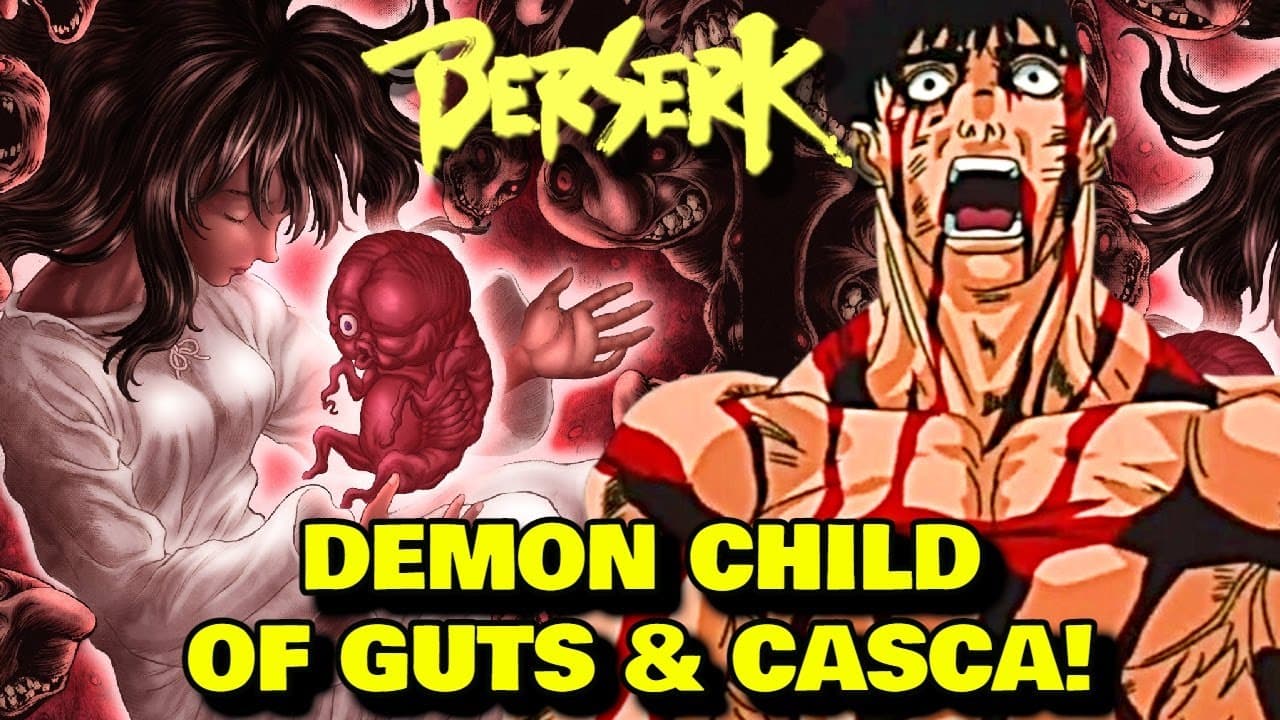
Demon Child Origins – Guts & Casca’s Cursed Child Who Might Be the Key to Defeating Griffith
TL;DR
The demon child in Berserk represents deep tragedy and impacts multiple story arcs involving Guts and Casca.
Transcript
there are plenty of characters in berserk whose lives feel like they've been predetermined to go through living hell guts and kaska immediately come to mind when we say that phrase but it's also true for most other characters we meet as well Jill Rosine farnese Serpico heck even Isidro have been through things that have culminated in their fated en... Read More
Key Insights
- 👶 The demon child's character exemplifies an ongoing theme of tragedy and predetermined suffering in the lives of Berserk’s major characters.
- 😘 It serves as a haunting manifestation of guilt and regret, often appearing during Guts' emotional lows, revealing the burden of their shared history.
- 🥰 The child’s grotesque appearance embodies the series’ dark exploration of trauma, particularly in the context of love and its destructive potential.
- 🥰 Its backstory highlights the complex interplay between love, violence, and the unintended consequences of actions, resonating deeply with the overarching narrative.
- 👶 The repeated encounters between Guts and the demon child reinforce the notion that confronting one's past is essential for character development and healing.
- 👶 The demon child ultimately becomes a vessel for Guts’ internal conflict, symbolizing his struggle with fatherhood and his legacy.
- ⛩️ Its role in the series hints at deeper magical and supernatural themes, suggesting a connection between characters not fully resolved throughout the plot.
Install to Summarize YouTube Videos and Get Transcripts
Explore YouTube Video Summarizer or Get YouTube Transcript Extractor
Questions & Answers
Q: What is the significance of the demon child’s design in Berserk?
The demon child is characterized by its grotesque appearance, with features like a tumor-like growth and tendrils, which reflect horror and suffering. Its unsettling design symbolizes the trauma and darkness surrounding Guts and Casca, serving as a reminder of their shared pain and the consequences of their actions. The child's presence is both repulsive and tragic, embodying aspects of Guts' buried emotions and regrets.
Q: How does the demon child relate to themes of fate in Berserk?
The demon child represents characters feeling trapped by fate in Berserk, as its existence is linked to Guts and Casca's tragic relationship. It emerges during pivotal moments for Guts, highlighting his struggles against preordained doom and the loss of agency. The child’s ties to the God Hand further illustrate the series' exploration of fate versus free will, as characters grapple with forces beyond their control.
Q: Why is the demon child regarded as a pivotal character despite its limited appearances?
Despite limited screen time, the demon child's repeated manifestations during Guts' most intense emotional crises illustrate its profound impact on the narrative. It symbolizes Guts's internal conflicts and catalyzes key character developments, particularly regarding his relationship with Casca. This complexity adds depth, making the demon child essential to understanding the overarching themes of love, loss, and fate in Berserk.
Q: What repercussions did the demon child's existence have on Guts and Casca’s lives?
The demon child’s existence brings tremendous repercussions for both Guts and Casca. It represents the culmination of their trauma, exacerbated by the Eclipse event, and highlights their struggles with guilt and parental instincts. As Guts confronts his hatred for the demon child, it complicates his sense of identity, family, and emotional turmoil, underscoring the tragic nature of their love and the harrowing consequences it yields.
Q: How does the relationship between Guts and the demon child evolve throughout the series?
Guts’ relationship with the demon child is fraught with tension and rejection, reflecting his own insecurities and fears of failure as a father. Initially viewing the child as a monstrous reminder of his past traumas, Guts struggles internally with acceptance. Over time, the demon child's recurring appearances push Guts to confront his emotions, ultimately leading to moments of reflection on love, loss, and connection.
Q: What role did the demon child play in the Eclipse and its aftermath?
During the Eclipse, the demon child embodies the horrific consequences of Guts and Casca’s union, being conceived from a traumatic event. The aftermath sees it act as a haunting reminder of their shared guilt and pain. Its birth intertwines with the emergence of Femto, further entangling Guts and Casca in a narrative of struggle against cursed fate, highlighting the horrific circumstances surrounding their relationship.
Summary & Key Takeaways
-
The demon child, first introduced in Berserk, is intricately tied to Guts and Casca's tragic story, representing their pain and the unintended consequences of their love.
-
Throughout the series, the demon child manifests during Guts' most vulnerable moments, reflecting his emotional struggles and serving as a haunting reminder of their past traumas.
-
Ultimately, the demon child becomes a pivotal figure in the narrative, influencing key events and embodying the tragic intersections of love, loss, and fate within Berserk.
Read in Other Languages (beta)
Share This Summary 📚
Summarize YouTube Videos and Get Video Transcripts with 1-Click
Try YouTube Summary with ChatGPT & Claude or YouTube Transcript Generator
Explore More Summaries from Marvelous Videos 📚






Summarize YouTube Videos and Get Video Transcripts with 1-Click
Try YouTube Summary with ChatGPT & Claude or YouTube Transcript Generator