Huge Sperm and Giant Tentacles: Relax, It's Marine Biology
TL;DR
Scientists discover ostracods with sperm ten times longer than body; new sea anemone order unveiled through DNA research.
Transcript
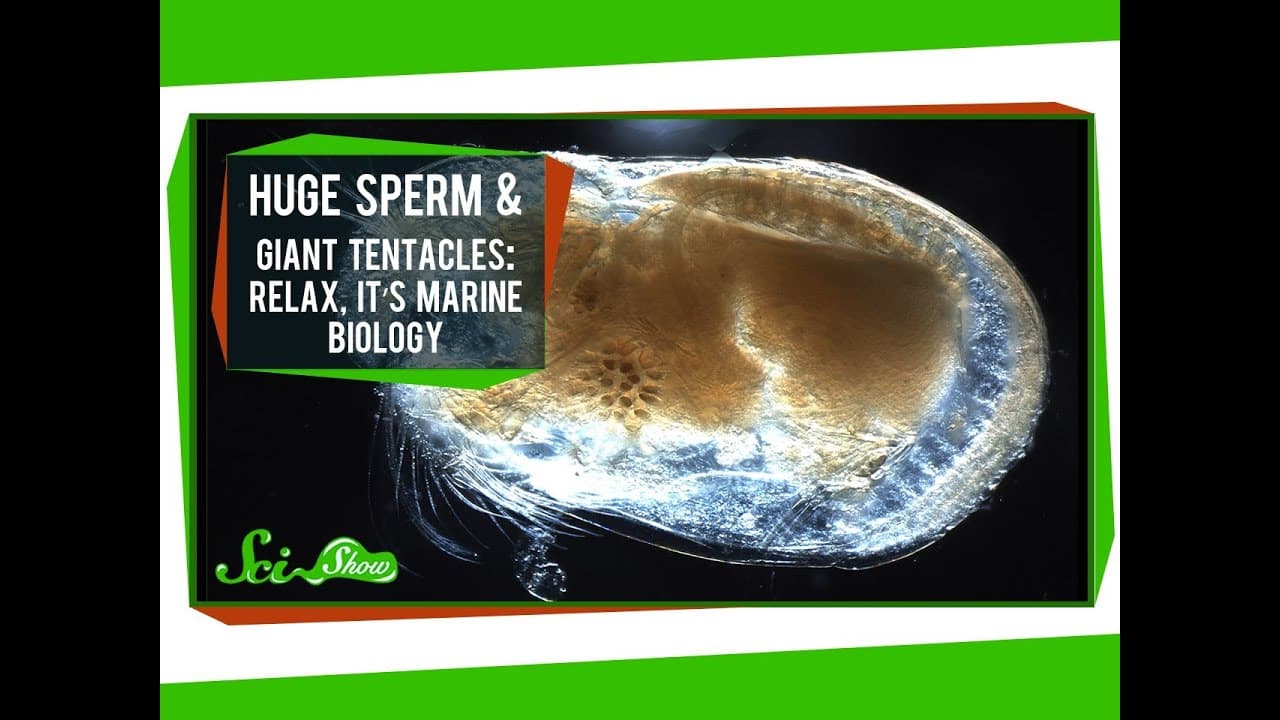
So I’m not trying to make anyone feel inadequate, or anything? But scientists have uncovered fossil evidence of an animal that produces sperm ten times longer than its body. The overachiever in question is a crustacean called an ostracod, which is a type of tiny freshwater shrimp. Ostracods are still around today, and many species seem to share thi... Read More
Key Insights
- 🧑🔬 Ostracods possess a unique reproductive strategy with giant sperm that remains a mystery to scientists.
- 🌥️ Fossil evidence of ostracods with large sperm offers a glimpse into the evolutionary history of these tiny creatures.
- 🤢 The discovery of a new sea anemone order, Relicanthus daphneae, challenges previous classification systems based on physical characteristics.
- 👨🔬 DNA research is revolutionizing taxonomy and evolutionary biology, revealing unexpected relationships among species.
- ❓ Convergent evolution is exemplified in R. daphneae, showcasing how unrelated species can develop similar traits through independent evolution.
- 🥹 The deep ocean holds many mysteries, with new orders of life being discovered, expanding our understanding of biodiversity.
- 👨🔬 Scientific research continues to uncover the complexities of life on Earth, highlighting the need for further exploration and study.
Install to Summarize YouTube Videos and Get Transcripts
Explore YouTube Video Summarizer or Get YouTube Transcript Extractor
Questions & Answers
Q: How do ostracods produce sperm ten times longer than their body?
Ostracods dedicate a significant portion of their body energy to creating and distributing massive sperm, lacking a clear understanding of the evolutionary advantage or function.
Q: What new discovery was made in the world of sea anemones?
Through DNA research, marine biologists identified a new order of animal life, with the species Relicanthus daphneae reclassified away from being an anemone due to genetic and structural differences.
Q: What is convergent evolution, and how is it illustrated in the case of Relicanthus daphneae?
Convergent evolution occurs when unrelated species develop similar traits independently, as seen in the case of R. daphneae closely resembling an anemone in appearance and behavior despite their genetic differences.
Q: Why is the discovery of new orders of life significant in taxonomy and evolutionary biology?
Discovering new orders provides insights into evolutionary relationships, prompting a reevaluation of species classification and contributing to a better understanding of the diverse forms life can take.
Summary & Key Takeaways
-
Ostracods produce sperm much larger than their body size, a mystery in evolutionary biology.
-
Fossil evidence of ostracods with large sperm found, still similar to modern specimens.
-
New sea anemone order, Relicanthus daphneae, revealed through DNA analysis, highlighting convergent evolution.
Read in Other Languages (beta)
Share This Summary 📚
Summarize YouTube Videos and Get Video Transcripts with 1-Click
Try YouTube Summary with ChatGPT & Claude or YouTube Transcript Generator
Explore More Summaries from SciShow 📚


Summarize YouTube Videos and Get Video Transcripts with 1-Click
Try YouTube Summary with ChatGPT & Claude or YouTube Transcript Generator