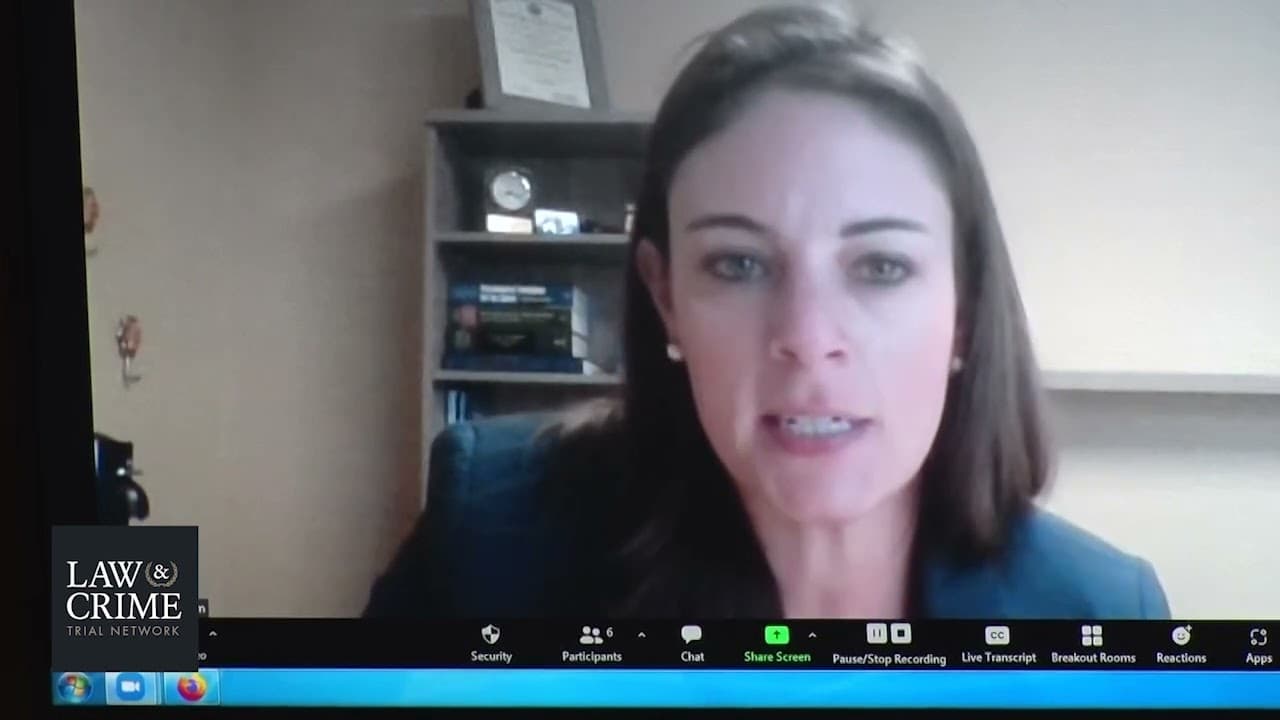
FL v. Robert Hayes Penalty Phase Day 1 - Dr. Nicole Graham - Licensed Psychologist
TL;DR
Dr. Graham, an expert witness in forensic psychology, evaluates Robert Hayes' executive functioning abilities based on various tests and interviews.
Transcript
get it jury this what do you guys got in terms of witnesses you have two more today or one more okay that's the expert is she here oh yeah there she is i'm gonna admit her now okay can you hear me uh is it dr graham can you hear me dr graham can you hear me oh then it's muted over there dr graham can you hear me can you hear me now you're asking if... Read More
Key Insights
- 🏆 Dr. Graham's evaluation focused on assessing Robert Hayes' executive functioning abilities through various tests.
- 🛀 Hayes showed strengths in intellectual abilities but weaknesses in aspects of executive functioning.
- ❓ Adverse childhood experiences and biological predispositions can influence deficits in executive functioning.
- 🙂 The evaluation shed light on how executive functioning impacts decision-making and impulse control.
- ❓ Dr. Graham highlighted the importance of understanding cognitive abilities within the context of an individual's history and experiences.
- 🤬 Various tests, such as symbol digit modalities and design fluency, were utilized to assess Hayes' executive functioning.
- 🥺 Factors like trauma and neglect can impact brain development and lead to deficits in executive functioning abilities.
Install to Summarize YouTube Videos and Get Transcripts
Explore YouTube Video Summarizer or Get YouTube Transcript Extractor
Questions & Answers
Q: How did Dr. Graham evaluate Robert Hayes' executive functioning abilities?
Dr. Graham used a series of tests related to attention and executive functions, such as symbol digit modalities and design fluency, to assess Hayes' capabilities.
Q: What were some of the key findings in Dr. Graham's evaluation of Robert Hayes?
Dr. Graham found that while Hayes excelled in intellectual abilities, his executive functioning was relatively weak, impacting his decision-making and impulse control.
Q: How did Dr. Graham explain the impact of adverse childhood experiences on executive functioning?
Adverse childhood experiences, such as abuse or neglect, can hinder proper brain development and contribute to deficits in executive functioning, affecting behavior later in life.
Q: What factors contribute to deficits in executive functioning abilities?
Biological predispositions, aversive childhood experiences, substance use, and familial history of risk-taking behaviors can all contribute to deficits in executive functioning abilities.
Summary & Key Takeaways
-
Dr. Graham, an expert witness, discusses her educational background, training experiences, and current professional affiliations.
-
She evaluated Robert Hayes' executive functioning abilities through various tests, highlighting strengths in intellectual abilities but weaknesses in executive functioning.
-
Dr. Graham's testimony sheds light on how executive functioning impacts behavior and decision-making in individuals like Robert Hayes.
Read in Other Languages (beta)
Share This Summary 📚
Summarize YouTube Videos and Get Video Transcripts with 1-Click
Try YouTube Summary with ChatGPT & Claude or YouTube Transcript Generator
Explore More Summaries from Law&Crime Network 📚





Summarize YouTube Videos and Get Video Transcripts with 1-Click
Try YouTube Summary with ChatGPT & Claude or YouTube Transcript Generator