The biggest myths about economics, debunked | Economics Explained
TL;DR
Explores misunderstandings of economies of scale and induced demand.
Transcript
economics is not a complicated subject it's simply the study of how people interact with things of value the problem is that people are very complicated and that can make economic assumptions that sound perfectly reasonable in theory inaccurate or just wrong economics is also a subject which For Better or Worse is intertwined with politics personal... Read More
Key Insights
- Economics is complex due to human behavior, not the subject itself, and is intertwined with politics and personal beliefs.
- Most economists agree on the majority of economic principles, with disagreements often rooted in misunderstandings or ideology.
- Economies of scale suggest reducing unit costs with increased production, but this can lead to diseconomies of scale if not managed properly.
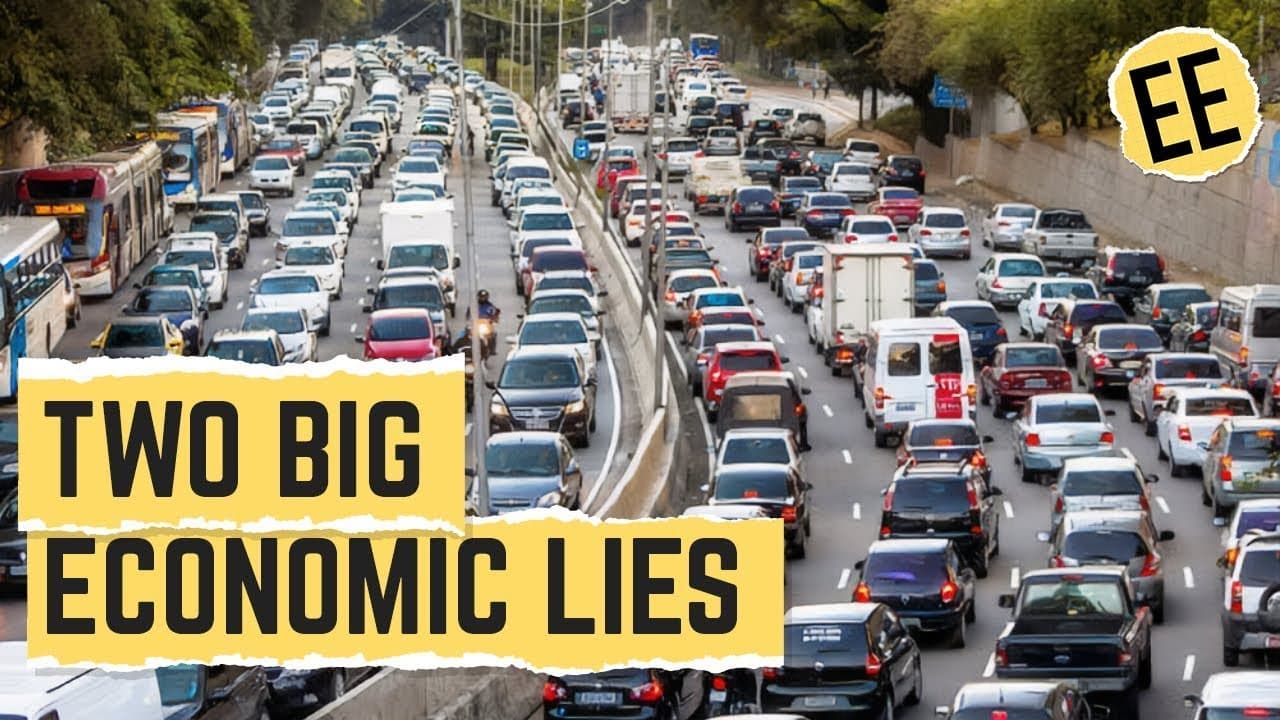
- Induced demand theory posits that increased infrastructure leads to more usage, but this is often misunderstood and misapplied.
- Examples like China's high-speed rail illustrate how misinterpretations of economies of scale can lead to costly mistakes.
- The concept of induced demand is often misused to argue against expanding infrastructure, despite its potential benefits.
- Public transport offers numerous advantages, but claims about induced demand should be critically assessed.
- Understanding these economic theories is crucial for informed decision-making in city planning and national policies.
Install to Summarize YouTube Videos and Get Transcripts
Explore YouTube Video Summarizer or Get YouTube Transcript Extractor
Questions & Answers
Q: What is the main focus of the video?
The video focuses on debunking common economic myths, specifically economies of scale and induced demand. It discusses how misunderstandings of these concepts can impact city planning, business growth, and national policies, leading to potentially costly mistakes. By clarifying these theories, the video aims to enhance understanding and informed decision-making.
Q: How does the video explain economies of scale?
The video explains economies of scale as a theory where increasing production reduces unit costs. However, it highlights that this can lead to diseconomies of scale if not managed properly. Through examples like a belt buckle business, it illustrates how oversimplification can lead to increased costs and challenges in scaling production efficiently.
Q: What example does the video use to illustrate a misunderstanding of economies of scale?
The video uses China's high-speed rail project as an example of misunderstanding economies of scale. Initially, it was assumed that expanding rail infrastructure would reduce costs, but it led to increased expenses and significant debt. This example highlights the importance of understanding the complexities of economies of scale to avoid costly economic decisions.
Q: What is induced demand, according to the video?
Induced demand is a theory that suggests increasing infrastructure, like roads, leads to higher usage. The video explains that this theory is often misunderstood, as it doesn't necessarily mean more infrastructure causes more congestion. Instead, it argues that expanding infrastructure can shift demand rather than creating new demand, emphasizing the need for critical assessment of this theory.
Q: How does the video critique the application of induced demand theory?
The video critiques the application of induced demand theory by highlighting its misuse in arguments against infrastructure expansion. It points out that while the theory suggests increased usage with more infrastructure, it doesn't inherently mean more congestion. The video emphasizes the importance of evaluating the theory critically to avoid misinformed decisions that could hinder infrastructure development.
Q: What benefits of public transport does the video mention?
The video mentions several benefits of public transport, including providing mobility for those who can't drive or afford a car, being more environmentally friendly, and improving urban living conditions by reducing noise and pollution. These benefits are presented as motivations for public investment in transport infrastructure, independent of the induced demand theory.
Q: Why does the video emphasize understanding economic theories?
The video emphasizes understanding economic theories to prevent costly mistakes in decision-making. Misinterpretations of theories like economies of scale and induced demand can lead to financial burdens and inefficient policies. By clarifying these concepts, the video aims to enhance informed decision-making in city planning, business growth, and national policies.
Q: What is the video's stance on economic misunderstandings?
The video's stance is that economic misunderstandings, particularly regarding economies of scale and induced demand, can lead to significant issues in policy and planning. It advocates for a clear understanding of these theories to avoid costly mistakes and improve decision-making processes in various economic contexts, from local city planning to national infrastructure projects.
Summary & Key Takeaways
-
The video explores economic misconceptions surrounding economies of scale and induced demand, emphasizing the complexity of human behavior over the subject itself. It highlights the potential for costly mistakes in city planning and national policies when these theories are misunderstood or misapplied.
-
Economies of scale can reduce unit costs, but if not managed correctly, they can lead to diseconomies of scale. This is illustrated through examples like China's high-speed rail, where misinterpretations led to significant financial burdens.
-
Induced demand theory suggests that increased infrastructure leads to more usage, often used to argue against expansion. However, the video argues that public transport offers numerous benefits, and claims about induced demand should be critically assessed to avoid misinformed decisions.
Read in Other Languages (beta)
Share This Summary 📚
Summarize YouTube Videos and Get Video Transcripts with 1-Click
Try YouTube Summary with ChatGPT & Claude or YouTube Transcript Generator
Explore More Summaries from Economics Explained 📚


Summarize YouTube Videos and Get Video Transcripts with 1-Click
Try YouTube Summary with ChatGPT & Claude or YouTube Transcript Generator