Scientist Stories: Frances Arnold, Directed Evolution and Protein Engineering
TL;DR
Scientists are using evolutionary algorithms to engineer new enzymes with unique catalytic capabilities, opening the door to a wide range of applications in chemistry and biology.
Transcript
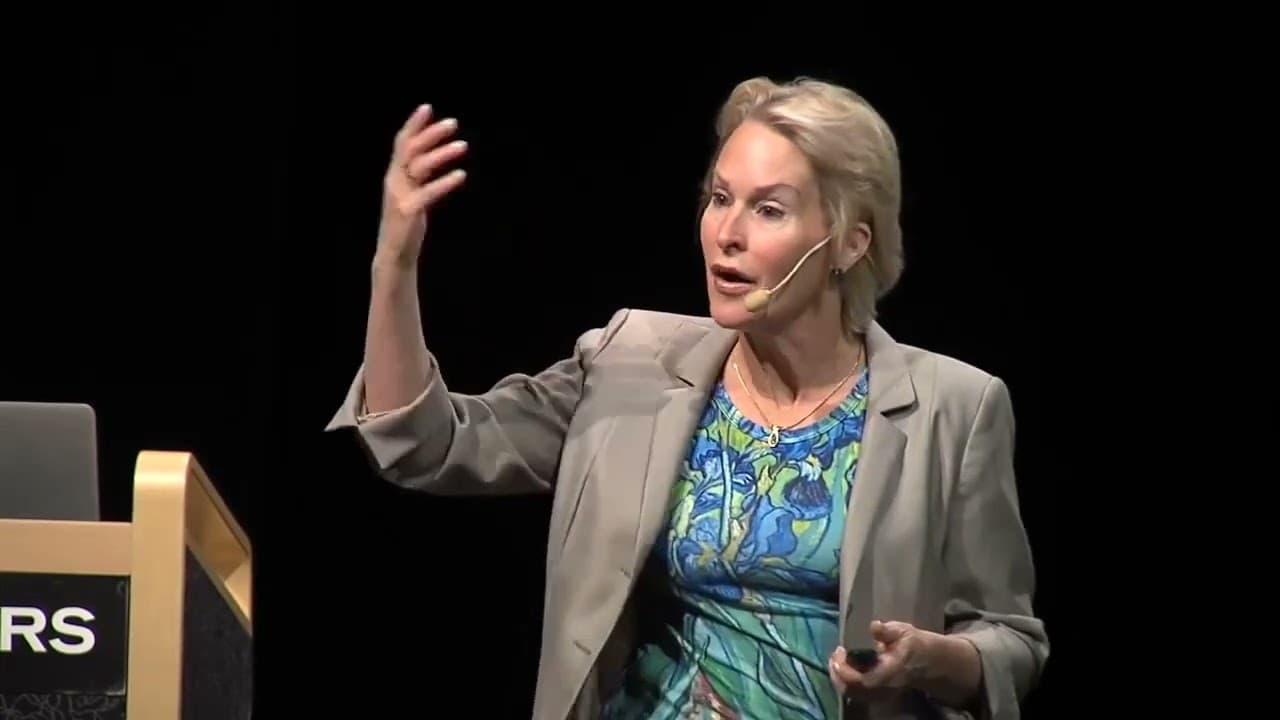
I'm glad it's almost over because I'm going to need a vacation after having so much fun with all your fabulous friends this has been scientists like parties too and I've noticed that you have friends who enjoy that so we had an amazing day yesterday and I want to start with something that Peter durvin said he told us that the goal of synthetic chem... Read More
Key Insights
- ♻️ Nature's microbes serve as an inspiration for green chemical synthesis, extracting energy and materials from the environment efficiently and cleanly.
- 👻 Synthetic chemistry allows scientists to genetically encode new enzyme functions and catalyze reactions not found in nature.
- 💨 The protein folding problem and the challenge of understanding mutations make the design of enzymes complex, but evolutionary algorithms offer a way to overcome these challenges.
Install to Summarize YouTube Videos and Get Transcripts
Explore YouTube Video Summarizer or Get YouTube Transcript Extractor
Questions & Answers
Q: How are scientists using synthetic chemistry to discover and invent new properties?
Scientists are leveraging the power of enzymes to create new materials and energy sources through green chemical synthesis. By reprogramming nature's microbes, they aim to produce abundant resources from renewable sources.
Q: Can enzymes be designed to catalyze reactions that are not already known in the biological world?
Yes, scientists are using evolutionary algorithms to design enzymes that can catalyze reactions outside of the natural repertoire. By introducing synthetic reagents into the enzyme's active site, they can manipulate its function and create entirely new chemical reactions.
Q: What challenges are faced in genetically encoding new enzyme functions?
One challenge is the protein folding problem, where the sequence of DNA encodes the polypeptide chain but not its specific three-dimensional structure. Additionally, predicting and understanding the mutations that occur during evolution is difficult, as mutations can happen anywhere in the protein sequence with unforeseen consequences.
Q: How many mutations are typically needed to create a new enzyme with practical use?
The number of mutations needed varies depending on the specific enzyme and desired function. In some cases, a single mutation may be sufficient, while in others, multiple mutations are required. The process of adapting and evolving enzymes can often occur rapidly, within a few generations.
Summary & Key Takeaways
-
Synthetic chemistry aims to discover and invent new properties through the use of enzymes.
-
Nature's microbes are incredibly efficient and clean at extracting energy and materials from the environment, making them an inspiration for future green chemical synthesis.
-
Evolution serves as an effective design algorithm, allowing scientists to genetically encode new enzyme functions and catalyze reactions not found in nature.
Read in Other Languages (beta)
Share This Summary 📚
Summarize YouTube Videos and Get Video Transcripts with 1-Click
Try YouTube Summary with ChatGPT & Claude or YouTube Transcript Generator
Explore More Summaries from Axial 📚

Summarize YouTube Videos and Get Video Transcripts with 1-Click
Try YouTube Summary with ChatGPT & Claude or YouTube Transcript Generator