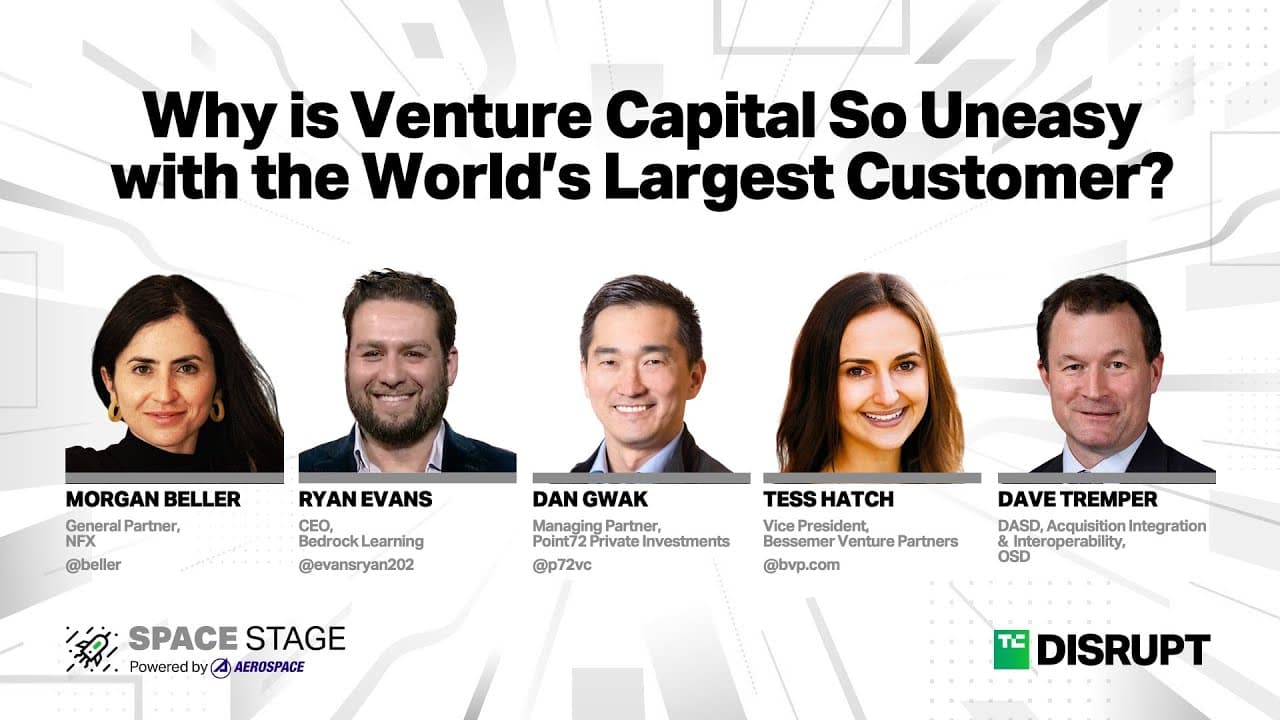
Why is Venture Capital So Uneasy with the World’s Largest Customer | TechCrunch Disrupt 2023
TL;DR
Venture capital firms in the US have historically been cautious about investing in defense tech startups due to long sales cycles and uncertainty about government contracts. However, recent developments in technology and potential geopolitical shifts have made the defense market more attractive.
Transcript
why is Venture Capital so uneasy with the world's largest customer the U.S Department of Defense is the world's biggest customer and is often eager to work with Innovative companies backed by venture capital unfortunately most of the largest Venture Capital firms in the United States are often gun shy or have a misunderstanding when it comes to bac... Read More
Key Insights
- 👋 Startup founders need to understand the nuances of selling to the government, including the long sales cycles and regulatory challenges, but they can find success by demonstrating a committed user and focusing on technology waves that can shift the global superpower balance.
- 💦 The Department of Defense is working on initiatives to facilitate the integration of disruptive technologies and bridge the communication gap between tech developers and the acquisition programs.
- 🧑💻 The venture capital industry and the government need to overcome communication barriers and develop a shared understanding of operational relevance to foster successful collaborations in defense tech.
Install to Summarize YouTube Videos and Get Transcripts
Explore YouTube Video Summarizer or Get YouTube Transcript Extractor
Questions & Answers
Q: Why have venture capital investors been cautious about investing in defense tech startups?
Historically, government contracts had long sales cycles and uncertainties about budget, authority, and user. This made it difficult for startups to operate at a sales velocity that aligns with their needs.
Q: What has changed in recent years to make the defense market more attractive?
The emergence of technology waves, such as AI and autonomy, that have the potential to shift the global superpower balance has made the defense market more attractive. The government is willing to invest in these technologies to maintain its technological edge.
Q: What are the challenges and benefits of selling to the government?
Selling to the government can be challenging due to long sales cycles, unpredictability, and regulatory hurdles. However, it offers access to the largest potential market, loyal customers, strong brand reputation, and non-dilutive funding opportunities through grants.
Q: How can startups navigate the challenges of selling to the government?
Startups can find success by securing year of execution investment as proof points, demonstrating a committed user and budget. They can also leverage the expertise of defense-focused venture capital firms and build bridges between the VC industry and the government.
Summary & Key Takeaways
-
Historically, it was considered a bad idea for startups to pursue government contracts due to long sales cycles and disconnection between budget, authority, and user. However, this perception is changing.
-
The catalyst for this change is the emergence of technology waves that have the potential to shift the global superpower balance, such as AI and autonomy.
-
Selling to the government can be daunting due to long sales cycles, unpredictability, and regulatory challenges. However, it offers access to the largest potential market, loyal customers, and non-dilutive funding opportunities.
Read in Other Languages (beta)
Share This Summary 📚
Summarize YouTube Videos and Get Video Transcripts with 1-Click
Try YouTube Summary with ChatGPT & Claude or YouTube Transcript Generator
Explore More Summaries from TechCrunch 📚


Summarize YouTube Videos and Get Video Transcripts with 1-Click
Try YouTube Summary with ChatGPT & Claude or YouTube Transcript Generator