How Did the 1983 Amendments to Social Security Change Benefits?

TL;DR
The 1983 amendments to Social Security aimed to ensure long-term solvency by gradually raising the retirement age and increasing tax rates. These changes were intended to address financial imbalances, with claims behavior shifting as retirees adjusted to the new rules. Understanding these amendments is crucial for informing future reforms.
Transcript
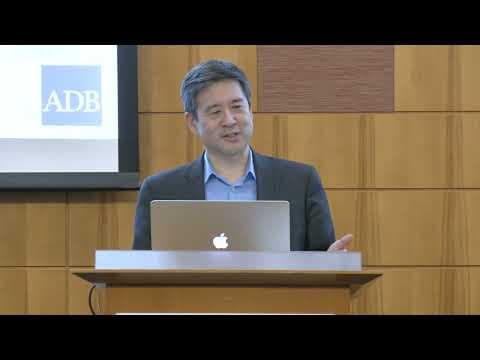
so it is a true Delight to introduce my co-author and friend Gina Lee Gina is currently a PhD student in the department of Economics at Stanford but in just about a month assuming everything goes well um she will earn her PhD after defending her dissertation and the summer she will be joining the Federal Reserve board as an economist in the microec... Read More
Key Insights
- 🛄 The 1983 amendments to Social Security aimed to ensure long-term solvency through changes in retirement age and tax rates.
- 📡 Behavioral responses to benefit claiming behavior highlighted the importance of incentives and signaling effects in retirement decisions.
- 🤕 Considerations for future reforms of Social Security should include assessments of retirement age, benefit structure, and tax rates.
Install to Summarize YouTube Videos and Get Transcripts
Explore YouTube Video Summarizer or Get YouTube Transcript Extractor
Questions & Answers
Q: How did the 1983 amendments change the retirement age and tax rates for Social Security?
The amendments increased the retirement age gradually to 67 and raised tax rates to ensure long-term financial stability.
Q: What were some considerations in the design of the 1983 amendments to Social Security to address long-term solvency?
The amendments focused on uniform changes like raising the retirement age and increasing tax rates to keep the program financially secure over 75 years.
Q: How did the behavioral response to benefit claiming behavior impact the effectiveness of the 1983 amendments?
Changes in benefit claiming behavior, influenced by the amendments, highlighted the importance of understanding incentives and signaling effects in retirement decisions.
Q: What implications do decisions around the retirement age and benefit structure of Social Security have on future reforms?
Decisions on retirement age, benefit formula, and tax rates in Social Security reforms are crucial for ensuring long-term financial stability while considering societal impacts and equity.
Summary & Key Takeaways
-
1983 amendments to Social Security were meant to ensure 75-year solvency by raising the retirement age and increasing tax rates.
-
Tax rate increases and delayed retirement age aimed to ensure the program's financial stability for future generations.
-
Changes in benefit claiming behavior and signaling effects of retirement age impacted the response to the amendments.
Read in Other Languages (beta)
Share This Summary 📚
Summarize YouTube Videos and Get Video Transcripts with 1-Click
Try YouTube Summary with ChatGPT & Claude or YouTube Transcript Generator
Explore More Summaries from Stanford Institute for Economic Policy Research (SIEPR) 📚





Summarize YouTube Videos and Get Video Transcripts with 1-Click
Try YouTube Summary with ChatGPT & Claude or YouTube Transcript Generator