Your Brain on Story
TL;DR
Understanding the neural mechanisms of storytelling and how it influences engagement, transportation, relevance, and influence.
Transcript
so I'm very happy to introduce to you Kendall Haven from West Point to degree in oceanography to becoming a master storyteller and he's had an opportunity to understand how people respond to stories and to study in fact to do some of the science of storytelling and he's going to talk tonight about your brain on stories so Kendall Haven thank you ye... Read More
Key Insights
- 🧠 Storytelling has been an integral part of human communication and memory storage for over 150,000 years, rewiring the human brain to make sense of the world in story terms.
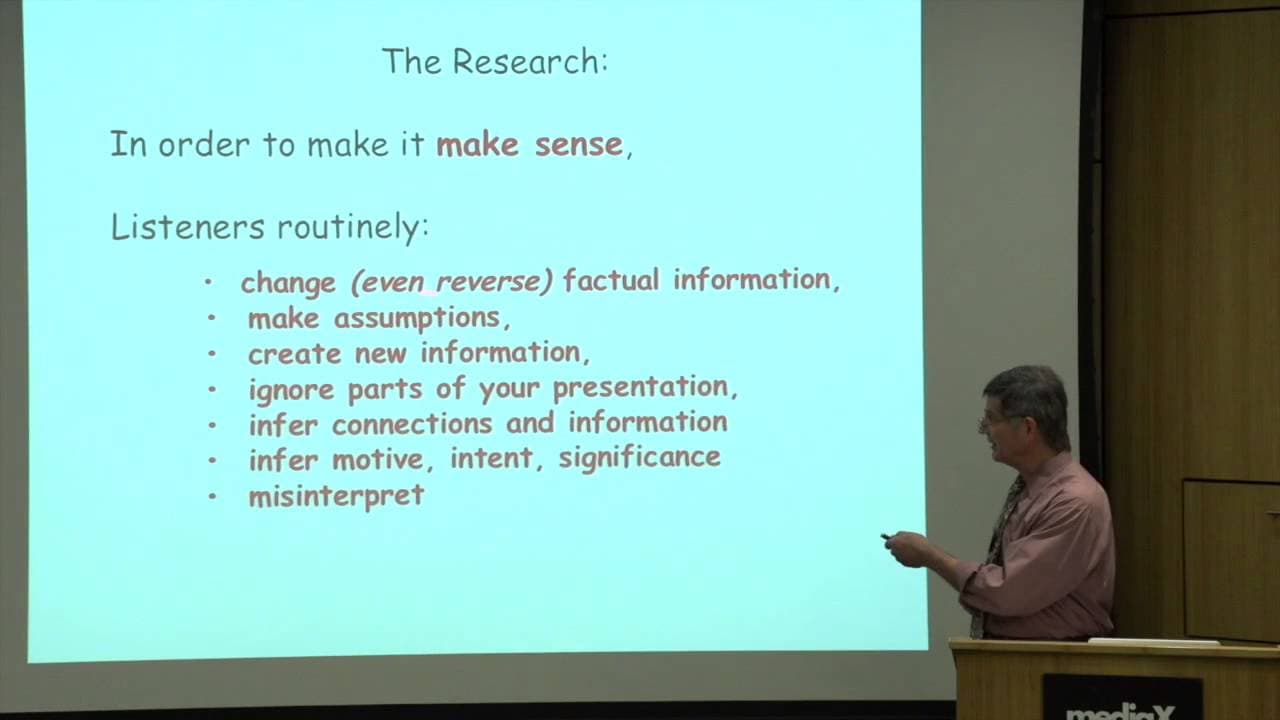
- 🧠 The neural story net, a fixed connection of brain regions, distorts incoming information into story form to meet the brain's innate "make sense mandate."
- 🤩 Characters, goals, motives, conflicts, and emotional involvement are key elements in storytelling that control engagement, transportation, relevance, and influence.
Install to Summarize YouTube Videos and Get Transcripts
Explore YouTube Video Summarizer or Get YouTube Transcript Extractor
Questions & Answers
Q: Why are humans so attracted to stories?
Humans are hardwired to make sense of the world in story terms, as storytelling served as a vital means of communication and memory storage before the advent of writing.
Q: How does storytelling impact engagement?
Engagement is emotionally laden attention, and story structure automatically engages listeners at an emotional level, allowing information to flow and fully engage the audience.
Q: How does transportation relate to empathy and trust?
Transportation, or immersing oneself in a story, is a precursor to empathy and trust. If individuals can transport themselves into a story, they are more likely to trust and engage with it.
Q: What is the key to influencing attitudes and behavior through storytelling?
Engagement is the essential gateway to influence, and storytelling elements such as character, goal, climax, and emotional involvement play a significant role in changing attitudes, beliefs, knowledge, and behavior.
Summary & Key Takeaways
-
Storytelling has a profound effect on people, but the reasons behind this phenomenon were previously unknown.
-
The neural study of storytelling has revealed that engagement is emotionally laden attention and is essential for influence.
-
The neural story net, a fixed connection of brain regions, distorts incoming information into story form before reaching the conscious mind.
Read in Other Languages (beta)
Share This Summary 📚
Summarize YouTube Videos and Get Video Transcripts with 1-Click
Try YouTube Summary with ChatGPT & Claude or YouTube Transcript Generator
Explore More Summaries from Stanford 📚





Summarize YouTube Videos and Get Video Transcripts with 1-Click
Try YouTube Summary with ChatGPT & Claude or YouTube Transcript Generator