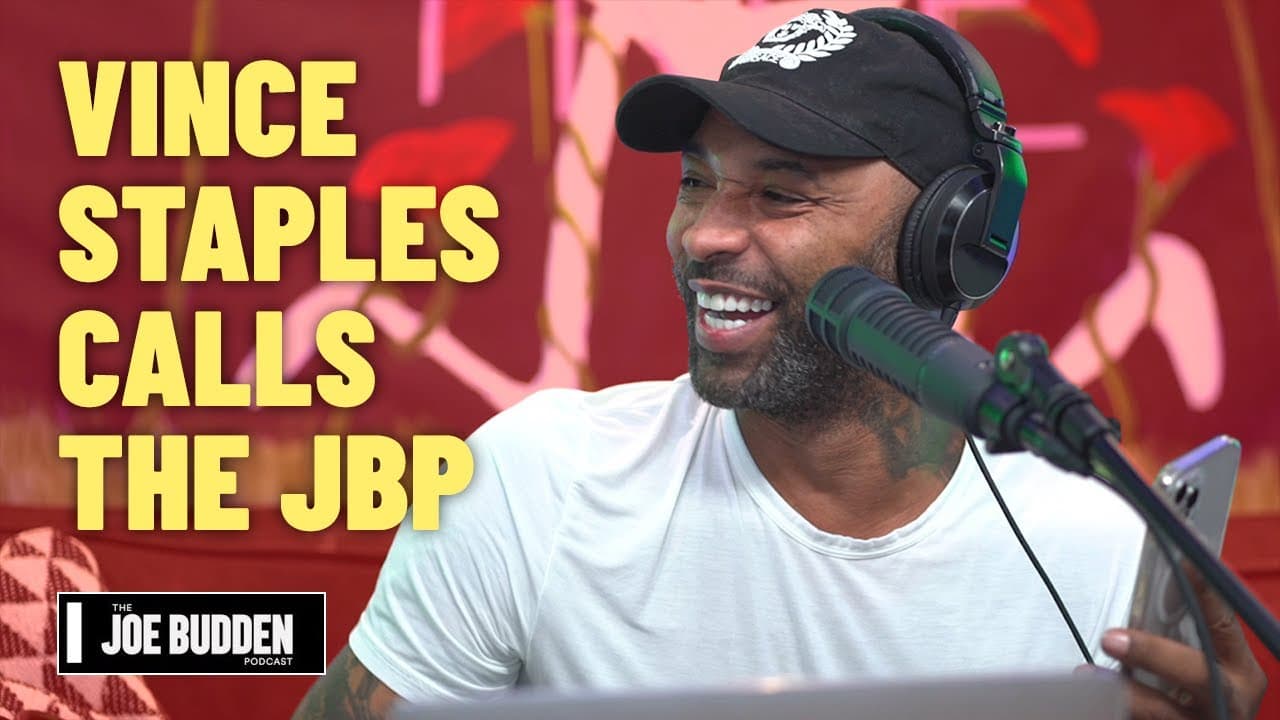
Vince Staples Calls The JBP | The Joe Budden Podcast
TL;DR
Freddie Gibbs and Vince Staples discuss underground hip-hop and industry success, highlighting differing views on authenticity.
Transcript
freddie gibbs i'm pretty dead i don't want to talk about it but guys all about y'all phony too because you only want to talk about when cassidy clapped back at tory lane we skipped that one we skipped that beat together good either though like we didn't care yeah but he tried did him was it worth talking freddie gibbs put a freestyle out over drake... Read More
Key Insights
- 🤞 Gibbs showcases his lyrical prowess through a freestyle, reinforcing the competitive spirit of hip-hop.
- 🍉 The debate between Gibbs and Staples reveals the complexities surrounding the terms “underground” and “mainstream” in the music industry.
- 🧑🎨 Staples’ critique of current definitions of underground highlights how visibility and opportunity affect artists’ identities.
- 🤞 The conversation reflects a broader issue in hip-hop culture regarding how artists navigate commercial success while staying true to their roots.
- 🤞 Both artists highlight the necessity of competition in driving quality and authenticity in hip-hop music.
- 🏷️ The discussion underscores the varying perceptions of label support and its impact on artistic integrity.
- 🧑🎨 Each artist presents their perspective on hip-hop as a genre that evolves with its artists while maintaining specific cultural context.
Install to Summarize YouTube Videos and Get Transcripts
Explore YouTube Video Summarizer or Get YouTube Transcript Extractor
Questions & Answers
Q: What key theme does Freddie Gibbs explore in his freestyle?
Freddie Gibbs emphasizes his confidence in his rap skills while calling out the competition in the industry. Through his freestyle over Drake's intro, he challenges other rappers' claims to the top spot, asserting that he can rap on the same level as the best in the game. This self-assertion sparks discussions on the dynamics of hip-hop rivalry.
Q: How does Vince Staples respond to being labeled as "underground"?
Vince Staples contests the notion of being "underground," suggesting that his opportunities, such as his visibility in media and festival appearances, reflect a broader spectrum of success beyond purely underground status. He argues that being an underground artist isn't simply about the type of music you produce but also about the visibility and the commercial opportunities available to the artist.
Q: What do Gibbs and Staples say about the importance of competition in hip-hop?
Both artists agree that competition is critical in hip-hop culture. Gibbs believes artists should assert themselves against their peers, signaling their confidence and ability to compete, even if the other party chooses to ignore them, as he anticipates Kendrick Lamar will. Staples acknowledges this sentiment, indicating that it’s a foundational element of hip-hop identity.
Q: How does Gibbs perceive the reactions to his freestyle?
Gibbs feels that his freestyle should be celebrated within hip-hop circles, as it encapsulates the proper "real" strategy of asserting one’s place in the rap hierarchy. He expresses frustration with perceptions that may overlook the significance of his work and insists that acknowledging freestyles and lyrical talent is integral to hip-hop culture.
Q: What does Vince Staples say about his brand versus his music?
Vince Staples suggests that while his music may be labeled as underground, his brand carries mainstream appeal, aided by a robust management team and commercial opportunities. He argues that being commercially viable doesn't diminish his authenticity, challenging the preconception that to be true to the underground, one must remain isolated from the mainstream.
Q: How do Gibbs and Staples differ in their views on label support?
Gibbs argues that he navigated his career without significant label support, seeing himself as an independent artist who shaped his own path. Staples, on the other hand, acknowledges his label's role in providing opportunities but asserts that this doesn't negate his origins or authenticity in the underground scene, highlighting a complex relationship with the industry.
Q: In what ways do Gibbs and Staples discuss the evolution of personal identity in hip-hop?
The discussion touches on how personal identity in hip-hop is shaped by various factors, including commercial success, authenticity, and community ties. Gibbs describes his evolution as a reflection of competition, while Staples emphasizes the importance of balancing one's roots with the realities of a successful career, ultimately leading to differing interpretations of what it means to be truly "underground."
Q: What conclusions do Gibbs and Staples arrive at regarding their identities?
Gibbs and Staples finish their conversation by recognizing the subjective nature of identities within hip-hop. While Gibbs remains assertive about his status as an underground artist who is confident in competing at high levels, Staples articulates that the underground can coalesce with mainstream success, revealing multiple layers of identity within the hip-hop genre.
Summary & Key Takeaways
-
Freddie Gibbs expresses confidence in his lyrical skills through a freestyle over Drake's intro, challenging the status of other rappers and positioning himself as a top artist.
-
A lively debate unfolds between Gibbs and Vince Staples about the definitions of "underground" artists while Staples argues his mainstream success does not negate his roots.
-
The conversation dives into the nature of support from major labels and how it affects the definition and perception of being an underground artist.
Read in Other Languages (beta)
Share This Summary 📚
Summarize YouTube Videos and Get Video Transcripts with 1-Click
Try YouTube Summary with ChatGPT & Claude or YouTube Transcript Generator
Explore More Summaries from Joe Budden TV 📚

Summarize YouTube Videos and Get Video Transcripts with 1-Click
Try YouTube Summary with ChatGPT & Claude or YouTube Transcript Generator