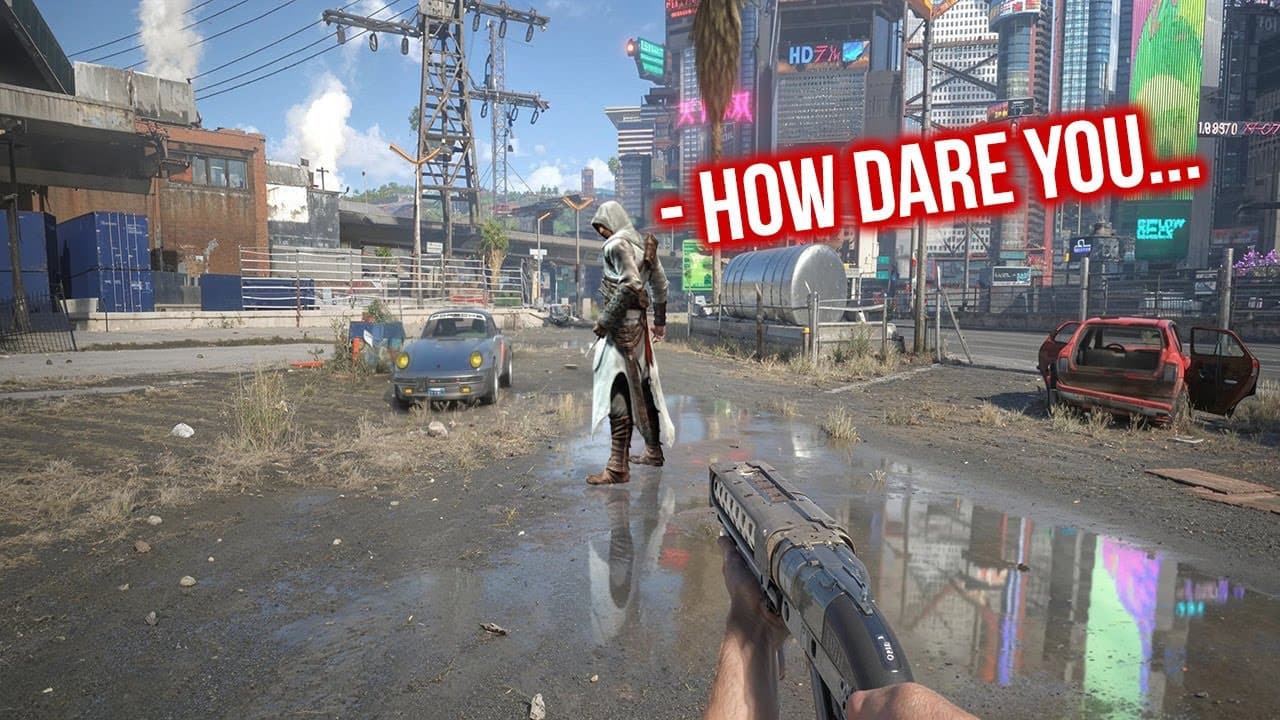
10 Game Companies That HATE EACH OTHER
TL;DR
Game companies often have intense rivalries driven by competition.
Transcript
(game jingle) - [Falcon] Game companies are constantly trying to milk the customer outta more money. It's easy to think, wow, they hate us. But there's one thing that game companies hate more than the consumer and it's other game companies. Hi folks, it's Falcon, and today on Gameranx, 10 game companies who absolutely hate each other. Getting start... Read More
Key Insights
- 🥺 Rivalries in the gaming industry often arise from strategic business decisions that can lead to public betrayals and corporate fallout.
- 🚀 Historical contexts, such as failed partnerships or product launches, can define the nature of these rivalries and their escalation over time.
- 🧑🚒 Competitive dynamics often translate into aggressive marketing and product differentiation strategies as companies fight for market share.
- 👾 Game mechanics and concepts are frequently at the center of disputes among developers, showcasing the blurred lines of originality in game design.
- 😈 Public perception can heavily influence narratives surrounding conflicts, often oversimplifying complex corporate relationships into good versus evil.
- 🎮 Personalities behind game development play a significant role in shaping the culture and competitive spirit between companies.
- 👶 The evolving landscape of digital storefronts, such as Steam and Epic, showcases how new entrants can disrupt established monopolies and impact developer relationships.
Install to Summarize YouTube Videos and Get Transcripts
Explore YouTube Video Summarizer or Get YouTube Transcript Extractor
Questions & Answers
Q: What are some reasons for the rivalry between Sony and Nintendo?
The rivalry stems from a historical betrayal when Nintendo abandoned a partnership with Sony to work with Phillips. Nintendo suspected Sony aimed to use their knowledge to create a competing console. Despite their differences in target audiences, their competition continues, especially in exclusive titles and overall market presence.
Q: How did the Epic Store's entry impact Steam's dominance?
Epic's competitive strategy focused on reducing the developer fee from 30% to 12%, challenging Steam's longstanding dominance. This rivalry has led to a market where Epic tries to attract developers with better terms and exclusive titles, although Valve remains largely tight-lipped regarding their competitor’s tactics and maneuvers.
Q: What fueled the animosity between Respawn Entertainment and Activision?
The animosity began when Activision fired the creators of "Call of Duty," Jason West and Vince Zampella, who subsequently founded Respawn Entertainment. Accusations of conspiracy and unfair treatment further stoked tensions, leading to industry shifts highlighted by the successes of Respawn, particularly with "Titanfall" and the revival of "Battlefield."
Q: Why did Blizzard and NetEase's partnership end?
Their partnership ended over disagreements regarding changes to their agreement, reportedly with NetEase seeking more lucrative terms. The fallout included public displays of anger from NetEase, such as destroying Blizzard memorabilia, showcasing the intensity of their dispute despite their prior successful collaboration.
Q: How did Rockstar's rivalry with the "True Crime" series manifest?
Rockstar used humorous jabs against the "True Crime" series through in-game references and missions that mocked its failures. The rivalry highlighted Rockstar's supremacy in the open-world genre, allowing them to capitalize on their success while "True Crime" struggled to compete.
Q: What triggered PUBG's lawsuit against Fortnite?
PUBG filed a lawsuit claiming that "Fortnite" copied several gameplay mechanics and concepts from its game. Although there was some legitimacy to the claim, the lawsuit was dropped quickly, showing the complex nature of perceived similarities in game mechanics, which often can't be legally protected.
Q: How has the perception of Bethesda and Obsidian's relationship shaped fan narratives?
The fan narrative often posits that Bethesda mistreats Obsidian, particularly regarding "Fallout: New Vegas" compared to other "Fallout" titles. While Obsidian's history with the IP adds to this perception, the reality involves business decisions that complicate the relationship, leading fans to take sides based largely on their preferences for the storytelling styles.
Q: What did EA's attempt to purchase Take-Two reveal about corporate dynamics?
EA's failed bid to acquire Take-Two for $2 billion displayed aggressive corporate strategies amid market exploitation. The attempt emphasized EA's ambition to consolidate power in the industry; however, Take-Two's subsequent growth highlights the volatility and unpredictability of mergers and acquisitions in the gaming sector.
Summary & Key Takeaways
-
The video discusses ten notable rivalries among major game companies, highlighting how these conflicts stem from competition for market share and consumer loyalty.
-
Each rivalry is examined for its historical context, revealing decisions and actions that led to long-lasting animosity, such as corporate betrayals and competitive product launches.
-
The presentation emphasizes that while consumers may feel antagonized by these companies, the true rivalry often exists among the corporations themselves, with underlying motivations tied to financial gain and market dominance.
Read in Other Languages (beta)
Share This Summary 📚
Summarize YouTube Videos and Get Video Transcripts with 1-Click
Try YouTube Summary with ChatGPT & Claude or YouTube Transcript Generator
Explore More Summaries from gameranx 📚
Summarize YouTube Videos and Get Video Transcripts with 1-Click
Try YouTube Summary with ChatGPT & Claude or YouTube Transcript Generator