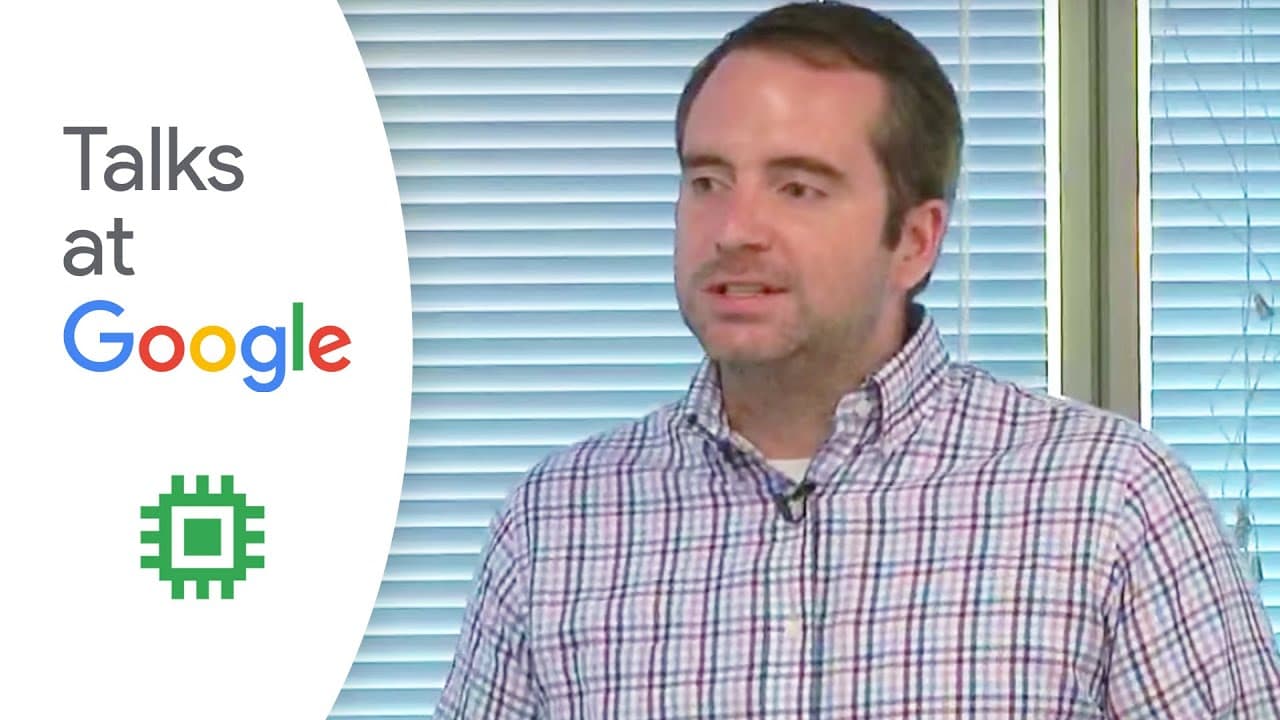
Data-Driven Astronomy Discoveries | John Bochanski | Talks at Google
TL;DR
Large astronomical surveys like Sloan and LSST are shaping the future of astronomy by mapping the structure of the Milky Way and discovering distant stars.
Transcript
JUSTIN: I wanted to introduce John. We have a great astronomy focused talk today. John Bochanski, a professor of physics at Rider University is joining us. He'll discuss how large digital surveys of the night sky have revolutionized how astronomy is done. He will also explore the motivation behind large surveys, detail some of his results, and disc... Read More
Key Insights
- 🤩 Large digital surveys like Sloan and LSST have revolutionized astronomy by mapping the Milky Way and discovering distant stars.
- 🤩 Spectra provide detailed information about the composition, velocity, and intrinsic properties of stars and galaxies.
- 🕵️ Telescopes like James Webb Space Telescope and Gaia focus on detecting exoplanets and studying planetary companions for groundbreaking discoveries.
- 🥺 The public can interact with the data from these surveys, potentially leading to exciting new discoveries and insights.
Install to Summarize YouTube Videos and Get Transcripts
Explore YouTube Video Summarizer or Get YouTube Transcript Extractor
Questions & Answers
Q: How do large digital surveys revolutionize astronomy?
Large surveys like Sloan and LSST map the structure of the Milky Way, discover distant stars, and provide valuable data for astronomers to study.
Q: How do astronomers use spectra to gather information about stars and galaxies?
Spectra provide detailed information about the composition, velocity, and intrinsic properties of stars and galaxies, offering insights beyond what images alone can provide.
Q: What is the primary aim of telescopes like James Webb Space Telescope and Gaia in the field of astronomy?
The James Webb Space Telescope and Gaia aim to detect exoplanets, study planetary companions, and enhance our understanding of the universe through advanced imaging techniques.
Q: How can the public interact with the data obtained from large surveys like LSST?
The data from these surveys will be made public, allowing anyone with an internet connection to access and analyze the information, potentially leading to exciting discoveries and new insights.
Summary & Key Takeaways
-
Professor John Bochanski discusses the impact of large digital surveys on astronomy, focusing on mapping the Milky Way galaxy.
-
Large surveys like Sloan and LSST provide detailed images and spectra of millions of stars and galaxies, enabling groundbreaking discoveries.
-
Future telescopes like the James Webb Space Telescope and Gaia will further enhance our understanding of the universe.
Read in Other Languages (beta)
Share This Summary 📚
Summarize YouTube Videos and Get Video Transcripts with 1-Click
Try YouTube Summary with ChatGPT & Claude or YouTube Transcript Generator
Explore More Summaries from Talks at Google 📚

Summarize YouTube Videos and Get Video Transcripts with 1-Click
Try YouTube Summary with ChatGPT & Claude or YouTube Transcript Generator