The 4% Rule for Retirement (FIRE)

TL;DR
The 4% rule suggests that spending 4% of your assets in the initial year of retirement, adjusted for inflation, will prevent you from running out of money. However, this rule may not be the best approach for retirement planning, especially for early retirees.
Transcript
If you have spent any time researching retirement planning online, you have heard of the 4% rule. If you haven’t heard of it, the 4% rule suggests that if you spend 4% of your assets in your initial year of retirement, and then adjust for inflation each year going forward, you will be unlikely to run out of money. To put some numbers to it... Read More
Key Insights
- ⚾ The 4% rule was based on historical US market data, which may not be applicable globally or for longer retirement periods.
- ↩️ Expected future returns are uncertain, and using historical data to predict the future may not be accurate.
- ❓ Variable spending and adjusting for market conditions can improve the sustainability of a retirement portfolio.
- 🤱 Fees play a crucial role in retirement planning, as higher fees reduce the safe withdrawal rate and overall spending.
- ☠️ The value of good financial advice can potentially offset fees and positively impact the safe withdrawal rate.
- ☠️ Conservative safe withdrawal rates may be necessary for longer retirement periods, such as in the case of early retirees.
- 💄 Considering individual circumstances and making informed financial decisions are important in retirement planning.
Install to Summarize YouTube Videos and Get Transcripts
Explore YouTube Video Summarizer or Get YouTube Transcript Extractor
Questions & Answers
Q: What is the 4% rule and how does it work?
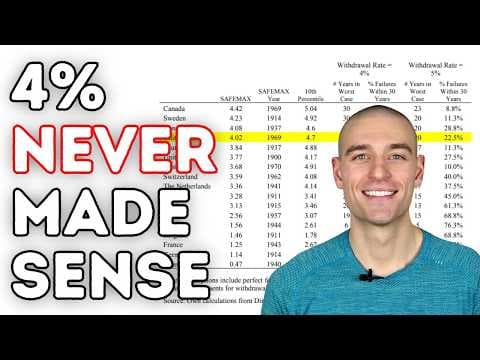
The 4% rule suggests that retirees spend 4% of their portfolio in the first year of retirement and adjust for inflation in subsequent years. This rule is based on historical data and aims to ensure the portfolio lasts for at least 30 years.
Q: Why is the 4% rule not the best approach for retirement planning?
The 4% rule may not be suitable for early retirees or those facing longer retirement periods. Analyzing global data shows lower safe withdrawal rates, and expected future returns and fees should also be considered.
Q: How can variable spending impact retirement planning?
Variable spending allows retirees to adjust their spending based on market performance. By spending more in good markets and less in bad markets, retirees can optimize their overall spending while reducing the risk of running out of money.
Q: How do fees affect the safe withdrawal rate?
Fees can significantly impact the safe withdrawal rate. Higher fees reduce the safe withdrawal rate, as they eat into investment returns. Considering low-cost investment options and the value received from financial advice is important.
Summary & Key Takeaways
-
The 4% rule originated in a 1994 study by William Bengen, which found that a 4% withdrawal rate was safe for 30-year retirement periods based on historical US market data.
-
However, recent analyses using global data and considering longer retirement periods suggest lower safe withdrawal rates, such as 3.5% over 30 years.
-
Variable spending, combining expected future returns with current market conditions, and factoring in fees are important considerations in retirement planning.
Read in Other Languages (beta)
Share This Summary 📚
Summarize YouTube Videos and Get Video Transcripts with 1-Click
Try YouTube Summary with ChatGPT & Claude or YouTube Transcript Generator
Explore More Summaries from Ben Felix 📚




Summarize YouTube Videos and Get Video Transcripts with 1-Click
Try YouTube Summary with ChatGPT & Claude or YouTube Transcript Generator