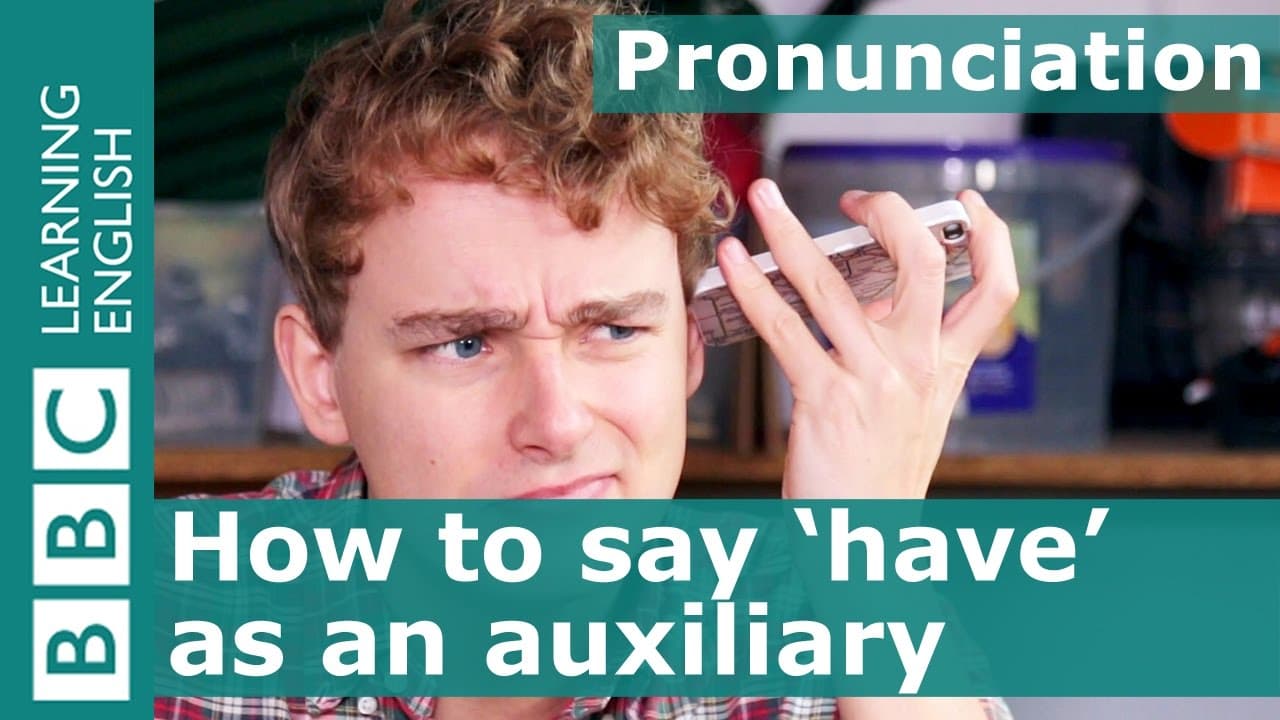
Pronunciation: How to pronounce 'have' when it's an auxiliary
TL;DR
Learn how 'have' is pronounced as an auxiliary verb.
Transcript
Hi. I'm Tim and this is my Pronunciation workshop. Here I'm gonna show you how English is really spoken. Come on, let's go inside. Phew, just made it. A little bit late today. My alarm didn't go off this morning, so, I nearly missed the bus. Err... Tim, why do you need a bus to get to the shed at the end of your garden? Well, you know it's a really... Read More
Key Insights
- The pronunciation of 'have' changes when used as an auxiliary verb, often contracting to /əv/ after a consonant.
- Tim humorously introduces the workshop, revealing it's borrowed from a friend, adding a light-hearted tone.
- In conditional sentences, 'have' is commonly contracted, as in 'I'd've' instead of 'I would have'.
- Examples show 'have' contracted in various contexts: 'should've', 'would've', 'might've', and 'police've'.
- Listeners are encouraged to practice pronunciation with examples, reinforcing learning through repetition.
- The video emphasizes real spoken English, bridging the gap between textbook and conversational language.
- Tim uses a relatable scenario of a missed alarm to introduce the pronunciation lesson, engaging the audience.
- The workshop invites viewers to explore more pronunciation tips on the BBC Learning English website.
Install to Summarize YouTube Videos and Get Transcripts
Explore YouTube Video Summarizer or Get YouTube Transcript Extractor
Questions & Answers
Q: What is the main focus of Tim's pronunciation workshop?
The main focus of Tim's pronunciation workshop is to teach viewers how the verb 'have' is pronounced when used as an auxiliary. He explains that it often contracts to /əv/ after a consonant sound, particularly in conditional sentences, and provides examples for practice.
Q: How does Tim make the workshop engaging for viewers?
Tim makes the workshop engaging by using humor and relatable situations, such as the scenario of nearly missing a bus due to a missed alarm. He also reveals that the workshop is borrowed from a friend, adding a light-hearted touch to the learning experience.
Q: What examples does Tim provide to illustrate the contracted pronunciation of 'have'?
Tim provides several examples to illustrate the contracted pronunciation of 'have', including 'I'd've' for 'I would have', 'should've' for 'should have', 'might've' for 'might have', and 'police've' for 'police have'. These examples demonstrate how 'have' contracts to /əv/ in spoken English.
Q: Why does Tim encourage repetition in the workshop?
Tim encourages repetition in the workshop because it helps reinforce learning and aids in mastering the pronunciation of 'have' as an auxiliary verb. By listening and repeating the examples, viewers can better internalize the contractions and improve their spoken English skills.
Q: What scenario does Tim use to introduce the pronunciation lesson?
Tim uses the scenario of nearly missing a bus due to a missed alarm to introduce the pronunciation lesson. This relatable situation sets the stage for discussing how 'have' is pronounced in conditional sentences, making the lesson more engaging and memorable for viewers.
Q: How does the video bridge the gap between textbook and conversational English?
The video bridges the gap between textbook and conversational English by focusing on how 'have' is pronounced in real spoken language. It highlights the difference between formal and informal speech, showing how contractions like 'I'd've' are used in everyday conversation to sound more natural.
Q: What additional resources does Tim suggest for learning more about pronunciation?
Tim suggests visiting the BBC Learning English website for additional resources on pronunciation. This website offers a wealth of information and exercises to help learners improve their English pronunciation, providing further opportunities to practice and refine their skills beyond the workshop.
Q: How does Tim conclude the pronunciation workshop?
Tim concludes the pronunciation workshop by encouraging viewers to practice the examples and visit the BBC Learning English website for more learning materials. He humorously struggles with an alarm, adding a playful ending to the session, and bids farewell to viewers until the next workshop.
Summary & Key Takeaways
-
Tim's pronunciation workshop focuses on how 'have' is pronounced when used as an auxiliary verb, often contracting to /əv/ after consonants. He uses real-life scenarios and examples to illustrate this pronunciation change, encouraging viewers to practice and explore more on the BBC Learning English website.
-
The video uses humor and relatable situations to engage viewers while teaching them about the pronunciation of 'have' in conditional sentences. It provides examples like 'I'd've' and 'should've', demonstrating how these contractions are used in everyday speech to make English sound more natural.
-
Tim's workshop emphasizes the importance of understanding real spoken English, offering practical examples and encouraging repetition for better learning. The content is designed to help learners transition from textbook English to natural, conversational language, with further resources available online.
Read in Other Languages (beta)
Share This Summary 📚
Summarize YouTube Videos and Get Video Transcripts with 1-Click
Try YouTube Summary with ChatGPT & Claude or YouTube Transcript Generator
Explore More Summaries from BBC Learning English 📚
Summarize YouTube Videos and Get Video Transcripts with 1-Click
Try YouTube Summary with ChatGPT & Claude or YouTube Transcript Generator