Cool Explosions and Bags of Hydrogen - Periodic Table of Videos
TL;DR
Cooling hydrogen-filled balloons with liquid nitrogen alters combustion noise due to slower gas expansion.
Transcript
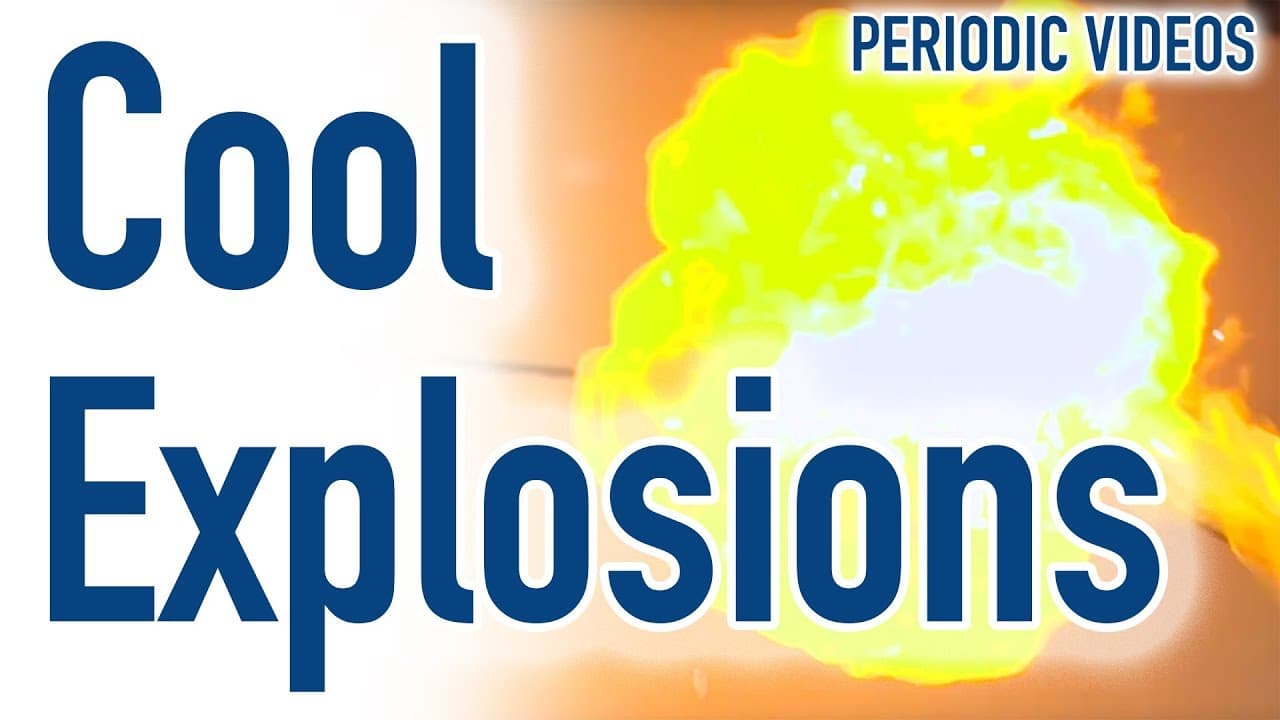
Brady, Neil and Darren have done another slightly strange experiment They decided to cool balloons down, balloons containing hydrogen with liquid nitrogen And of course when you cool a gas, it contracts and the balloon follows down But of course as the balloon get smaller, its weight doesn't change, it displaces less air And it can't float. And as ... Read More
Key Insights
- 🫢 Cooling a gas in a balloon alters its behavior by decreasing pressure and slowing expansion.
- 🫢 Combustion noise is influenced by the rate of gas expansion and pressure in the balloon.
- 🫢 Testing hypotheses with alternative containers like plastic bags can provide additional insights into gas reactions.
- 💬 Factors like tension in rubber and air mixture affect combustion reactions in hydrogen-filled balloons.
- 🫢 Observing differences in combustion noise helps understand the impact of gas behavior on explosive reactions.
- 🫢 The combination of slow gas expansion and decreased pressure in cold balloons affects combustion dynamics.
- 💬 Alternative setups like hydrogen-filled plastic bags can replicate balloon experiments with varying combustion outcomes.
Install to Summarize YouTube Videos and Get Transcripts
Explore YouTube Video Summarizer or Get YouTube Transcript Extractor
Questions & Answers
Q: Why does a cold hydrogen-filled balloon make less noise when ignited?
A cold balloon contracts due to lower pressure and slower gas expansion, resulting in a less explosive combustion when ignited compared to a warm balloon.
Q: How did the experimenters test the theory without using balloons?
The experimenters used hydrogen-filled plastic bags, manipulating variables like tension and air mixture to replicate the conditions of a balloon filled with hydrogen.
Q: What was the result of using a hydrogen-filled plastic bag that allowed air to mix with the gas?
The mixture of hydrogen and oxygen in the plastic bag produced a more convincing pop when ignited, proving that air mixture affects combustion noise.
Q: What were the key findings of the experiment with cold balloons and hydrogen gas?
The experiment revealed that slower gas expansion and lower pressure in cold balloons contribute to reduced combustion noise, highlighting the factors affecting explosive reactions.
Summary & Key Takeaways
-
Cooling a hydrogen-filled balloon with liquid nitrogen causes it to contract and sink due to lower pressure and slower gas expansion.
-
When the cold balloon is ignited, it produces less explosive noise compared to a warm balloon.
-
Testing the theory in different scenarios with hydrogen-filled plastic bags supports the hypothesis of slower gas expansion and lower pressure.
Read in Other Languages (beta)
Share This Summary 📚
Summarize YouTube Videos and Get Video Transcripts with 1-Click
Try YouTube Summary with ChatGPT & Claude or YouTube Transcript Generator
Explore More Summaries from Periodic Videos 📚


Summarize YouTube Videos and Get Video Transcripts with 1-Click
Try YouTube Summary with ChatGPT & Claude or YouTube Transcript Generator