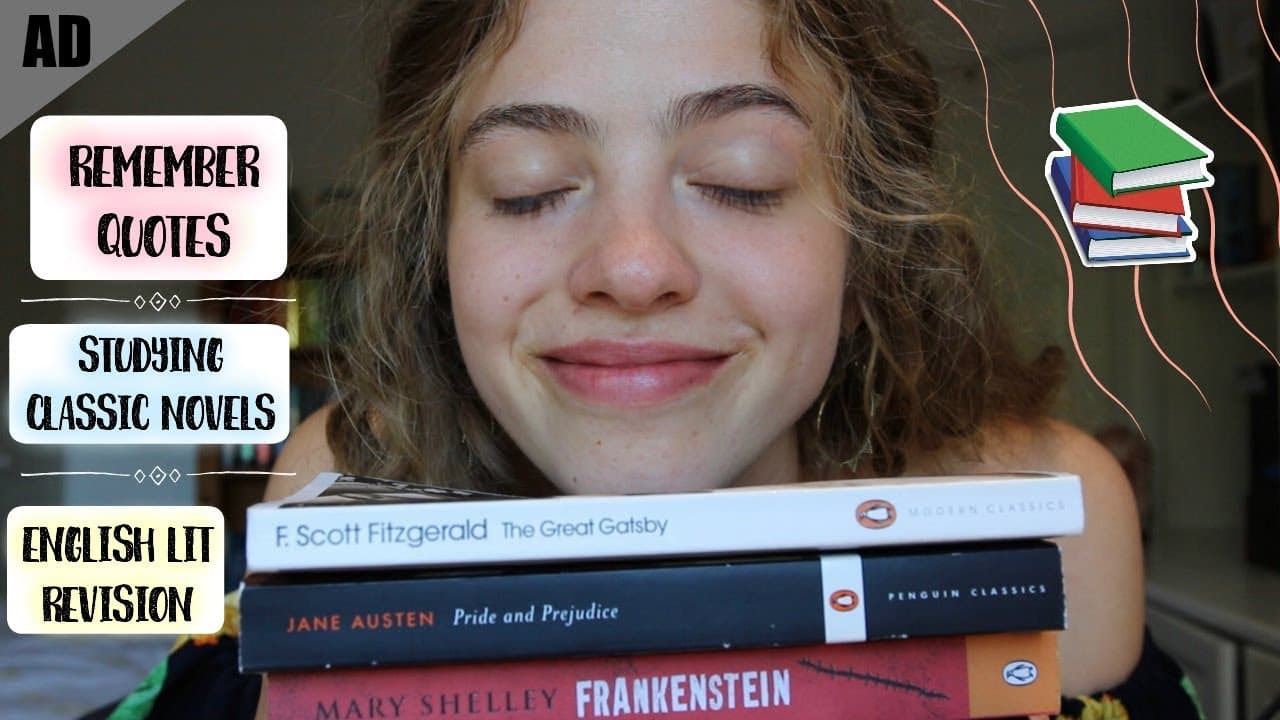
English Lit: 8 Tips for Successfully Studying Classics 📚
TL;DR
Learn effective strategies for studying classic literature in school and beyond.
Transcript
hey there guys and welcome back to unjaded Jade welcome to a comprehensive guide to successfully studying classics for school or uni or even in your free time at the end of the day I am no expert but I've always loved reading I love classics and I did study English literature to a yes and I did get an A at the end of the year which is like the high... Read More
Key Insights
- 🏛️ Engaging with classic literature for pleasure beforehand can enhance critical analysis and appreciation.
- ❓ Contextual knowledge provides deeper insights into themes and character motivations, essential for effective study.
- 🤩 Chapter and character summaries simplify complex texts and aid in exam preparation by identifying key themes and quotes.
- 🤔 Mind maps facilitate creative thinking and organization of ideas, enriching the overall understanding of literary works.
- 🤔 Participating in discussions fosters critical thinking and exposes readers to diverse perspectives on interpretations.
- 🦻 Flashcards and creative memory techniques make quote retention easier, aiding in effective studying for exams.
- 💨 Film adaptations can complement reading, providing visual clarity and a fun way to engage with classic narratives.
Install to Summarize YouTube Videos and Get Transcripts
Explore YouTube Video Summarizer or Get YouTube Transcript Extractor
Questions & Answers
Q: What is the first step to successfully studying classic literature?
The first step is to read the book for fun. Engaging with the novel on a personal level before focusing on analysis allows for a deeper understanding of its themes and characters. This approach shifts the perception of studying from a chore to an enjoyable experience, making it easier to appreciate and analyze the text later.
Q: Why is understanding the context of a classic book important?
Context is crucial as it unravels layers of meaning within the text. Grasping the historical and social issues of the time when a book was written provides insights into the characters' motivations and themes. For instance, knowing the societal dynamics of the 1920s enriches the understanding of "The Great Gatsby," revealing underlying themes of class and cultural shifts.
Q: How can chapter summaries aid in studying classics?
Creating chapter summaries can simplify the density of classic texts by breaking down complex plots into digestible parts. This practice allows students to spot foreshadowing and key plot points, enhancing their comprehension during discussions or when writing essays. It serves as a quick reference tool to revisit important events and themes.
Q: What is a helpful method for remembering quotes from classic literature?
Using flashcards is an effective method for memorizing quotes. On one side, write the quote linked to a specific theme or character, and on the other side, test yourself by recalling the quote. Additionally, considering alternative memory techniques, such as filling in missing words or using the first letters of each word, can further assist retention.
Q: How can discussions in class improve understanding of classic literature?
Active participation in class discussions encourages critical thinking and deeper analysis. Hearing varying perspectives can illuminate different interpretations and aspects of the literature that one might not have considered. This exchange not only enhances understanding but also builds confidence in articulating one's thoughts.
Q: What role do mind maps play in studying literature?
Mind maps help visualize and organize ideas, facilitating a nuanced exploration of characters, themes, and quotes. This tool aids in brainstorming and developing complex ideas by connecting different elements of the text. In studying literature, mind maps also assist in structuring thoughts for essays or presentations.
Q: How should one approach reading classic texts if they find it difficult?
If a classic text feels overwhelming, it’s advisable to read it in chunks rather than attempting to absorb it all at once. Watching film adaptations can provide clarity on the plot and themes, making the reading experience less daunting. Gradually engaging with the text allows for a more inviting learning process.
Q: What is the significance of alternative interpretations in literary analysis?
Considering alternative interpretations broadens the analytical framework, enabling students to understand and articulate differing views. Exploring feminist, historical, or psychological perspectives, for example, can deepen comprehension and enhance argumentation in essays, especially in coursework or exams.
Summary & Key Takeaways
-
This content offers practical tips for studying classic literature, emphasizing the importance of reading for enjoyment before delving into analysis.
-
Understanding the context in which a classic book was written enhances comprehension and appreciation, providing deeper insights into themes and characters.
-
Effective studying techniques include summarizing chapters, creating character summaries, and utilizing alternative interpretations to foster critical thinking.
Read in Other Languages (beta)
Share This Summary 📚
Summarize YouTube Videos and Get Video Transcripts with 1-Click
Try YouTube Summary with ChatGPT & Claude or YouTube Transcript Generator
Explore More Summaries from UnJaded Jade 📚






Summarize YouTube Videos and Get Video Transcripts with 1-Click
Try YouTube Summary with ChatGPT & Claude or YouTube Transcript Generator