How to Create a Winning Day Trading Strategy

TL;DR
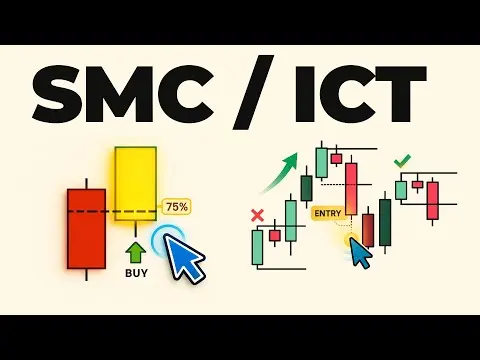
To create a successful day trading strategy, focus on identifying supply and demand zones, utilizing fair value gaps, and incorporating pivot points for better trade confluence. Hedging techniques used by institutions can help mitigate losses, while liquidity runs can provide insights into market movements. Prioritize fresh supply and demand levels for higher probability trades.
Transcript
So today I’ll share with you a complete smart money trading plan to filter and find the best possible trades, with the highest probabilities. The trading plan revolves around supply and demand areas, or order block, whatever you want to call them, fair value gaps, liquidity runs, and one of my most reliable filters, pivot points. If you follow this... Read More
Key Insights
- 🤑 Smart money traders strategically enter the market at supply and demand zones by splitting orders and forming consolidations.
- 🤩 Institutions use hedging strategies to balance positions, influence the market, and minimize losses by mitigating them at key levels.
- 🧚 Liquidity runs and fair value gaps enhance trading decisions by trapping traders and signaling imbalances in the market.
- 😥 Pivot points provide significant confluence in trading decisions, acting as support/resistance levels when aligned with supply and demand zones.
- ✋ Fresh supply and demand zones with less time spent at the zone indicate higher probability trading levels.
- 🖐️ Time factor plays a crucial role in trading success, with newer supply and demand zones having higher trading activity.
- 🥺 Losses in trading are common when dealing with leading signals and anticipating future price movements.
Install to Summarize YouTube Videos and Get Transcripts
Explore YouTube Video Summarizer or Get YouTube Transcript Extractor
Questions & Answers
Q: How do smart money traders strategically enter the market?
Smart money traders strategically enter by splitting orders at supply and demand zones, creating consolidations and forming strategic entry points.
Q: Why do institutions use hedging strategies instead of stop losses?
Institutions use hedging to balance positions, influence the market, and minimize losses, mitigating losses at key levels.
Q: How do liquidity runs and fair value gaps impact trading success?
Liquidity runs trap traders, and fair value gaps signal imbalances, acting as confluence tools to enhance trading decisions.
Q: Why is pivot point confluence important in trading?
Pivot points act as significant price levels, providing support/resistance and extra confluence when aligned with supply/demand zones.
Summary & Key Takeaways
-
Smart money strategically enters the market at supply and demand zones by splitting orders and forming consolidations for precise entries.
-
Institutions use hedging strategies instead of stop losses, influencing price movements to mitigate losses.
-
Liquidity runs and fair value gaps in combination with pivot points can enhance trade success.
Read in Other Languages (beta)
Share This Summary 📚
Summarize YouTube Videos and Get Video Transcripts with 1-Click
Try YouTube Summary with ChatGPT & Claude or YouTube Transcript Generator
Explore More Summaries from The Secret Mindset 📚





Summarize YouTube Videos and Get Video Transcripts with 1-Click
Try YouTube Summary with ChatGPT & Claude or YouTube Transcript Generator