What Are the New Uses for Drones in 2023?
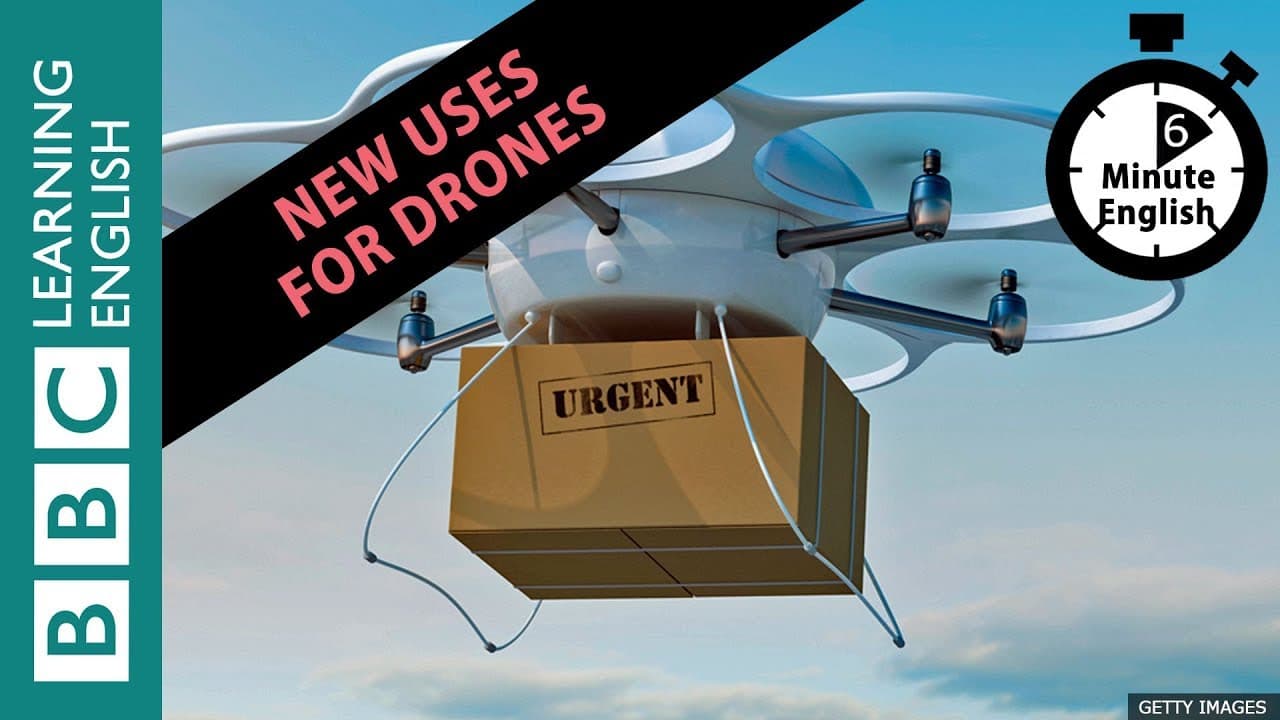
TL;DR
Drones, also known as UAVs, are used in diverse applications such as surveillance, medical supply deliveries, and lifesaving missions for lifeguards. While they offer significant benefits, like capturing aerial footage and inspecting hazardous environments, there are ongoing safety and privacy concerns. Regulations are evolving to ensure safe and appropriate use as technology advances.
Transcript
Rob: Hello I'm Rob and this is 6 Minute English - a programme that brings you an interesting topic, authentic listening practice and some vocabulary to help you improve your language skills. Joining me today is Neil. Neil: Hello. And today we're discussing those pilotless aircraft that we seem to be hearing and reading a lot about at the moment. Ro... Read More
Key Insights
- Drones, also known as UAVs, are increasingly used for various tasks including surveillance, drug smuggling, and detecting water leaks.
- The safety and necessity of drones are debated, with concerns about privacy invasion and hazards to aircraft, especially near airports.
- Drones have been involved in 70 near misses in the UK in 2016, highlighting safety concerns.
- Drones offer significant benefits, such as capturing aerial footage and inspecting dangerous sites like Fukushima's nuclear plant.
- UNICEF and the Malawian government are testing drones for medical supply delivery, potentially saving lives in remote areas.
- In Australia, drones assist lifeguards in rescuing swimmers, showcasing their lifesaving potential.
- A Japanese firm plans to use drones to encourage employees to leave work on time by playing music.
- Regulations for drones are evolving to harmonize with technological advancements, ensuring they are used effectively and safely.
Install to Summarize YouTube Videos and Get Transcripts
Explore YouTube Video Summarizer or Get YouTube Transcript Extractor
Questions & Answers
Q: What are some potential risks associated with drones?
Drones pose risks such as invading privacy when equipped with cameras and causing hazards to aircraft, particularly near airports. In the UK, there were 70 near misses involving drones in 2016, highlighting the potential dangers they pose to air safety and personal privacy.
Q: How are drones being used in humanitarian efforts?
Drones are being tested by UNICEF and the Malawian government for delivering medical supplies to remote areas, which could be lifesaving. This application demonstrates the potential of drones to improve access to healthcare in regions that are difficult to reach by traditional means.
Q: What are some innovative uses of drones mentioned in the content?
Innovative uses of drones include inspecting the Fukushima nuclear plant, aiding lifeguards in Australia with swimmer rescues, and a Japanese firm using drones to encourage employees to leave work on time by playing music. These examples illustrate the diverse and impactful applications of drone technology.
Q: What does the term 'game changer' mean in the context of drones?
In the context of drones, 'game changer' refers to their ability to completely change how certain tasks are performed or perceived. For example, drones can revolutionize surveillance, delivery, and rescue operations, offering new ways to address challenges and improve efficiency in these areas.
Q: How is drone regulation evolving with technology?
Drone regulation is evolving to keep pace with technological advancements, aiming to harmonize legal controls with the diverse uses of drones. This involves developing appropriate regulations that ensure drones are used safely and effectively without stifling their potential benefits or innovation.
Q: What vocabulary related to drones is highlighted in the content?
The content highlights vocabulary such as 'surveillance' (carefully watching someone or something), 'aerial footage' (film recording from the sky), 'game changer' (something that changes how things are done), 'the sky's the limit' (no limit to possibilities), and 'harmonised' (suitable and working properly together).
Q: What concerns exist regarding the privacy implications of drones?
Privacy concerns arise when drones are equipped with cameras, as they can be used to capture images or videos over private properties without consent. This raises issues about individuals' rights to privacy and the potential for unauthorized surveillance, necessitating careful regulation and ethical considerations.
Q: How have drones impacted wildlife television programs?
Drones have been a 'game changer' for wildlife television programs by providing stunning aerial footage that was previously difficult or impossible to capture. This technology allows filmmakers to record wildlife from unique perspectives, enhancing the visual storytelling and educational value of these programs.
Summary & Key Takeaways
-
Drones, or UAVs, are increasingly common and serve various purposes, from surveillance to lifesaving missions, but they raise safety and privacy concerns.
-
While drones pose risks like near misses with aircraft, they also offer benefits such as capturing aerial footage and inspecting dangerous environments.
-
Efforts are underway to regulate drones appropriately, balancing their potential as game changers with necessary safety and privacy considerations.
Read in Other Languages (beta)
Share This Summary 📚
Summarize YouTube Videos and Get Video Transcripts with 1-Click
Try YouTube Summary with ChatGPT & Claude or YouTube Transcript Generator
Explore More Summaries from BBC Learning English 📚

Summarize YouTube Videos and Get Video Transcripts with 1-Click
Try YouTube Summary with ChatGPT & Claude or YouTube Transcript Generator