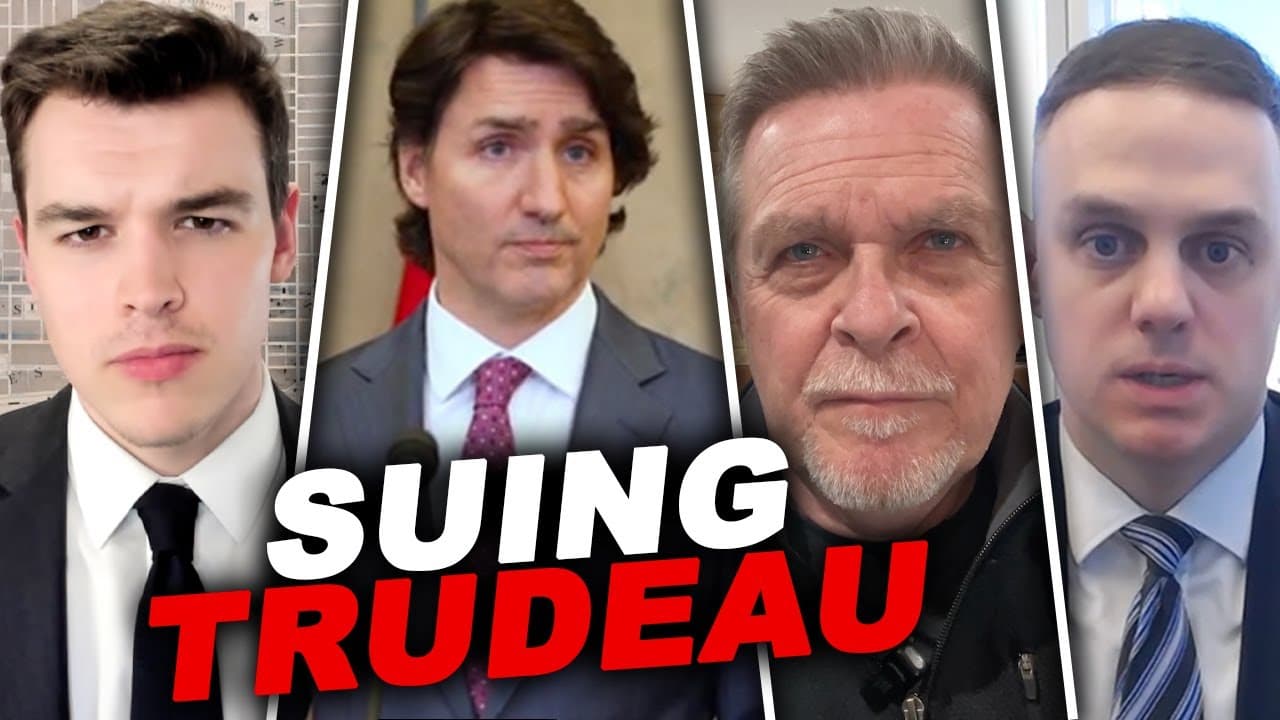
Meet the Canadians taking Justin Trudeau to court
TL;DR
A group of Canadians files a lawsuit against government actions during the Freedom Convoy.
Transcript
how can Canadians attempt to hold our government accountable when that same government has routinely displayed irreverence and contempt for even the concept of accountability well one of the few legal ways that is still available to us as Canadians for now is through the courts well my next two guests are leading the fight against our government an... Read More
Key Insights
- ✊ The lawsuit against government and financial institutions is framed as a response to perceived abuses of power during the Freedom Convoy’s emergency measures.
- ❓ Many plaintiffs were affected financially by unconstitutional account freezes, underscoring the broader societal impact of government actions.
- 🤨 The invocation of the Emergencies Act is highlighted as having bypassed necessary judicial oversight, raising significant legal and ethical concerns.
- 🥳 The case stresses the importance of accountability in governance, with the plaintiffs seeking to deter similar future actions by any political party.
- 🎁 The narrative presents a broader commentary on trust deficits between citizens and institutions due to perceived government overreach.
- ◼️ Mainstream media's lack of coverage raises questions about biases in reporting and the implications for democratic discourse.
- 🗯️ Individuals from various political backgrounds can unite under the cause of protecting civil liberties against government action, emphasizing the universal nature of these rights.
Install to Summarize YouTube Videos and Get Transcripts
Explore YouTube Video Summarizer or Get YouTube Transcript Extractor
Questions & Answers
Q: What prompted Eddie Cornell to join the Freedom Convoy protests?
Eddie Cornell felt compelled to join the Freedom Convoy as he believed the government's mandates, particularly regarding vaccination for truckers, were unreasonable, especially considering truckers typically work alone in their vehicles. He noticed inconsistencies in the government's messaging, which drove him to protest against the imposed restrictions.
Q: How did Eddie Cornell realize that his bank account was frozen?
After the Emergencies Act was invoked, Eddie attempted to withdraw cash but his card was rejected. Upon contacting his bank for clarification, he received vague responses and was directed to escalate the issue without any explanation regarding his account status, which escalated his concerns about his financial security.
Q: What constitutes the legal basis of the lawsuit filed by the plaintiffs?
The lawsuit argues that the invocation of the Emergencies Act resulted in one of Canada's largest breaches of Charter rights, allowing law enforcement and banks to engage in warrantless searches and account freezes, effectively bypassing judicial oversight and impacting thousands of Canadians unfairly.
Q: How have the mainstream media covered this lawsuit?
Mainstream media has largely ignored the lawsuit against the government and financial institutions, with little outreach to the plaintiffs for their stories, potentially reflecting biases in reporting and funding that align with government narratives during the events of the Freedom Convoy.
Q: What were some examples of collateral damage from the Emergencies Act?
One notable case involved a woman and her son who opposed the protest; despite not participating, their accounts were frozen as a result of the emergency measures. This incident illustrates the reach of the government’s actions and the unintended harm to those not affiliated with the convoy.
Q: What do the plaintiffs hope to achieve with this lawsuit?
The plaintiffs aim to hold the government accountable for its actions, seek justice for the victims of unconstitutional measures, and establish a precedent that protects Canadians' rights from similar future overreach, reinforcing the notion that the government must not infringe on civil liberties.
Q: Why is Eddie Cornell concerned about future government actions?
After experiencing government overreach firsthand, Cornell expressed a significant loss of faith in government institutions. He worries that similar actions could occur under future administrations, thereby emphasizing the necessity of this lawsuit to safeguard citizens' rights moving forward.
Summary & Key Takeaways
-
A group of 20 plaintiffs, led by veteran Eddie Cornell and lawyer Blair Ector, has filed a multi-million dollar lawsuit against various government officials and financial institutions, seeking justice for alleged constitutional violations during the Freedom Convoy.
-
The lawsuit contends that the invocation of the Emergencies Act resulted in unconstitutional freezing of bank accounts and police brutality, significantly affecting many Canadians, including those who did not support the convoy.
-
Both plaintiffs emphasize the importance of accountability and the need for Canadians to uphold their rights against government overreach, aiming to set a precedent for future actions that protect civil liberties.
Read in Other Languages (beta)
Share This Summary 📚
Summarize YouTube Videos and Get Video Transcripts with 1-Click
Try YouTube Summary with ChatGPT & Claude or YouTube Transcript Generator
Explore More Summaries from True North 📚




Summarize YouTube Videos and Get Video Transcripts with 1-Click
Try YouTube Summary with ChatGPT & Claude or YouTube Transcript Generator