Implicit Stereotypes with Michela Carlana
TL;DR
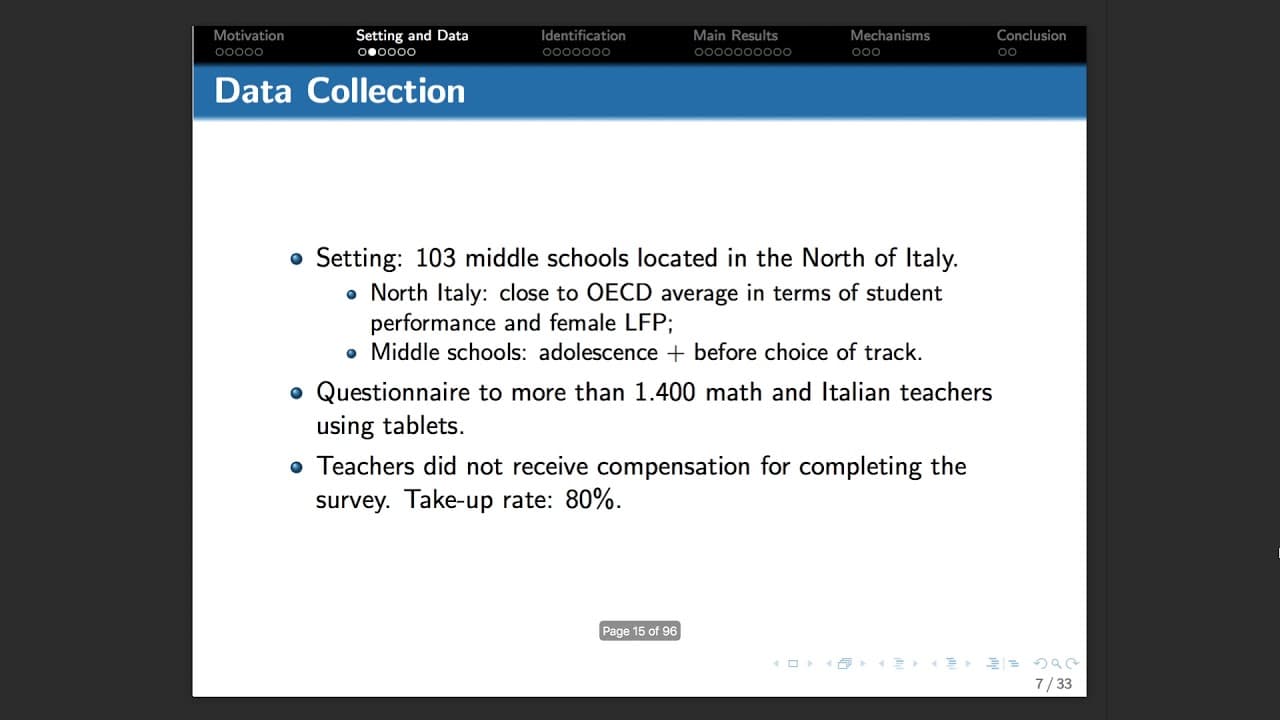
Teacher implicit biases, especially related to gender and race, have a significant impact on students' academic performance, career choices, and self-confidence.
Transcript
SPEAKER 1: Welcome to the Women and Public Policy Program's Seminar Series podcast at the Harvard Kennedy School. SPEAKER 2: All right, I'm going to bring us to order even though there are still folks who are getting their lunch in the hope that we'll get a system going where we start by quarter of on a regular basis. It's so wonderful to see so ma... Read More
Key Insights
- 🤳 Teacher implicit biases, particularly related to gender and race, have a substantial impact on students' academic performance, career choices, and self-confidence.
- ⚧️ Gender stereotypes play a role in the wider gender gap in math performance in countries with stronger gender norms.
- 🧑🎓 Teacher recommendations and interactions can influence students' choices of field of study and future career paths.
- 🤳 Academic self-confidence and beliefs about one's abilities are influenced by exposure to gender stereotypes.
Install to Summarize YouTube Videos and Get Transcripts
Explore YouTube Video Summarizer or Get YouTube Transcript Extractor
Questions & Answers
Q: How do teacher implicit biases affect students' performance in standardized tests?
Teacher implicit biases, particularly related to gender and race, can detrimentally impact students' performance in standardized tests, especially in math. Stereotypes can lead to biased interactions, where teachers may challenge boys more than girls, resulting in a wider gender gap in math performance.
Q: Do gender stereotypes also affect students' choice of field of study?
Yes, gender stereotypes play a significant role in students' choices of field of study. Girls who are exposed to teachers with stronger gender biases are more likely to be pushed towards vocational tracks, while boys are less likely to be recommended these tracks.
Q: How does exposure to gender stereotypes impact students' self-confidence?
Exposure to gender stereotypes can lower girls' self-confidence in math and science. Girls who are exposed to teachers with more implicit biases tend to believe that they are less proficient in math, which can further influence their performance and choices in these fields.
Q: Can teacher implicit biases be addressed through training and awareness programs?
Training teachers and increasing awareness about implicit biases can be effective in reducing biased behavior. The results of a study show that providing teachers with feedback on their racial bias can lead to more equal treatment of students, potentially reducing discrimination based on stereotypes.
Summary & Key Takeaways
-
Teacher implicit biases affect students' performance in standardized tests, choice of field of study, and self-confidence in math and science.
-
Gender stereotypes play a role in the gender gap in math performance, with countries with stronger gender norms seeing wider gaps.
-
Teachers, both male and female, tend to have biases associating scientific fields with boys, which affects their interactions with students and recommendations for different tracks.
-
Exposure to gender stereotypes can lead to lower self-confidence in math and science for girls.
Read in Other Languages (beta)
Share This Summary 📚
Summarize YouTube Videos and Get Video Transcripts with 1-Click
Try YouTube Summary with ChatGPT & Claude or YouTube Transcript Generator
Explore More Summaries from Harvard University 📚



Summarize YouTube Videos and Get Video Transcripts with 1-Click
Try YouTube Summary with ChatGPT & Claude or YouTube Transcript Generator