9 Animals That Will Outlive Humans
TL;DR
Some animals are extreme survivors in harsh conditions, relying on unique adaptations to thrive.
Transcript
A lot of animals can only survive under very specific conditions. If you mess with their habitat, they start to die out. Others are a lot more versatile, and can adapt when their environment changes. But a few animals are really, really good at dealing with extremes -- like, way better than we humans are. We’re talking extreme heat and very little ... Read More
Key Insights
- 🐪 Camels' fat storage and water reabsorption mechanisms enable desert survival.
- 💦 Merriam’s kangaroo rat efficiently uses water from seeds for hydration, reducing water dependency.
- 🥵 Sahara desert scavenger ant exhibits adaptations like speed and leg length for survival in extreme heat.
- 🤢 Giant tube worms thrive near deep-sea vents without sunlight through symbiosis with bacteria.
- 🇦🇶 Antarctic toothfish possesses antifreeze genes to prevent tissues from freezing.
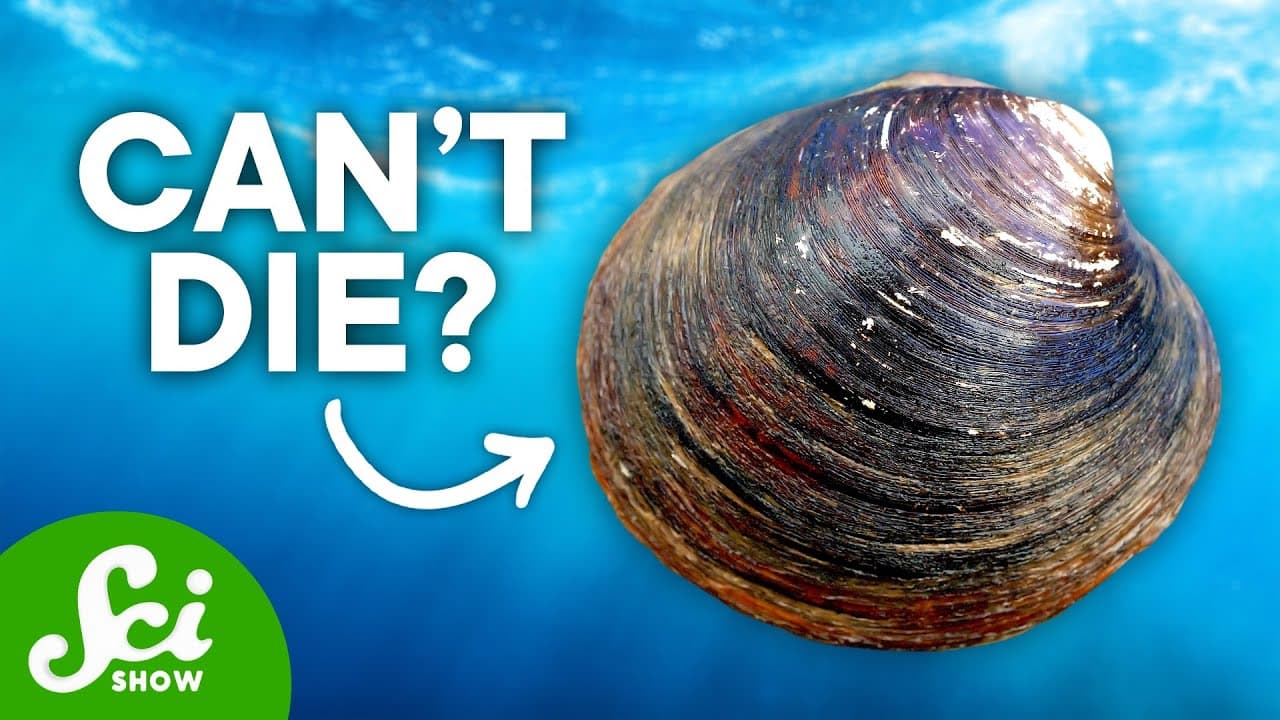
- 🥶 Ocean quahog's slow metabolism and free radical damage limitation contribute to its long lifespan.
- 🪼 Immortal jellyfish has the ability to reverse development and potentially live indefinitely.
Install to Summarize YouTube Videos and Get Transcripts
Explore YouTube Video Summarizer or Get YouTube Transcript Extractor
Questions & Answers
Q: How does the dromedary camel survive in the desert?
The dromedary camel's fat storage helps insulate and provide energy reserves, breaking down fat into water and reabsorbing water from exhaled vapor through nasal cavity adaptations.
Q: What unique adaptation allows Merriam’s kangaroo rat to thrive on minimal water?
Merriam’s kangaroo rat possesses a body highly efficient at water retention from the seeds they consume, eliminating the need for external hydration sources.
Q: How does the Sahara desert scavenger ant cope with extreme heat conditions?
The Sahara desert scavenger ant survives by being quick, having long legs to elevate from hot surfaces, and feeding on other insects that perished in the heat.
Q: How do deep sea vent-dwelling giant tube worms survive without sunlight?
Giant tube worms derive energy from chemicals released by deep-sea vents, courtesy of a symbiotic relationship with bacteria that also produce essential organic molecules.
Summary & Key Takeaways
-
Animals like the dromedary camel can survive extreme heat and little water due to fat storage and water reabsorption through breathing.
-
Merriam’s kangaroo rat thrives on minimal water intake, deriving hydration efficiently from seeds.
-
The Sahara desert scavenger ant withstands scorching temperatures, relying on adaptations like speed and leg length to secure food sources.
Read in Other Languages (beta)
Share This Summary 📚
Summarize YouTube Videos and Get Video Transcripts with 1-Click
Try YouTube Summary with ChatGPT & Claude or YouTube Transcript Generator
Explore More Summaries from SciShow 📚
Summarize YouTube Videos and Get Video Transcripts with 1-Click
Try YouTube Summary with ChatGPT & Claude or YouTube Transcript Generator