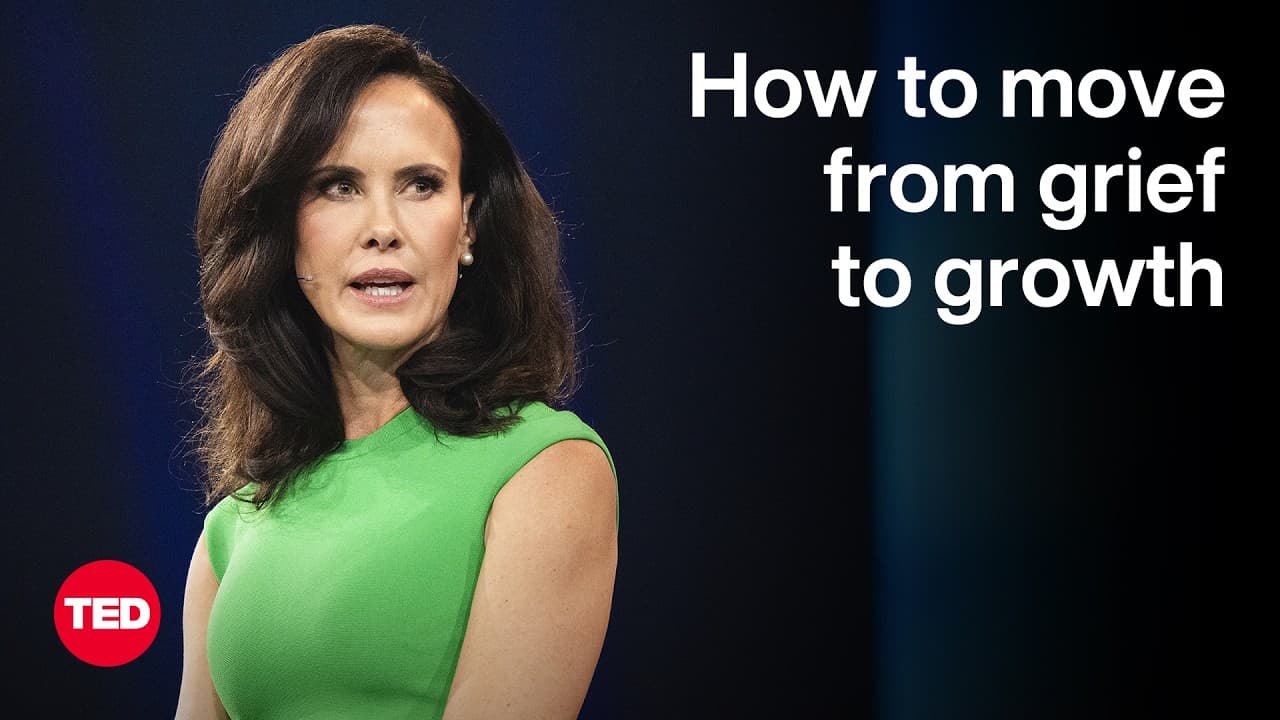
How to Handle Grief at Work and Beyond | Meredith Wilson Parfet | TED
TL;DR
Grief impacts both personal and professional lives; manage it with practical tools.
Transcript
My life has not been perfect, and I find that deeply annoying. For better or worse, I've faced crisis across every part of it. When it's personal, it's hard to know how to survive. When it's professional, suffering at work, not allowed. My boss used to say, "That big stall in the bathroom is for crying, because I don't want to see it." But what hap... Read More
Key Insights
- Grief affects both personal and professional aspects of life equally, and it's crucial to address it comprehensively.
- Pop culture promotes resilience, but practical tools are more effective in managing crisis situations.
- Managing crisis is a skill set that involves strategic coping mechanisms and self-awareness.
- Our brains do not differentiate between grief at work and at home, making emotional management important.
- Crisis management requires balancing the inner world of emotions with the outer world of logistics.
- Grief brain, characterized by foggy thinking, can complicate decision-making during crises.
- Understanding personal tendencies, like being a barrier or a detonator, helps in managing emotional responses.
- In professional settings, support colleagues in crisis by being present and showing empathy, not by trying to fix the problem.
Install to Summarize YouTube Videos and Get Transcripts
Explore YouTube Video Summarizer or Get YouTube Transcript Extractor
Questions & Answers
Q: How does grief affect both personal and professional settings?
Grief impacts both personal and professional settings by affecting the brain's ability to function optimally, leading to what is known as 'grief brain.' This results in challenges with memory, cognition, and impulse control, making it difficult to manage tasks both at home and at work. The emotional turmoil is universal, requiring similar coping strategies in both settings.
Q: What are the common misconceptions about managing grief?
A common misconception about managing grief is the belief in toxic positivity—thinking that simply being resilient or maintaining a positive outlook can solve the problem. In reality, grief requires practical tools and strategies to manage effectively, as well as an understanding of one's emotional responses and tendencies, such as whether one tends to bury emotions or react explosively.
Q: What practical tools are suggested for managing crises?
Practical tools for managing crises include developing self-awareness, understanding personal emotional tendencies, and balancing emotional needs with logistical problem-solving. This involves asking critical questions to define the crisis, identifying trade-offs, setting priorities, and focusing on the next right step. These strategies help in organizing chaos and providing clarity during difficult times.
Q: How can one support a colleague experiencing a personal crisis?
Supporting a colleague in crisis involves showing empathy and presence rather than attempting to fix the problem. It is important to acknowledge their situation, offer kindness, and simply be there for them. This could mean checking in regularly, expressing genuine concern, and allowing them to share their feelings without judgment, fostering a supportive work environment.
Q: What role does self-awareness play in managing grief?
Self-awareness is crucial in managing grief as it enables individuals to recognize their emotional responses and tendencies, such as avoiding emotions or reacting impulsively. By understanding these patterns, individuals can adopt more effective coping strategies, make informed decisions, and manage their inner emotional world more effectively, which is essential for personal growth and leadership.
Q: Why is it important to balance the inner and outer worlds during a crisis?
Balancing the inner emotional world with the outer logistical world is important during a crisis because it allows for a comprehensive approach to managing grief. The inner world requires emotional support and self-awareness, while the outer world demands organization and problem-solving. Balancing these aspects helps individuals navigate crises more effectively and maintain stability in both personal and professional settings.
Q: What are the effects of 'grief brain' on decision-making?
'Grief brain' affects decision-making by impairing cognitive functions such as memory, attention, and impulse control. This can lead to difficulties in processing information, making decisions, and managing tasks efficiently. Understanding the impact of grief brain is crucial for developing strategies to mitigate its effects, such as breaking tasks into manageable steps and seeking support when needed.
Q: How can workplaces create a supportive environment for employees dealing with grief?
Workplaces can create a supportive environment by fostering open communication, offering empathy, and providing resources for emotional support. Encouraging a culture of understanding and flexibility, where employees feel safe to express their emotions and seek help, is vital. Training managers to recognize signs of distress and respond appropriately can also enhance support for employees dealing with grief.
Summary & Key Takeaways
-
Meredith Wilson Parfet discusses the challenges of managing grief both personally and professionally, emphasizing the importance of practical tools over resilience. She shares insights from her experiences as a crisis management CEO and hospice chaplain, highlighting the need for strategic emotional coping and self-awareness.
-
The talk explores how grief impacts the brain, causing what is termed 'grief brain,' which affects memory and cognition. Parfet stresses the importance of balancing emotional support with logistical problem-solving to navigate crises effectively.
-
Meredith advises against toxic positivity and encourages genuine human connection in the workplace. She suggests that supporting colleagues in crisis involves being present and empathetic, rather than attempting to fix their problems, thus fostering a more compassionate work environment.
Read in Other Languages (beta)
Share This Summary 📚
Summarize YouTube Videos and Get Video Transcripts with 1-Click
Try YouTube Summary with ChatGPT & Claude or YouTube Transcript Generator
Explore More Summaries from TED 📚





Summarize YouTube Videos and Get Video Transcripts with 1-Click
Try YouTube Summary with ChatGPT & Claude or YouTube Transcript Generator