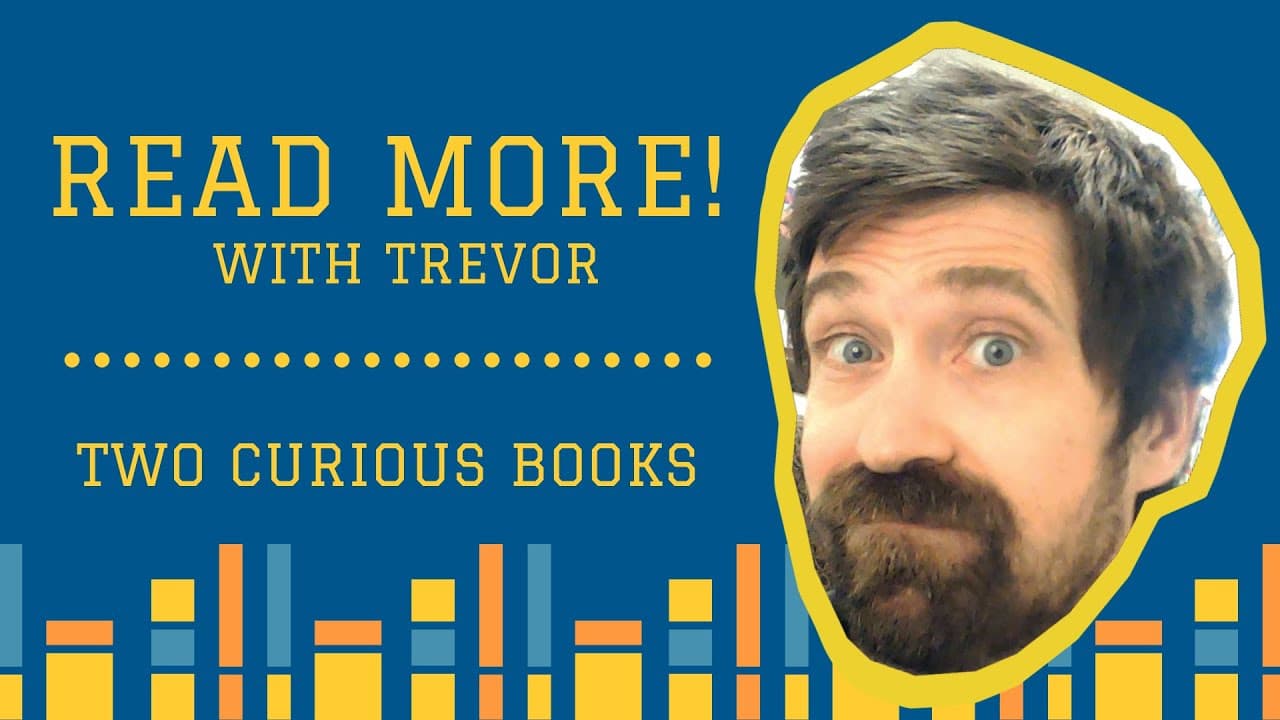
Read More! with Trevor: Two Curious Books
TL;DR
- Get lost in dream-like novels by Peter Cameron and Benjamin Labatut.
Transcript
and then here's another one at the center of a dead star the entire mass was concentrated in in an infinitely dense body that something like this could exist in the universe it was unimaginable to schwartz child not only did it challenge the human intellect not only did it raise doubt about the validity of general relativity it also scratched at th... Read More
Key Insights
- 🏝️ Peter Cameron's "What Happens at Night" presents a dream-like narrative in a foreign land, blending comic elements with melancholy and fantastical realism.
- 💦 Benjamin Labatut's work challenges traditional narratives of scientific progress by blending fiction and non-fiction to explore the outer limits of human understanding.
- ✍️ Labatut's writing emphasizes the role of imagination, poetry, and aesthetics in the development of wisdom and knowledge, questioning the simplistic accumulation of facts.
- 🥰 Both authors offer unique and captivating storytelling experiences that transcend genre conventions and provide new perspectives on art and intellectual exploration.
- 😃 Cameron's plain style in "What Happens at Night" masterfully creates a sense of disorientation and dream-like states, renewing everyday experiences with fresh eyes.
Install to Summarize YouTube Videos and Get Transcripts
Explore YouTube Video Summarizer or Get YouTube Transcript Extractor
Questions & Answers
Q: What are the key themes in "What Happens at Night" by Peter Cameron?
"What Happens at Night" explores themes of disorientation, dream-like states, communication barriers in a foreign land, and a blend of comic elements and melancholy. The book's pacing and writing style create a unique reading experience.
Q: How does Benjamin Labatut challenge traditional narratives of scientific progress in his work?
Labatut blends fiction and non-fiction to explore the outer edges of science and human understanding. His work emphasizes the role of imagination, poetry, and aesthetics in the development of human wisdom and knowledge, questioning the simplistic accumulation of facts.
Q: What sets Benjamin Labatut's writing apart from traditional non-fiction works?
Labatut's writing in "When We Cease to Understand the World" combines meticulous research with imaginative storytelling, bridging gaps in historical and factual records to create a more nuanced and engaging narrative of scientific discoveries. His work challenges the boundaries between fiction and non-fiction.
Q: How do Peter Cameron and Benjamin Labatut offer fresh perspectives on art and knowledge through their novels?
Both authors break away from traditional genre conventions, blending elements of comedy, melancholy, fantastical realism, and creative non-fiction to present readers with provocative and thought-provoking narratives. Their works invite readers to reconsider established notions of storytelling and intellectual exploration.
Summary & Key Takeaways
-
Peter Cameron's "What Happens at Night" offers a dream-like narrative in a foreign land with a touch of comic elements, melancholy, and fantastical realism.
-
Benjamin Labatut's work delves into the outer limits of science and human understanding, blending fiction and non-fiction to challenge traditional narratives of scientific progress.
-
Both books provide unique and captivating storytelling experiences that defy genre conventions and offer new perspectives on art and knowledge.
Read in Other Languages (beta)
Share This Summary 📚
Summarize YouTube Videos and Get Video Transcripts with 1-Click
Try YouTube Summary with ChatGPT & Claude or YouTube Transcript Generator
Explore More Summaries from San Diego Public Library 📚


Summarize YouTube Videos and Get Video Transcripts with 1-Click
Try YouTube Summary with ChatGPT & Claude or YouTube Transcript Generator