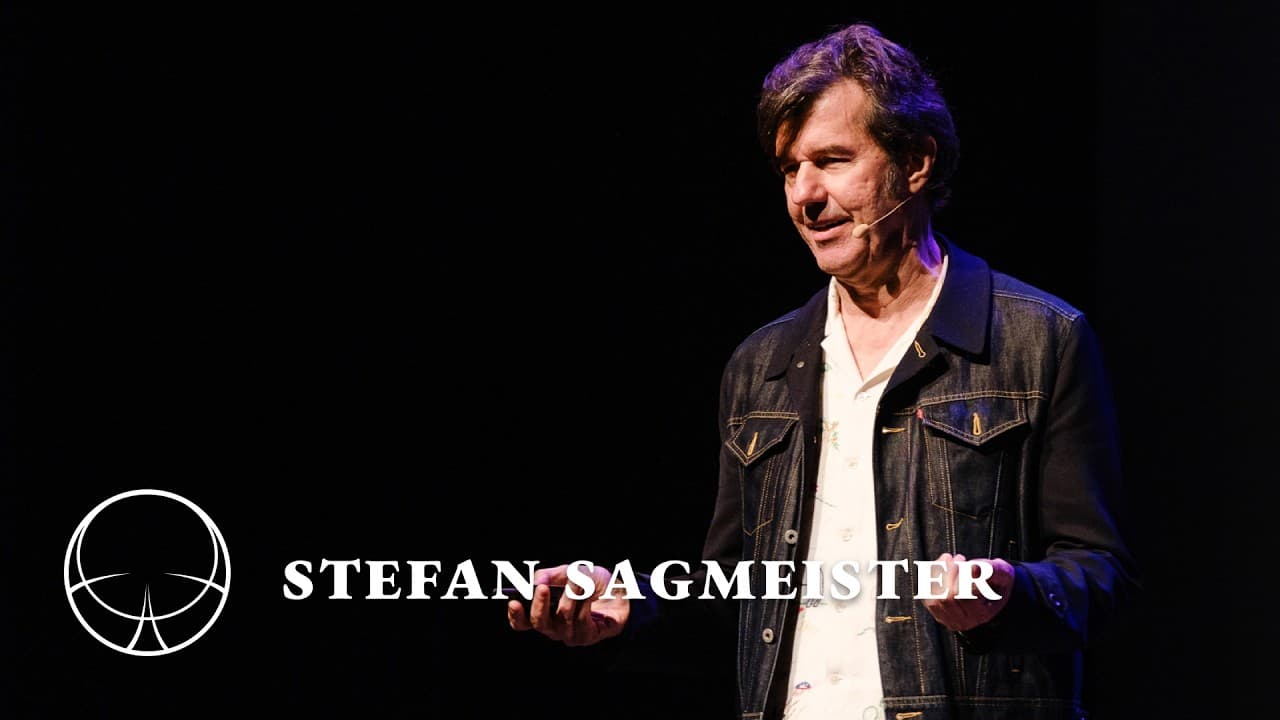
What Is Informed Optimism? Stefan Sagmeister Explains in Finally, Something Good
TL;DR
Informed optimism means balancing immediate anxieties with long-term evidence of human progress. Stefan Sagmeister notes that democratic countries increased from one 200 years ago to 86 today, while short news cycles favor scandals and catastrophes over gradual improvements. Read on to understand the optimism gap, media negativity, and how design can turn progress data into beauty.
Transcript
[music] [cheering] [applause] Good evening and welcome to our long now talk with Stefan Sagmeister. We are just so delighted to see all of you here braving the elements, showing up to an oversold house for this conversation. My name is Lisa K. Solomon. I am your host from the Long Now Foundation. Tonight is about hope and informed optimism. Stefan ... Read More
Key Insights
- Informed optimism involves understanding historical data to maintain a balanced perspective on progress.
- The optimism gap is a psychological phenomenon where individuals believe they are doing better than the world as a whole.
- Media cycles have shifted from yearly to constant, often highlighting negative news due to its immediate impact.
- The amygdala processes negative news quickly, a trait from our ancestors that may not suit modern life.
- Progress in democracy, literacy, and health has been significant over the past two centuries.
- Negative news is crucial for action, but too much can lead to despair and inaction.
- Design can play a role in communicating complex ideas through beauty and engagement.
- Taking time for reflection, such as through sabbaticals, can lead to more meaningful and innovative work.
- "And it turned out that if you looked at it 200 years ago, there was a single democratic country, the United States." (6:25)
- "It's for the first time in human history that more than half of all people live in a democratic system." (6:53)
- "And of course, the shorter the news cycle, the more negative the news because scandals and catastrophes happen to work brilliantly in that tiny short cycle." (8:33)
Install to Summarize YouTube Videos and Get Transcripts
Explore YouTube Video Summarizer or Get YouTube Transcript Extractor
Questions & Answers
Q: What is informed optimism?
Informed optimism is a hopeful outlook grounded in long-term data rather than immediate impressions. It recognizes current anxiety while zooming out to see progress in areas such as democracy, health, and literacy.
Q: What is the optimism gap?
The optimism gap is the widespread tendency to believe that your own life is going better than the world as a whole. Sagmeister says this pattern occurs in poor and rich countries and extends to opinions, including the belief that we care more about the environment than other people do.
Q: Why does negative news dominate shorter media cycles?
Scandals and catastrophes fit easily into short news cycles, while positive changes often take a long time to emerge. As media moved from yearly almanacs to constant social media, news consequently became more negative.
Q: How does the amygdala affect our response to negative news?
Sagmeister describes the amygdala as a shortcut that lets negative news enter quickly but does not do the same for positive information. This response helped Stone Age predecessors stay safe, but he argues that it can leave a person with a poorly informed view of a comparatively safe life.
Q: How has the number of democratic countries changed over time?
According to Sagmeister, there was one democratic country, the United States, 200 years ago. There were 16 after World War I, and the United Nations now identifies 86 countries as proper democracies.
Q: How widespread is democracy today?
Sagmeister says that, for the first time in human history, more than half of all people live in a democratic system. He uses this long-term trend to show how someone focused on current events can misjudge the broader situation.
Q: What is Stefan Sagmeister's Finally, Something Good about?
Finally, Something Good asks people to zoom out beyond immediate anxiety and examine progress over time. The project presents progress not only as data but also as beauty, reflecting Sagmeister's work as a communication designer.
Q: What role can design play in communicating informed optimism?
Sagmeister considers long-term progress a strong subject for communication design because many people around him believe the world is deteriorating. Design can make complex progress data engaging and beautiful, helping audiences experience evidence that short news cycles often overlook.
Summary & Key Takeaways
-
Informed optimism is about recognizing the progress humanity has made over time, despite the prevalence of negative news. By examining historical data, we can see improvements in areas like democracy and health, which can offer a more hopeful perspective.
-
The optimism gap highlights the common belief that individuals are doing better than the world, a viewpoint that can be informed by understanding long-term trends and data.
-
Designers can use their craft to communicate complex ideas effectively, using beauty and engagement to inspire hope and action in the face of challenges.
Read in Other Languages (beta)
Share This Summary 📚
Summarize YouTube Videos and Get Video Transcripts with 1-Click
Try YouTube Summary with ChatGPT & Claude or YouTube Transcript Generator
Explore More Summaries from The Long Now Foundation 📚






Summarize YouTube Videos and Get Video Transcripts with 1-Click
Try YouTube Summary with ChatGPT & Claude or YouTube Transcript Generator