Products
Features
YouTube Video Summarizer
Summarize YouTube videos
Web & PDF Highlighter
Highlight web pages & PDFs
Chat with PDF
Ask any PDF questions with AI
Ask AI Clone
Chat with your highlights & memories
Audio Transcriber
Transcribe audio files to text
Glasp Reader
Read and highlight articles
Kindle Highlight Export
Export your Kindle highlights
Idea Hatch
Hatch ideas from your highlights
Integrations
Obsidian Plugin
Notion Integration
Pocket Integration
Instapaper Integration
Medium Integration
Readwise Integration
Snipd Integration
Hypothesis Integration
Apps & Extensions
Chrome Extension
Safari Extension
Edge Add-ons
Firefox Add-ons
iOS App
Android App
Discover
Discover
Ideas
Discover new ideas and insights
Articles
Curated articles and insights
Books
Book recommendations by great minds
Posts
Essays and notes from readers
Quotes
Inspiring quotes collection
Videos
Curated videos and summaries
Explore Glasp
Glasp Story
How we grew from 0 to 3 million users
Glasp Newsletter
Weekly insights and updates
Glasp Talk
Interview series with great minds
Glasp Blog
Latest news and articles
Glasp Use Cases
Learn how others use Glasp
Build & Support
Glasp API
Access Glasp's API for developers
MCP Connector
Connect Glasp to Claude & ChatGPT
Community
Glasp Reddit Community
Students
Student discount and benefits
FAQs
Frequently Asked Questions
AboutPricing
DashboardLog inSign up

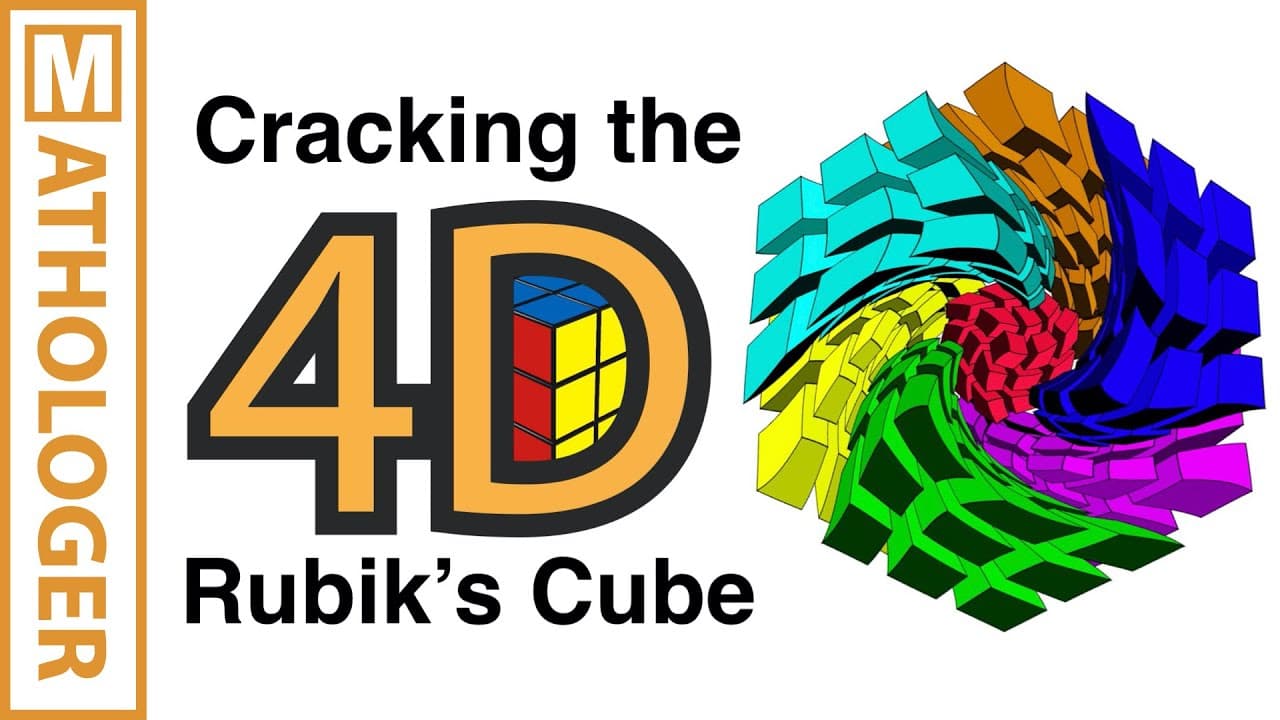
Cracking the 4D Rubik's Cube with simple 3D tricks
June 17, 2016
by
Mathologer
YouTube video player
Cracking the 4D Rubik's Cube with simple 3D tricks

TL;DR

Learn how to solve the 40 Rubik's Cube using specialized algorithms and techniques.

Transcript

Exciting news everybody. Just a couple of days ago I solved the 40 Rubik's cube for the first time. Not many people have done this so I thought I'd do a video on this to enable as many of you as possible to do the same. I've got two warm up exercises for you. The first one is this. What are you looking at here? Strange question, obviously a cube. B... Read More

Key Insights

  • 🧩 The 40 Rubik's Cube is a complex puzzle that requires specialized algorithms and techniques to solve.
  • 🧊 The cube is represented as a 2D image of a 3-dimensional simulator, enhancing visualization and manipulation.
  • 😀 Different types of hypercubes, such as face, edge, and corner hypercubes, require different algorithms for positioning and orienting.
  • 🦔 The 40 Rubik's Cube offers additional challenges with the ability to twist corners and flip edges.
  • 🙈 Blind solving the cube from memory is a difficult but rewarding challenge.

Install to Summarize YouTube Videos and Get Transcripts

Explore YouTube Video Summarizer or Get YouTube Transcript Extractor

Questions & Answers

Q: How many faces are visible when looking at a cube?

Many people might say three, but in reality, if the cube is hollow, you can see up to six faces, or even seven if you look around from a corner.

Q: What is the purpose of Magic Cube 4d?

Magic Cube 4d is a program that allows users to manipulate a 2-dimensional image of a 3-dimensional 40 Rubik's Cube, simulating the actions of a real 4-dimensional cube.

Q: How many different types of cubies are there in a normal Rubik's Cube?

There are three types of cubies: face cubies with one sticker, edge cubies with two stickers, and corner cubies with three stickers.

Q: Are the algorithms used for solving the 40 Rubik's Cube different from the ones used for the traditional cube?

Although the 40 Rubik's Cube requires additional algorithms to handle specific twists and permutations of hypercubes, many of the algorithms used for solving the traditional cube can still be applied.

Summary & Key Takeaways

  • The content provides a step-by-step guide to solving the 40 Rubik's Cube, highlighting the differences between the traditional cube and the 40 Rubik's Cube.

  • The cube is represented as a 2D image of a 3-dimensional 40 Rubik's Cube simulator, allowing for easier manipulation.

  • Algorithms are introduced for solving different types of hypercubes, including face, edge, and corner hypercubes.


Read in Other Languages (beta)

English

Share This Summary 📚

Summarize YouTube Videos and Get Video Transcripts with 1-Click

Download browser extensions on:

Try YouTube Summary with ChatGPT & Claude or YouTube Transcript Generator

Explore More Summaries from Mathologer 📚
The Secret of Parabolic Ghosts thumbnail
The Secret of Parabolic Ghosts
Mathologer
e to the pi i for dummies thumbnail
e to the pi i for dummies
Mathologer
Fibonacci = Pythagoras: Help save a beautiful discovery from oblivion thumbnail
Fibonacci = Pythagoras: Help save a beautiful discovery from oblivion
Mathologer
Gauss's magic shoelace area formula and its calculus companion thumbnail
Gauss's magic shoelace area formula and its calculus companion
Mathologer
Secrets of the NOTHING GRINDER thumbnail
Secrets of the NOTHING GRINDER
Mathologer
A simple trick to design your own solutions for Rubik's cubes thumbnail
A simple trick to design your own solutions for Rubik's cubes
Mathologer

Summarize YouTube Videos and Get Video Transcripts with 1-Click

Download browser extensions on:

Try YouTube Summary with ChatGPT & Claude or YouTube Transcript Generator

Apps & Extensions

  • Chrome Extension
  • Safari Extension
  • Edge Add-ons
  • Firefox Add-ons
  • iOS App
  • Android App

Key Features

  • YouTube Video Summarizer
  • Web & PDF Summarizer
  • Web & PDF Highlighter
  • Chat with PDF
  • Ask AI Clone
  • Audio Transcriber
  • Glasp Reader
  • Kindle Highlight Export
  • Idea Hatch

Integrations

  • Obsidian Plugin
  • Notion Integration
  • Pocket Integration
  • Instapaper Integration
  • Medium Integration
  • Readwise Integration
  • Snipd Integration
  • Hypothesis Integration

More Features

  • APIs
  • MCP Connector
  • Blog & Post
  • Embed Links
  • Image Highlight
  • Personality Test
  • Quote Shots

Company

  • About us
  • Our Story
  • Blog
  • Community
  • FAQs
  • Job Board
  • Newsletter
  • Pricing
Terms

•

Privacy

•

Guidelines

© 2026 Glasp Inc. All rights reserved.