What Is Gluconeogenesis and Why Is It Important?
TL;DR
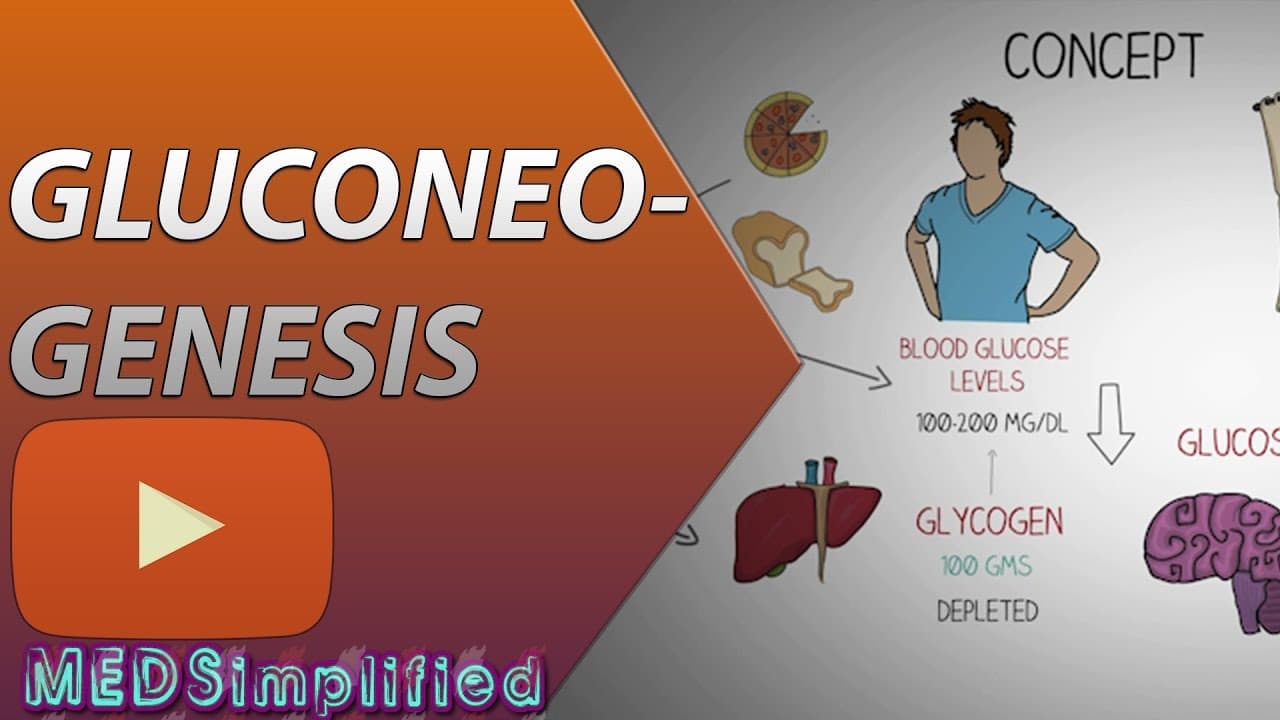
Gluconeogenesis is the vital process of producing glucose from non-carbohydrate sources like fats and amino acids, crucial for maintaining blood sugar levels. This metabolic pathway primarily takes place in the liver but also occurs in the kidneys and intestines. Understanding gluconeogenesis is essential, particularly for energy supply during fasting or low carbohydrate intake.
Transcript
in this video we will study about the gluconeogenesis let's play this term which will help us to remember about this process just from the name the world Group Co means glucose neo means new and the word Genesis refers to the production under normal circumstances the carbohydrates are broken down in the human body by various enzymes into glucose bu... Read More
Key Insights
- 💨 Gluconeogenesis is a vital process for maintaining blood glucose levels, especially in fasting states.
- 😑 The liver is the main site for gluconeogenesis, but the kidneys and intestines also contribute to a lesser extent.
- 👻 Gluconeogenesis involves several reversible reactions, allowing the synthesis of glucose from non-carbohydrate sources.
- ❓ Specific enzymes are upregulated during gluconeogenesis to facilitate the conversion of substrates like pyruvate, propionate, lactate, and glycerol into glucose.
- 🤩 Glycolysis and the Krebs cycle are closely related to gluconeogenesis and understanding these pathways is key to comprehending the process fully.
- 🧑🏭 Gluconeogenesis is regulated by hormonal and metabolic factors, ensuring the balance of glucose production and utilization.
- 😪 Gluconeogenesis plays a crucial role in providing energy to tissues that can only utilize glucose, such as the nervous tissue and red blood cells.
Install to Summarize YouTube Videos and Get Transcripts
Explore YouTube Video Summarizer or Get YouTube Transcript Extractor
Questions & Answers
Q: What is gluconeogenesis?
Gluconeogenesis is the process by which glucose is synthesized in the body from non-carbohydrate sources like fat, amino acids, and pyruvate.
Q: Where does gluconeogenesis primarily occur?
Gluconeogenesis primarily occurs in the liver, but it also takes place to a lesser extent in the kidneys and intestines.
Q: Why is gluconeogenesis important?
Gluconeogenesis is important for maintaining blood glucose levels, especially during fasting or when glucose availability is limited.
Q: What are the reversible reactions involved in gluconeogenesis?
The reversible reactions in gluconeogenesis include the conversion of pyruvate back to phosphoenolpyruvate and the conversion of fructose 1,6-bisphosphate to fructose 6-phosphate.
Summary & Key Takeaways
-
Gluconeogenesis is the synthesis of glucose from non-carbohydrate sources, which helps maintain blood glucose levels.
-
This process occurs mainly in the liver, but also in the kidneys and intestines to a lesser extent.
-
Gluconeogenesis involves several reversible reactions, including the conversion of pyruvate back to phosphoenolpyruvate.
Read in Other Languages (beta)
Share This Summary 📚
Summarize YouTube Videos and Get Video Transcripts with 1-Click
Try YouTube Summary with ChatGPT & Claude or YouTube Transcript Generator
Explore More Summaries from MEDSimplified 📚


Summarize YouTube Videos and Get Video Transcripts with 1-Click
Try YouTube Summary with ChatGPT & Claude or YouTube Transcript Generator