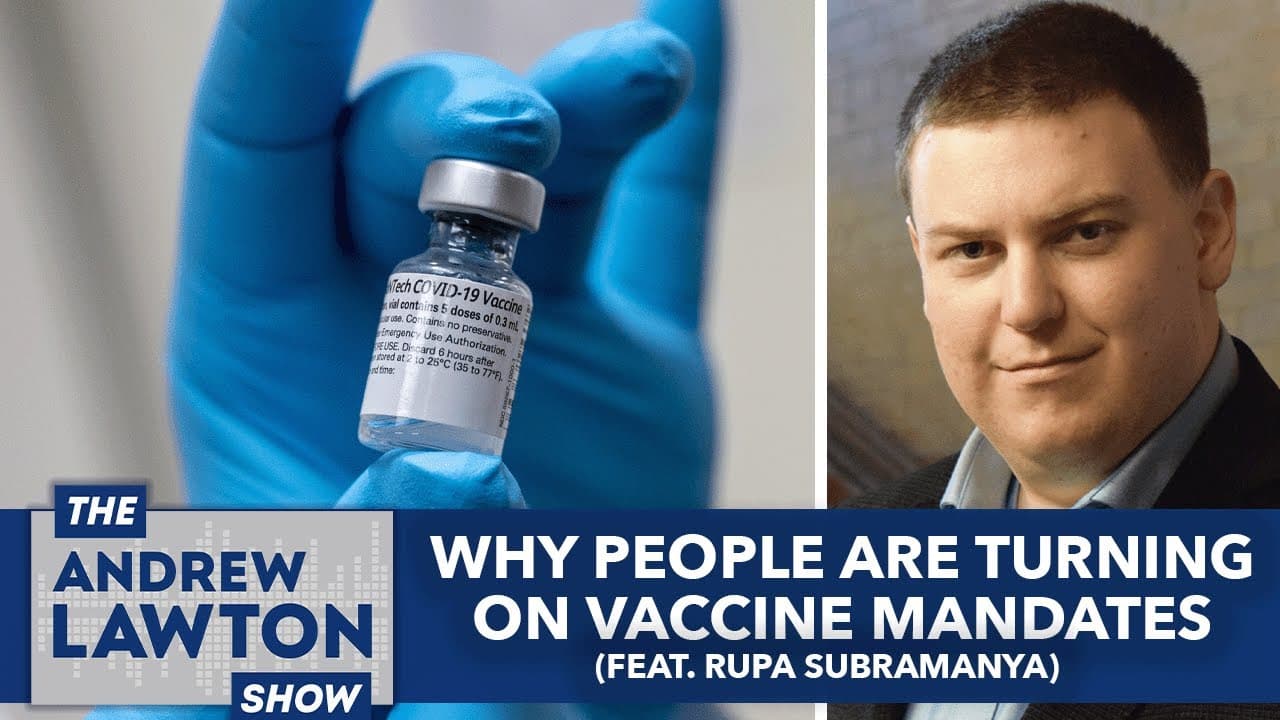
Why people are turning on vaccine mandates (ft. Rupa Subramanya)
TL;DR
Rupa Subramania discusses vaccine mandates, evolving views, and civil discourse in Canada.
Transcript
welcome to canada's most irreverent talk show this is the andrew logan show brought to you by true north coming up i talked to my colleague rupa subramania about vaccine mandates vaccine passports and the all-important marketplace of ideas the andrew lawton show starts right now hello and welcome to another edition of the andrew lawton show canada'... Read More
Key Insights
- 🫵 Rupa Subramania's views on vaccination mandates evolved significantly in response to personal experiences and broader societal changes.
- 😨 The initial support for mandates stemmed from a deep personal connection to the fear and trauma caused by COVID-19, particularly regarding family health crises in India.
- 🧑⚕️ Changing perceptions of public health communications reveal a disconnect between governmental assurances and the reality of ongoing restrictions, fostering skepticism among many Canadians.
- 🇨🇫 Public discourse surrounding vaccines has become increasingly polarized, with an observed tribalism affecting both proponents and opponents of vaccination.
- 🥺 Fear-based public health messaging may have unintended consequences, leading to entrenched attitudes and a lack of critical engagement with differing viewpoints.
- 🤨 The concept of natural immunity remains sidelined in discussions about vaccination, raising important questions about the comprehensive data used in public health policy.
- 🧑⚕️ Engagement in intelligent dialogue surrounding health measures is essential to foster understanding and mitigate divisions in communities.
Install to Summarize YouTube Videos and Get Transcripts
Explore YouTube Video Summarizer or Get YouTube Transcript Extractor
Questions & Answers
Q: What were Rupa Subramania's initial thoughts on vaccine mandates?
Initially, Rupa supported vaccine mandates as a method to encourage vaccination, particularly influenced by personal circumstances involving her parents and the fear surrounding COVID-19, especially during the Delta variant surge in India. Her early experiences led her to believe that these mandates were necessary for public safety and health.
Q: How did Rupa's experiences shape her views over time?
Over time, Rupa's experiences, including the lack of clear scientific basis for the mandates and her observations of government policies reverting to restrictive measures, prompted her to reconsider her stance. She realized that the fearmongering and political agendas surrounding mandates often overshadowed the actual public health goals, leading to her current opposition to mandates.
Q: What role did personal trauma play in Rupa's perspective?
Rupa shared that during the initial COVID-19 waves, she faced significant personal trauma as she dealt with her parents' health crises in India. This emotional experience drove her to initially support stringent mandates, believing they were vital for saving lives. However, as her perspective evolved, she acknowledged how these mandates could also be divisive and counterproductive.
Q: What concerns did Rupa raise about public health messaging?
Rupa pointed out that public health messaging in Canada shifted towards fear-based communication, often failing to provide clarity on the efficacy of the vaccines. She criticized the lack of acknowledgment of natural immunity and questioned why vaccination did not alleviate the ongoing fears and restrictions, as promised.
Q: How does Rupa feel about the current state of civil discourse regarding vaccination?
Rupa believes that civil discourse has suffered due to the polarized nature of debates surrounding vaccination and mandates. She argues for the importance of engaging in constructive discussions and allowing individuals the space to change their views without facing harsh criticisms or being labeled as anti-vaccine.
Q: What is Rupa's position on the efficacy of vaccines?
Rupa acknowledges that vaccines have important roles, particularly for vulnerable populations, but she personally does not intend to pursue further boosters. She recognizes the importance of vaccination for certain age groups and health conditions while expressing her discomfort with the constant push for newer booster doses.
Summary & Key Takeaways
-
Rupa Subramania shares her personal journey regarding vaccine mandates, explaining how her experiences during the pandemic shaped her views on vaccination and civil liberties.
-
The conversation highlights the tensions in Canadian society concerning vaccine passports and the public's shifting perspectives due to government restrictions and fear-based messaging.
-
Both Rupa and Andrew Lawton emphasize the importance of constructive discourse and the ability to change one’s mind based on new experiences and evidence.
Read in Other Languages (beta)
Share This Summary 📚
Summarize YouTube Videos and Get Video Transcripts with 1-Click
Try YouTube Summary with ChatGPT & Claude or YouTube Transcript Generator
Explore More Summaries from True North 📚

Summarize YouTube Videos and Get Video Transcripts with 1-Click
Try YouTube Summary with ChatGPT & Claude or YouTube Transcript Generator