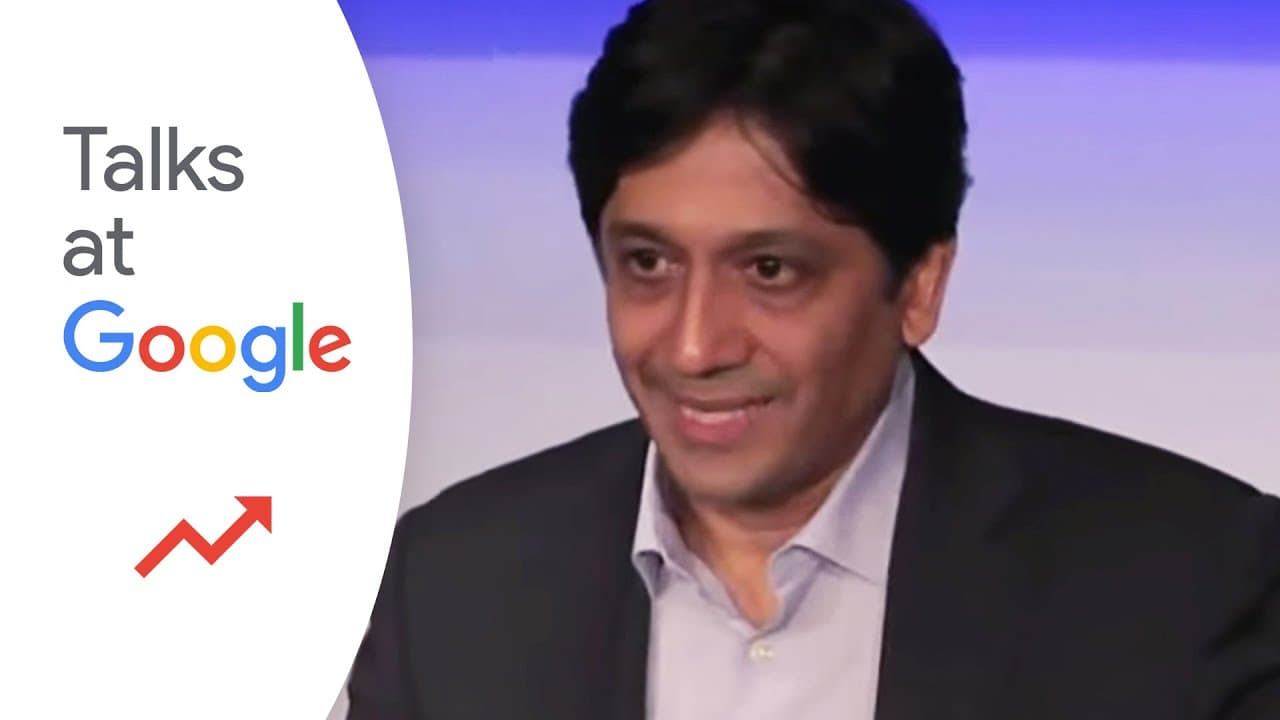
The Sharing Economy and the Future of Digital Governance | Arun Sundararajan | Talks at Google
TL;DR
Crowd-based capitalism is reshaping economic activities and governance, transitioning to a decentralized model.
Transcript
DAVID: Arun Sundararajan is a professor at New York University's Stern School of Business and an affiliated faculty member at NYU's Center for Data Science and NYU's Center for Urban Science and Progress. He is here today to discuss the sharing economy and the future of digital governance. Please join me in welcoming Arun Sundararajan. [APPLAUSE] A... Read More
Key Insights
- ⚾ Crowd-based capitalism redefines economic organization through peer-to-peer interactions and decentralized models.
- 🪛 Trust, social connections, and economic incentives drive participation in the sharing economy, influencing individual behaviors.
- 🤳 Data-driven delegation and self-regulatory mechanisms reshape governance in the sharing economy, ensuring accountability and compliance.
Install to Summarize YouTube Videos and Get Transcripts
Explore YouTube Video Summarizer or Get YouTube Transcript Extractor
Questions & Answers
Q: Why did Arun Sundararajan write the book on the sharing economy?
Arun was inspired by the emergence of the sharing economy through diverse examples, leading him to explore its economic impacts and regulatory implications.
Q: How is crowd-based capitalism reshaping economic activities?
Crowd-based capitalism, exemplified by platforms like Airbnb and BlaBlaCar, replaces traditional corporate models with decentralized approaches, fostering trust and interaction among participants.
Q: What drives individuals to participate in the sharing economy?
Social connections, economic motives, and improved unit economics are key reasons individuals engage in sharing economy platforms like BlaBlaCar and Airbnb.
Q: How does data-driven delegation enhance regulatory governance in the sharing economy?
Delegating regulatory responsibilities to platforms holding data enables more efficient enforcement and verification of compliance, creating a self-regulatory ecosystem.
Summary & Key Takeaways
-
Arun Sundararajan explores the sharing economy's rise and impact, focusing on crowd-based capitalism.
-
Examples like Airbnb, BlaBlaCar showcase the shift from traditional models to decentralized, peer-to-peer systems.
-
Trust, economic factors, and regulation play key roles in shaping the future of crowd-based capitalism.
Read in Other Languages (beta)
Share This Summary 📚
Summarize YouTube Videos and Get Video Transcripts with 1-Click
Try YouTube Summary with ChatGPT & Claude or YouTube Transcript Generator
Explore More Summaries from Talks at Google 📚
Summarize YouTube Videos and Get Video Transcripts with 1-Click
Try YouTube Summary with ChatGPT & Claude or YouTube Transcript Generator