How to Develop a Biofilm Assay for Anti-Fouling Solutions
TL;DR
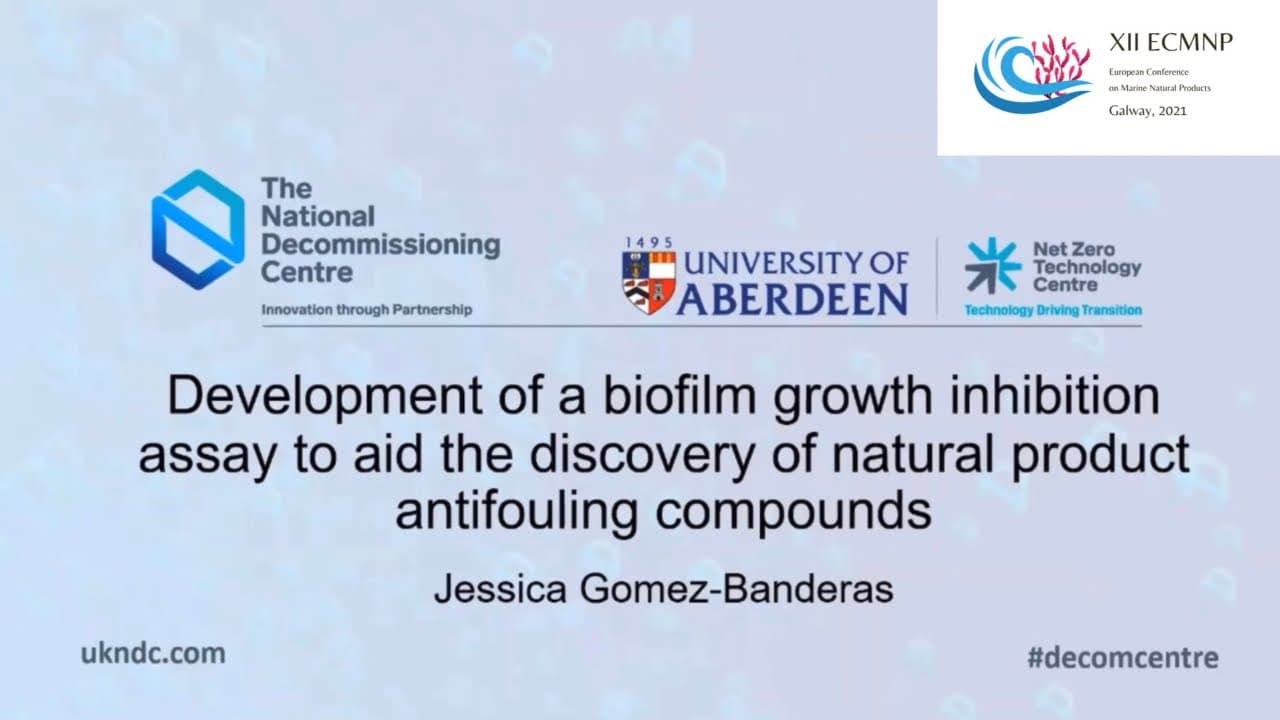
To develop a biofilm growth inhibition assay for discovering natural anti-fouling compounds, begin by culturing marine invertebrate extracts in a controlled environment. The assay successfully identifies promising extracts that inhibit biofilm formation, addressing the ecological and economic challenges posed by biofouling in marine industries.
Transcript
thank you so much for the introduction uh conchita um as conchita says my name is jessica i'm a third year phd student at the university of aberdeen in scotland um and today i'm going to speak to you about part of my project which was the process behind developing a biofilm growth inhibition assay to aid the discovery of natural product anti-filmin... Read More
Key Insights
- ❓ Biofouling in marine industries is a costly and ecological problem.
- ♻️ Current anti-fouling solutions have toxic effects and accumulate in the marine environment.
- 🇦🇬 Jessica developed a biofilm growth inhibition assay to find natural anti-fouling compounds.
- ❓ Marine invertebrates produce chemical defense compounds that can potentially prevent biofouling.
- 💻 Jessica's assay provides a method to screen marine invertebrate extracts for bioactivity.
- 👶 Promising results from tested extracts show potential for new anti-fouling compounds.
- 👨🔬 Understanding bacterial species reactions to extracts is crucial for further research.
Install to Summarize YouTube Videos and Get Transcripts
Explore YouTube Video Summarizer or Get YouTube Transcript Extractor
Questions & Answers
Q: What is biofouling and why is it a problem in marine industries?
Biofouling is the growth of a slimy biofilm that attracts larger organisms, causing financial and ecological challenges in marine industries due to the need for costly removal and risk of transporting invasive species.
Q: Why are current anti-fouling solutions problematic?
Current solutions like copper-based paints pose toxic effects on non-target species and accumulate in the marine environment, prompting the search for more environmentally friendly alternatives.
Q: How did Jessica develop the biofilm growth inhibition assay?
Jessica optimized the assay through trial and error, considering factors like medium, culture growth conditions, and incubation time to effectively test for biofilm inhibition using marine invertebrate samples.
Q: What are the next steps in Jessica's project?
Jessica aims to identify pure anti-fouling compounds from marine invertebrates by testing various extracts and fractions, hoping to find environmentally friendly solutions to prevent marine fouling.
Summary & Key Takeaways
-
Biofouling poses challenges in marine industries due to biofilm attracting larger organisms.
-
Current anti-fouling solutions have toxic effects, prompting the search for natural alternatives.
-
Jessica developed a biofilm growth inhibition assay to find marine invertebrate compounds for anti-fouling.
Read in Other Languages (beta)
Share This Summary 📚
Summarize YouTube Videos and Get Video Transcripts with 1-Click
Try YouTube Summary with ChatGPT & Claude or YouTube Transcript Generator
Explore More Summaries from Dr Jessica Gomez 📚




Summarize YouTube Videos and Get Video Transcripts with 1-Click
Try YouTube Summary with ChatGPT & Claude or YouTube Transcript Generator