How to Sing 'Em Dạo Này' in Vietnamese
TL;DR
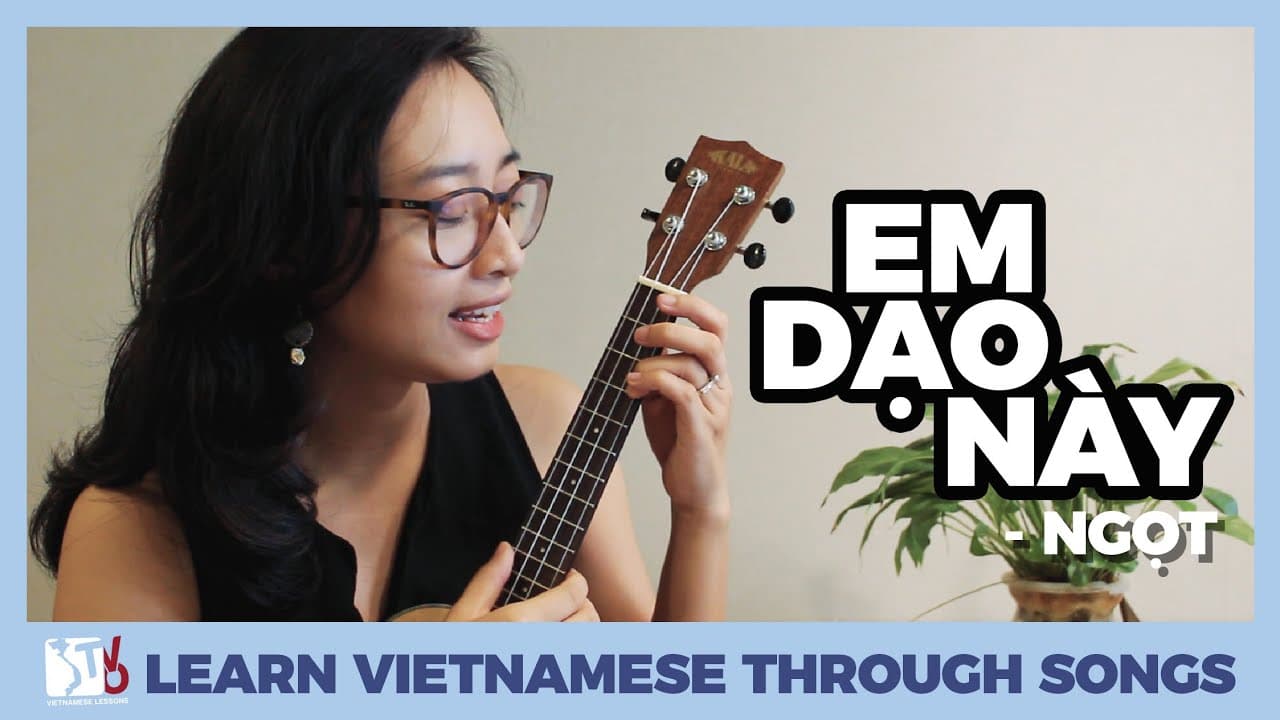
Learning to sing 'Em Dạo Này' by Ngọt helps in understanding Vietnamese culture and language. The song revolves around a man's lingering feelings for his ex-girlfriend, expressed through rhetorical questions. The video breaks down the song's verses, explaining vocabulary, sentence structure, and cultural context, making it easier to sing along and learn Vietnamese.
Transcript
you but you go hi-yah so badly he ankle nosy tell that welcome to TVO's channel my name is hua we got this idea from one of our students that learning through songs is a great way to learn a language and I found that to be true because when you learn one of a few songs in the local language you kind of get to know the culture a little bit better an... Read More
Key Insights
- Learning songs in a new language can enhance cultural understanding and language skills.
- 'Em Dạo Này' is a Vietnamese song about a man's feelings for his ex-girlfriend.
- The song uses rhetorical questions to express emotions and thoughts.
- Vietnamese sentence structure often includes a 'có...không' question form.
- In songs, some grammatical elements may be omitted for poetic effect.
- Understanding local vocabulary, such as 'chị' and 'em', is crucial for context.
- Cultural references, like karaoke, are embedded in language learning.
- The song's bridge and chorus offer insight into everyday Vietnamese expressions.
Install to Summarize YouTube Videos and Get Transcripts
Explore YouTube Video Summarizer or Get YouTube Transcript Extractor
Questions & Answers
Q: How does learning songs help in language acquisition?
Learning songs in a new language aids in language acquisition by improving pronunciation, vocabulary, and cultural understanding. Songs often include colloquial expressions and sentence structures that are used in everyday conversation, making it easier for learners to grasp the nuances of the language. Additionally, music can make learning more enjoyable and memorable.
Q: What is 'Em Dạo Này' about?
'Em Dạo Này' is a Vietnamese song by the band Ngọt, which revolves around a man's lingering feelings for his ex-girlfriend. Throughout the song, he imagines conversations with her, asking rhetorical questions that express his emotions and curiosity about her current life. The song captures themes of nostalgia and unspoken feelings.
Q: Why are some grammatical elements omitted in Vietnamese songs?
In Vietnamese songs, some grammatical elements may be omitted to achieve a poetic effect, maintain rhythm, or fit the melody. This artistic choice can make the lyrics sound more open-ended or romantic. While these omissions might deviate from standard grammar, they contribute to the song's emotional and aesthetic appeal.
Q: What is the significance of the 'có...không' question form?
The 'có...không' question form is a common structure in Vietnamese used for yes/no questions. It involves placing 'có' before the verb and 'không' at the end of the sentence. This structure helps clarify the question being asked and is an essential part of Vietnamese grammar, providing a straightforward way to form questions.
Q: How does the video help with Vietnamese pronunciation?
The video helps with Vietnamese pronunciation by breaking down the song's lyrics, focusing on the correct pronunciation of words and phrases. The host sings the verses slowly, allowing viewers to follow along and practice. This method provides a practical way to improve pronunciation through repetition and listening to native speakers.
Q: What cultural insights does 'Em Dạo Này' provide?
'Em Dạo Này' offers cultural insights into Vietnamese language and social interactions. It highlights the use of familial terms like 'chị' and 'em,' which denote respect and familiarity. The song also references common activities, such as watching movies alone or going to karaoke, which are integral to Vietnamese social life.
Q: How can singing 'Em Dạo Này' improve language skills?
Singing 'Em Dạo Này' can improve language skills by reinforcing vocabulary, sentence structures, and pronunciation. Engaging with the song allows learners to practice speaking and listening in a fun and interactive way. Additionally, understanding the song's context and emotions enhances cultural comprehension, making language learning more holistic.
Q: What role do rhetorical questions play in the song?
Rhetorical questions in 'Em Dạo Này' serve to express the protagonist's lingering feelings and curiosity about his ex-girlfriend. These questions convey emotions indirectly, allowing the listener to infer the protagonist's thoughts and feelings. This technique adds depth to the song's narrative, making it more engaging and relatable.
Summary & Key Takeaways
-
The video teaches how to sing 'Em Dạo Này' by Ngọt, a song about a man's lingering feelings for his ex-girlfriend. It breaks down the lyrics, explaining vocabulary, sentence structures, and cultural nuances. Singing along helps learners improve their Vietnamese language skills and cultural understanding.
-
Viewers learn about Vietnamese sentence structures, including the 'có...không' question form, and how certain grammatical elements may be omitted in songs for poetic effect. The video emphasizes the importance of understanding vocabulary and cultural references for effective language learning.
-
The host explains the song's verses, bridge, and chorus, offering insights into common Vietnamese expressions and cultural contexts. By learning the song, viewers can enhance their language skills and enjoy Vietnamese karaoke with friends.
Read in Other Languages (beta)
Share This Summary 📚
Summarize YouTube Videos and Get Video Transcripts with 1-Click
Try YouTube Summary with ChatGPT & Claude or YouTube Transcript Generator
Explore More Summaries from Tieng Viet Oi - Vietnamese Lessons 📚

Summarize YouTube Videos and Get Video Transcripts with 1-Click
Try YouTube Summary with ChatGPT & Claude or YouTube Transcript Generator