How Drybar's Alli Webb scaled a side hustle into a blowout empire | Masters of Scale
TL;DR
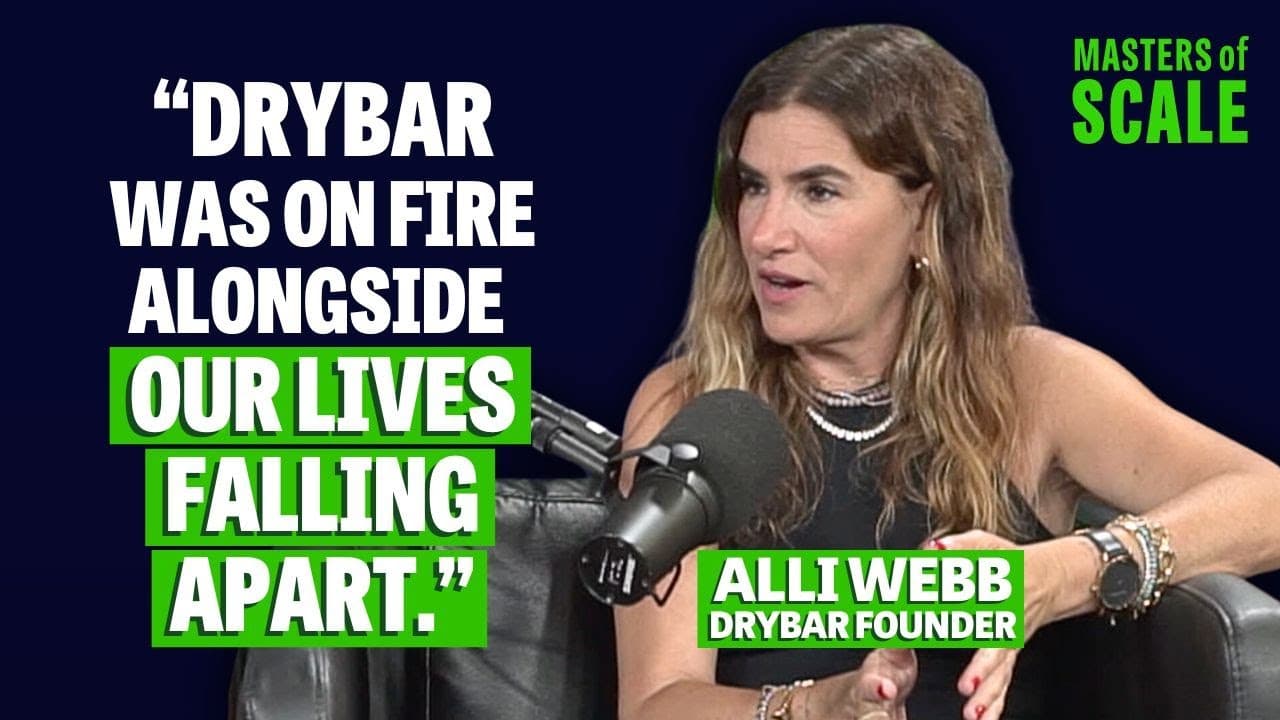
Alli Webb transformed Drybar from a side hustle into a nationwide business.
Transcript
I don't really know where to start but what I do know is how to run a salon I've worked in salons a big part of my 20s and knew hair really well Ali Webb wanted to open her own Salon called dry bar one that would focus on a specific service the blowout no haircuts no hair dye just the perfect blow dry and styling her business savvy brother realized... Read More
Key Insights
- Alli Webb leveraged her expertise in hairstyling to create Drybar, focusing solely on blowouts, which was a novel concept at the time.
- Her brother's business acumen and financial support were crucial in scaling Drybar, demonstrating the power of complementary skills in business partnerships.
- The business model of Drybar was initially met with skepticism due to its singular focus on blowouts, but it succeeded through high volume and customer satisfaction.
- Franchising was considered for rapid expansion but was met with internal resistance due to concerns about maintaining brand control and consistency.
- The introduction of a product line was a strategic move to complement the salon business, eventually leading to a lucrative sale of the product division.
- Webb's personal challenges, including family struggles, were shared publicly, resonating with many and highlighting the importance of authenticity in leadership.
- The decision to sell Drybar's product line separately from the service business was strategic, given the different buyer profiles for product and service companies.
- Her new venture, Squeeze, a massage concept, capitalizes on lessons learned from Drybar, focusing on an app-based customer experience to streamline operations.
Install to Summarize YouTube Videos and Get Transcripts
Explore YouTube Video Summarizer or Get YouTube Transcript Extractor
Questions & Answers
Q: What inspired Alli Webb to start Drybar?
Alli Webb was inspired to start Drybar due to her extensive experience in hairstyling and the success of her mobile blowout business. She realized there was a demand for a dedicated blowout service, which led her to establish Drybar as a salon focused solely on blowouts, offering a unique and specialized service.
Q: How did Drybar scale so quickly?
Drybar scaled quickly by capturing a niche market with its unique focus on blowouts and leveraging the complementary skills of Alli Webb and her brother. They expanded rapidly by opening new locations, raising investment capital, and eventually introducing a product line, which further fueled growth and brand recognition.
Q: What challenges did Drybar face with franchising?
Drybar faced challenges with franchising due to concerns about maintaining brand control and consistency. Franchising offered rapid expansion but required balancing the needs of franchisees with company-owned stores. This dual structure was complex to manage and required significant resources to ensure a consistent brand experience across locations.
Q: Why did Drybar introduce a product line?
Drybar introduced a product line to complement its salon services and address the need for products specifically designed for blowouts. The product line was developed to enhance the blowout experience and extend its longevity, ultimately becoming a significant revenue stream and leading to a separate sale of the product division.
Q: How did Alli Webb handle personal challenges while running Drybar?
Alli Webb handled personal challenges by being open about her struggles, which resonated with many and provided a sense of authenticity. She shared her experiences publicly, including family issues and the pressures of running a booming business, which helped her connect with others facing similar challenges and built a supportive community.
Q: What strategic decision did Drybar make regarding its business divisions?
Drybar made the strategic decision to separate its product and service divisions when selling the company. Recognizing that potential buyers for products and services were different, they sold the product line to Helen of Troy while planning to sell the service business separately, a move that maximized value and aligned with market realities.
Q: What is Alli Webb's new venture, Squeeze, and how does it differ from Drybar?
Alli Webb's new venture, Squeeze, is a massage concept that applies lessons learned from Drybar, focusing on creating a streamlined customer experience through an app-based system. Unlike Drybar's initial focus on physical locations, Squeeze emphasizes technology to enhance service delivery and customer satisfaction, offering a modern approach to the massage industry.
Q: What lessons from Drybar is Alli Webb applying to her new business?
Alli Webb is applying lessons from Drybar to her new business, Squeeze, by focusing on a specialized service, leveraging technology for a seamless customer experience, and maintaining brand consistency. She is also emphasizing the importance of strategic partnerships and efficient operations to ensure scalability and success in the competitive wellness industry.
Summary & Key Takeaways
-
Alli Webb founded Drybar with a unique business model focusing on blowouts, leveraging her hairstyling expertise and her brother's business skills to scale rapidly.
-
Despite initial skepticism about its narrow focus, Drybar's success was driven by high customer satisfaction and strategic expansion, including a product line.
-
Webb's openness about personal challenges has resonated with many, and her new venture, Squeeze, applies lessons learned from Drybar to the massage industry.
Read in Other Languages (beta)
Share This Summary 📚
Summarize YouTube Videos and Get Video Transcripts with 1-Click
Try YouTube Summary with ChatGPT & Claude or YouTube Transcript Generator
Explore More Summaries from Masters of Scale 📚

Summarize YouTube Videos and Get Video Transcripts with 1-Click
Try YouTube Summary with ChatGPT & Claude or YouTube Transcript Generator