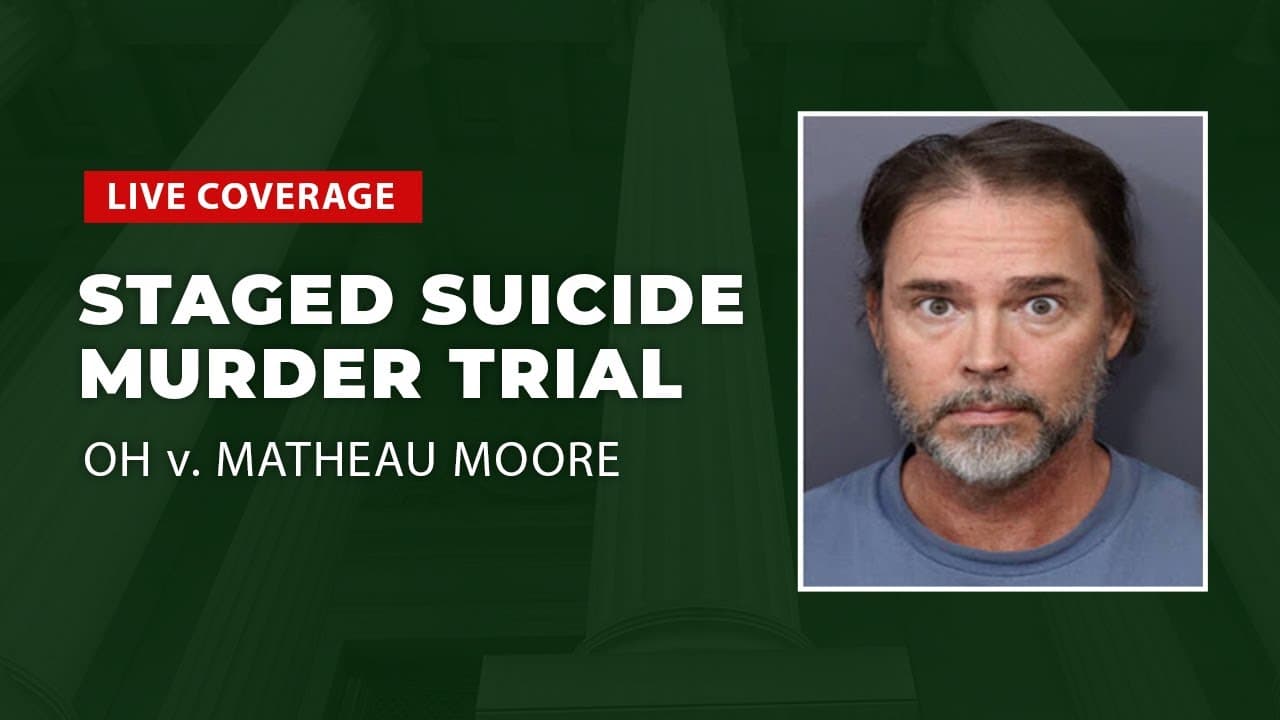
Watch Live: Staged Suicide Murder Trial - OH v. Matheau Moore Day 6
TL;DR
Pathologist discusses autopsy procedures and expert testimony in a legal case.
Transcript
um okay where are you meant to be yes to make sure um you see me up there i saw yeah wow um i wish i wish i could tell you no i [Applause] i can't wait for like my next travels foreign god hmm so thank you hi good morning members of the jury everyone follow the course admonition last night ready to go thank you very much stay ready proceed yes defe... Read More
Key Insights
- 👪 The collaboration between forensic pathologists and family physicians in handling autopsy findings is essential for comprehensive investigations.
- 🏣 The chain of custody for remains in the coroner's office ensures proper documentation and handling of evidence during post-mortem examinations.
- 😷 Training and certifications are crucial for medical professionals to perform autopsy procedures and maintain expertise in forensic examinations.
Install to Summarize YouTube Videos and Get Transcripts
Explore YouTube Video Summarizer or Get YouTube Transcript Extractor
Questions & Answers
Q: What qualifications are required to become a forensic pathologist?
To become a forensic pathologist, one must have a medical degree and specialized training in pathology, with a focus on forensics for evaluating post-mortem bodies.
Q: How does the chain of custody work in handling remains for autopsy examinations?
Remains are received in a receiving area, then transferred to a cooler until the autopsy is performed, and finally returned to the cooler until released to other agencies or funeral homes.
Q: Are photographs crucial in documenting post-mortem examinations?
Yes, photographs play a crucial role in documenting the external and internal examination of remains, providing visual evidence for investigations and legal purposes.
Q: How do family physicians like Dr. Hickman collaborate with forensic pathologists in the coroner's office?
Family physicians like Dr. Hickman review autopsy findings and oversee the coroner's responsibilities, relying on forensic pathologists for detailed anatomical examinations and expertise in cause of death determinations.
Summary & Key Takeaways
-
Dr. Richmond, a forensic pathologist, details her examination procedures for post-mortem bodies in a legal case.
-
Dr. Hickman, a family physician and county coroner, discusses his role in reviewing autopsy findings as a non-forensic pathologist.
-
Both experts provide insight into the process and requirements for conducting autopsies in forensic investigations.
Read in Other Languages (beta)
Share This Summary 📚
Summarize YouTube Videos and Get Video Transcripts with 1-Click
Try YouTube Summary with ChatGPT & Claude or YouTube Transcript Generator
Explore More Summaries from Law&Crime Network 📚


Summarize YouTube Videos and Get Video Transcripts with 1-Click
Try YouTube Summary with ChatGPT & Claude or YouTube Transcript Generator