What Are the Latest Innovations in Robotics by Dennis Hong?
TL;DR
Dennis Hong presents seven new robot species that demonstrate innovative locomotion methods, including the helium balloon robot BALLU, which walks on water and dances. Other highlights include the humanoid robots ARTEMIS and ALPHRED, which utilize advanced actuators for improved stability and movement, showcasing the future direction of robotics in various applications.
Transcript
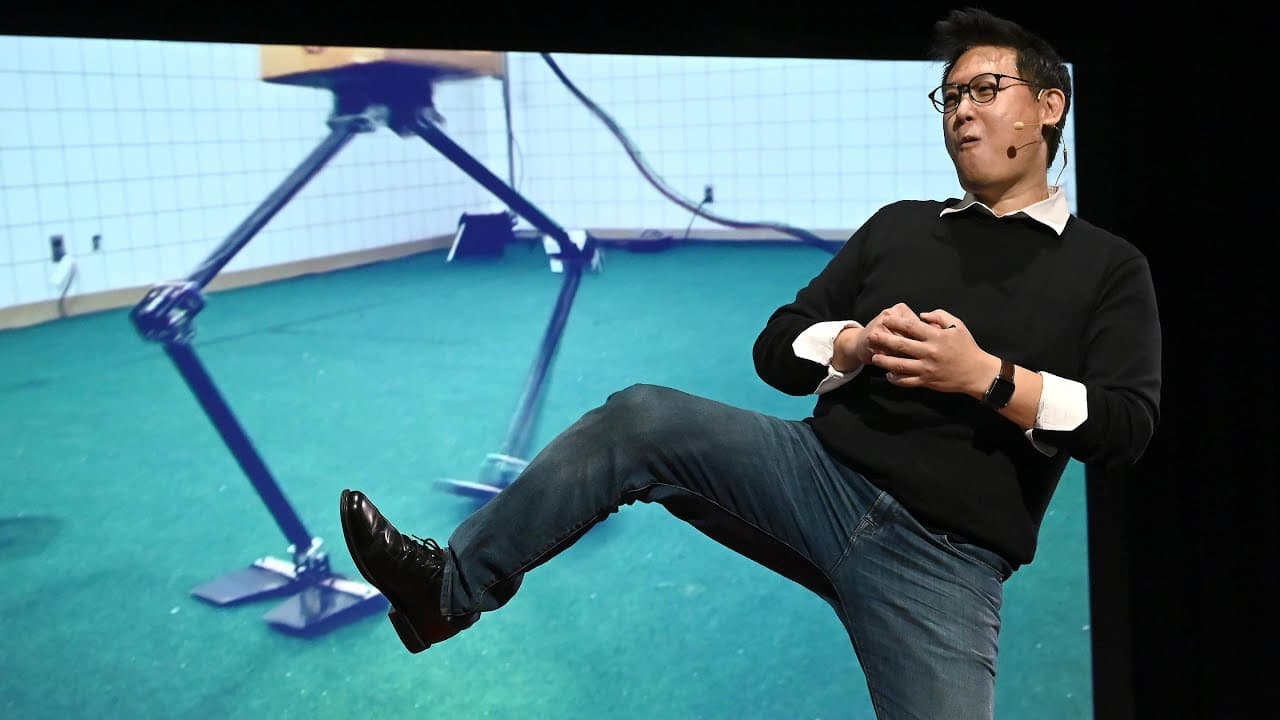
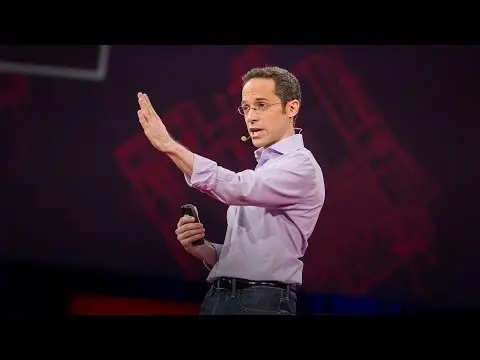
Exactly 12 years ago in a TEDx Talk, I introduced my seven species of robot. A unique three-legged robot called STriDER, a wheel-leg hybrid robot called IMPASS, an amoeba robot and many more. Now, 12 years is a pretty long time, especially in a cutting-edge field like robotics. How have our robots evolved during the past 12 years? What new species ... Read More
Key Insights
- 🤖 Humanoid robots have evolved over the past 12 years, but their stability, speed, cost, and safety remain significant challenges.
- 🚶 Walking with two feet is difficult for robots due to unwanted twisting forces, inspiring the development of sideways walking robots.
- 🤝 Non-anthropomorphic bipedal robots, like NABi, offer simple, fast, and low-cost walking solutions.
- 🌪️ Rotating knees and torsos, along with redesigned legs and heads, can create new types of robots like NABi.
- 🦵 Changing body configurations, like in ALPHRED, allow for different modes of locomotion, such as galloping like a horse.
- ⚡ BEAR actuators generate compliant and energy-efficient movements in robots like NABi-2 and ALPHRED-2.
- 🕷️ Robots with six legs, like HEX and SiLVIA, excel in rough and unstructured terrains and can climb walls.
- 🎈 BALLOON is a bipedal robot with a helium balloon body that offers improved stability, safety, and versatility, but faces challenges outdoors.
Install to Summarize YouTube Videos and Get Transcripts
Explore YouTube Video Summarizer or Get YouTube Transcript Extractor
Questions & Answers
Q: How have robots evolved in the past 12 years?
Over the past 12 years, robots have evolved significantly. The focus has shifted towards the development of humanoid robots, with advancements in their design and functionality.
Q: What new species of robots have been built since the last TEDx Talk?
Since the last TEDx Talk, several new species of robots have been built. These include DARwIn, CHARLI, THOR-RD, Shipboard Autonomous Fire Fighting Robot (SAFFiR), NABi, ALPHRED, NABi-2, ALPHRED-2, HEX, SiLVIA, OmBURo, BALLU, SCALER, and ARTEMIS.
Q: What are the challenges with making humanoid robots walk with two feet?
One of the challenges with making humanoid robots walk with two feet is the constant struggle to maintain balance. The distance between the left and right legs creates unwanted twisting forces that lead to instability. Additionally, designing robots that are both cost-effective and safe presents additional difficulties.
Q: How has the lab addressed the challenges of bipedal locomotion?
The lab has approached the challenges of bipedal locomotion by exploring alternative methods. They have developed robots that walk sideways, eliminating the twisting moments that cause instability. They have also made changes to the body configuration, eliminating the need for feet and ankles and utilizing rotation in the knees.
Q: What is the BEAR actuator and how has it been used in robotics?
The BEAR actuator is a new type of actuator developed by the lab. It emulates the compliance and springiness of biological muscles, allowing for more dynamic movement. It has been used in robots such as NABi-2 and ALPHRED-2, enabling them to jump, hop, and generate electricity through the impact of landing.
Q: What applications are the different robots designed for?
The different robots have been designed for various applications. For example, DARwIn and CHARLI are used for research and education, THOR-RD is for disaster relief, SAFFiR is for shipboard firefighting, HEX and SiLVIA are for unstructured terrains, OmBURo is for navigating crowded environments, BALLU is for safe human-robot interaction, SCALER is for cliff climbing, and ARTEMIS is a yet-to-be-revealed advanced humanoid robot.
Q: What are the underlying factors behind the lab's creative and productive work?
The lab attributes its creative and productive work to factors such as openness, freedom, trust, and having fun. They believe in their ability to change the world through their work, and the energy and enthusiasm of their students contribute to their success.
Summary & Key Takeaways
-
Over the past 12 years, the development of humanoid robots has been a focus for the lab, RoMeLa, resulting in the creation of multiple humanoid robots such as DARwIn and CHARLI.
-
The lab has also explored alternative forms of locomotion, resulting in the development of robots with unique walking styles, such as NABi and ALPHRED.
-
The lab has also created robots with specialized functions, such as the climbing robot SCALER, the hexapod robot HEX, and the wheel-based robot OmBURo.
Read in Other Languages (beta)
Share This Summary 📚
Summarize YouTube Videos and Get Video Transcripts with 1-Click
Try YouTube Summary with ChatGPT & Claude or YouTube Transcript Generator
Explore More Summaries from TED 📚


Summarize YouTube Videos and Get Video Transcripts with 1-Click
Try YouTube Summary with ChatGPT & Claude or YouTube Transcript Generator