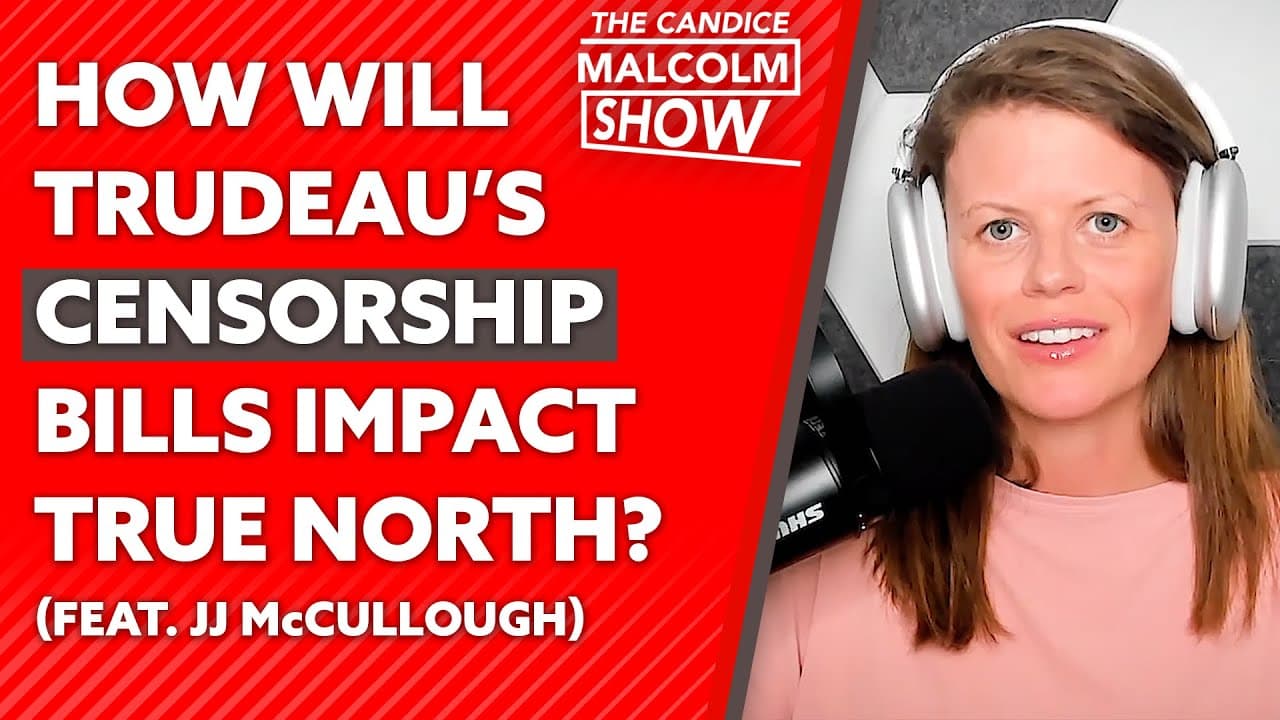
How will Trudeau’s internet censorship bills impact True North? (Ft. JJ McCullough)
TL;DR
Trudeau's new censorship bills threaten online creators like JJ McCullough.
Transcript
how will prime minister justin trudeau's online censorship bills affect outlets like true north we'll speak to one of canada's largest youtube creators to discuss how this bill will affect online creators i'm dennis welcome and this is the kenneth welcome show [Applause] hi everyone thank you so much for tuning in so we are paying a lot of attentio... Read More
Key Insights
- 🤨 Trudeau’s online censorship bills, particularly Bill C-11, aim to impose government control over content algorithms, which has raised concerns among creators.
- 🫵 The proposed legislation is viewed as an unnecessary intervention in a thriving digital landscape that has been successful without regulatory oversight.
- ❓ Critics argue that such regulations may create a hierarchy of content that favors government-sanctioned creators while hindering diverse viewpoints and grassroots creators.
- 👤 There's skepticism about the CRTC's relevance in a modern media environment where user autonomy has been a significant driver of content creation and consumption.
- 🤩 McCullough highlights the key problem of defining what constitutes "Canadian content," noting the potential pitfalls of vague governmental criteria.
- 🤗 Opposing cultural nationalism and bureaucratic intervention, the discussion calls for an open dialogue about the role of the government in regulating cultural consumption.
- 🤕 The contrast between U.S. and Canadian approaches to tech regulation illustrates a broader debate on rights and responsibilities in the digital age.
Install to Summarize YouTube Videos and Get Transcripts
Explore YouTube Video Summarizer or Get YouTube Transcript Extractor
Questions & Answers
Q: What are the main concerns regarding Bill C-11 for Canadian creators?
The main concerns about Bill C-11 include the regulation of content algorithms that prioritize certain Canadian content while disregarding the needs of diverse creators. Many fear it could disrupt their livelihoods by imposing heavy-handed quotas reminiscent of traditional media regulations, thereby restricting creative freedom and autonomy.
Q: How does JJ McCullough view the government's intentions behind the proposed bills?
McCullough believes the government's intentions are misguided, suggesting that these bills reflect a paternalistic approach that underestimates the ability of Canadian creators to thrive independently. He sees it as an attempt to extend government control into spaces where creators have been successful without interference, motivated by both jealousy and a misguided need for cultural preservation.
Q: In what ways could Bill C-11 impact platforms like YouTube?
Bill C-11 could compel YouTube to alter its content algorithms to comply with Canadian regulations, requiring them to prioritize Canadian content based on vague criteria. This could disproportionately benefit established creators while potentially marginalizing others whose content does not fit the government's definition of "Canadian," thus limiting the diversity of views available online.
Q: What is the perceived role of the CRTC in regulating content?
The CRTC is seen as an outdated regulatory body that traditionally enforces content quotas in Canadian television and radio. Its proposed extension into online platforms is criticized as unnecessary, especially when user-driven content like YouTube has flourished without such oversight, suggesting that the organization may be clinging to power in a changing media landscape.
Q: How does McCullough characterize the Canadian government’s stance towards cultural sovereignty?
McCullough characterizes the Canadian government's stance as hypocritical, asserting it advocates for cultural sovereignty while simultaneously eroding individual freedoms. He argues that the government invokes the rhetoric of national identity to justify intrusive regulations while ignoring that many successful Canadian creators flourish independently of state control.
Q: Why does the discussion highlight the distinction between the U.S. and Canadian approaches to regulating tech companies?
The discussion highlights that in the U.S., the focus tends to be on preventing government intervention to promote free speech, while in Canada, there’s a trend towards government regulation that aims to enforce ideological agendas. This contrast underscores the differing attitudes towards the balance of power between the state and private enterprises in managing content dissemination.
Q: What are the potential consequences for smaller content creators under these bills?
Smaller content creators may face challenges as government criteria for what constitutes "Canadian" content could exclude them from receiving algorithmic boosts or financial support. Their content may not align with the government’s ideological goals, resulting in reduced visibility and opportunities compared to larger, established channels that fit the defined parameters better.
Q: Is there a consensus on the necessity of regulation in online spaces?
There is no clear consensus, as opinions vary significantly. While some advocate for protecting free speech and individual choice in content consumption, others argue that without regulation, harmful content might proliferate. The challenge lies in finding a legislative approach that protects freedoms without encroaching on the diversity and spontaneity that online platforms provide.
Summary & Key Takeaways
-
The discussion focuses on two proposed online censorship bills by the Trudeau government, particularly Bill C-11, which regulates content algorithms without evidence that Canadian creators need such intervention.
-
JJ McCullough argues that these bills promote government control in a previously unregulated creative space like YouTube while potentially disrupting the livelihoods of many creators by favoring certain types of content over others.
-
The debate raises questions about the effectiveness of existing regulatory bodies like the CRTC and whether it is necessary for the government to impose ideological criteria on online content in the name of protecting Canadian cultural sovereignty.
Read in Other Languages (beta)
Share This Summary 📚
Summarize YouTube Videos and Get Video Transcripts with 1-Click
Try YouTube Summary with ChatGPT & Claude or YouTube Transcript Generator
Explore More Summaries from True North 📚

Summarize YouTube Videos and Get Video Transcripts with 1-Click
Try YouTube Summary with ChatGPT & Claude or YouTube Transcript Generator