Can Video Games Make You A Better Person?
TL;DR
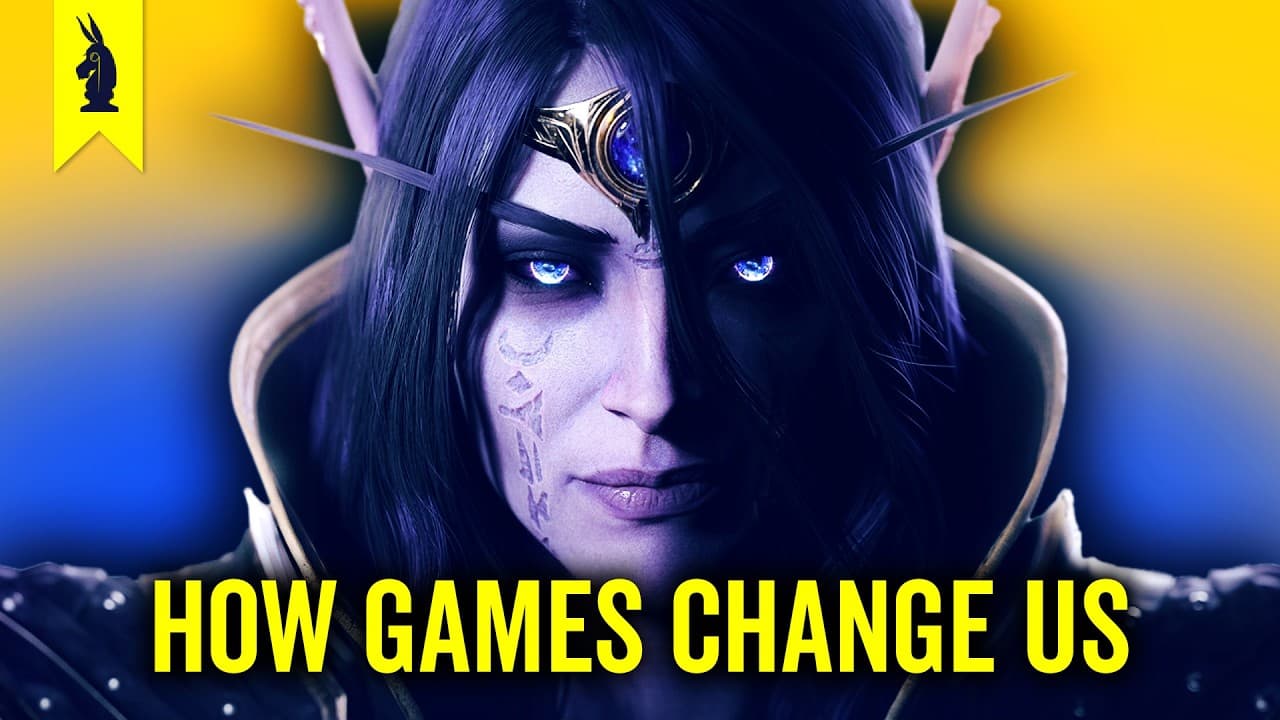
World of Warcraft allows players to explore identity and community, shaping real-world behaviors.
Transcript
guys I'm so old that when I was in college we actually had to plug into the internet via Ethernet cable you know we didn't have Wi-Fi yet but at the time we didn't care cuz it was the fastest internet any of us had ever had which was so good for downloading music playing video games and other stuff but one thing that quickly ended up on everyone's ... Read More
Key Insights
- 💪 World of Warcraft has maintained a strong player base since 2004, highlighting its significance in gaming culture and social interaction.
- 👻 The game's design allows for extensive character customization, enabling players to explore their identities and create alternate personas.
- 🎮 Games like World of Warcraft facilitate emotional experiences where players confront personal issues and ethical dilemmas through gameplay.
- 👾 The social structures within the game promote cooperation and adherence to communal norms, enhancing players' social skills and community engagement.
- 👾 Research indicates that the game satisfies deeper psychological needs by fostering friendships that often surpass those formed outside of gaming.
- 🛟 Engagement in the virtual world can impact real-life behaviors, with players demonstrating resilience and adaptability during in-game events reflecting real-life crises.
- 🎮 The nature of World of Warcraft as a "rise matic" game allows for nonlinear gameplay, offering endless possibilities for exploration and personal growth.
Install to Summarize YouTube Videos and Get Transcripts
Explore YouTube Video Summarizer or Get YouTube Transcript Extractor
Questions & Answers
Q: How does World of Warcraft allow players to explore their identities?
World of Warcraft acts as a platform for crafting a 'ludic identity,' wherein players can create avatars that represent idealized versions of themselves. As players engage in different roles and quests, they explore new possibilities, behaviors, and traits that can diverge significantly from their real-life personas. This process enables self-reflection and can lead to personal growth and a deeper understanding of one's identity.
Q: What is the difference between narrative identity and ludic identity?
Narrative identity relates to how individuals construct their self-concept based on past experiences, making sense of their lives through stories. In contrast, ludic identity emphasizes play and exploration, allowing players to imagine alternative realities and futures without the constraints of past choices. This openness fosters creativity and adaptability in players, impacting their decision-making in both virtual and real-life settings.
Q: How does World of Warcraft facilitate community building among players?
The game encourages collaboration through team-based tasks like raids and quests, where players must coordinate and communicate effectively. This social interaction fosters trust and friendship among players, creating a sense of belonging and community that often extends beyond the game. The shared experiences of overcoming challenges together enhance social bonds, leading to deeper connections than those in many other online environments.
Q: What can World of Warcraft teach us about real-life behaviors during crises?
The "Corrupted Blood" incident in 2005 demonstrated that players' reactions mirrored real-world pandemic responses. Players took on roles akin to first responders and engaged in both altruistic and self-serving behaviors during the in-game epidemic. This suggests that gaming environments can provide valuable insights into human behavior in crisis situations, making them useful for epidemiological studies and understanding social dynamics during global events.
Summary & Key Takeaways
-
World of Warcraft has been a cultural phenomenon since its release in 2004, with a massive player base and lasting popularity. The game invites players to create and experiment with their identities, providing a platform for personal growth and social connection.
-
Philosophical frameworks, such as narrative identity and ludic identity, help explain how games like World of Warcraft offer players opportunities to reflect on their self-concept through character creation and gameplay, fostering emotional development and enhancing moral understanding.
-
The game's community dynamics highlight how social interactions within World of Warcraft can mirror real-life challenges and relationships, contributing to a sense of belonging while also providing insights into human behavior during crises, such as pandemics.
Read in Other Languages (beta)
Share This Summary 📚
Summarize YouTube Videos and Get Video Transcripts with 1-Click
Try YouTube Summary with ChatGPT & Claude or YouTube Transcript Generator