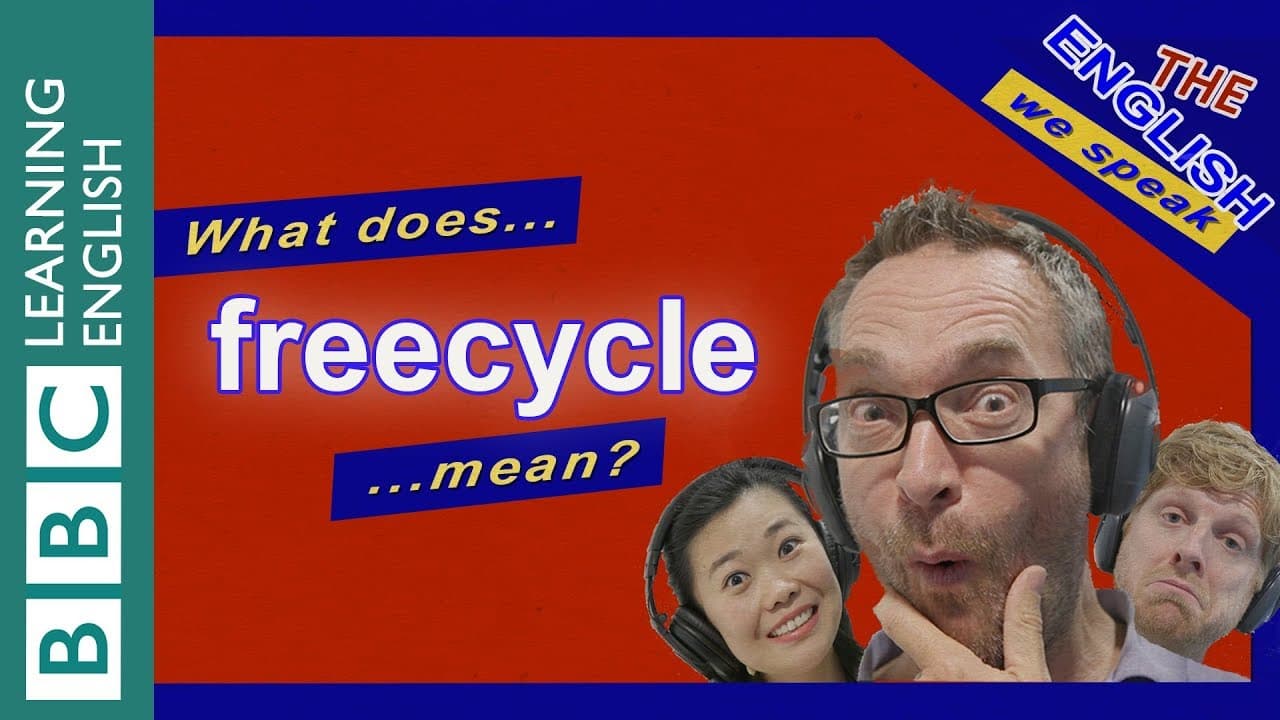
What does 'freecycle' mean?
TL;DR
Freecycle means giving away items for free to recycle.
Transcript
Feifei: Are you OK, Neil? Neil: Just clearing out this cupboard, Feifei. It's full of old junk. Feifei: Ooh, what a lot of stuff. Is that a... gorilla arm? Neil: Yes, that was a fun project. Feifei: Interesting. Neil: Ooh, this is the microphone I recorded my first masterpiece with. Bit dusty. I wonder if it still works? Or maybe I should sell it? ... Read More
Key Insights
- Freecycling is the act of giving away unwanted items for free to others who might need them, as an alternative to recycling.
- There are online platforms that facilitate freecycling by matching people who want to give away items with those who need them.
- Freecycling can be a win-win situation, saving space and giving items a new life without the hassle of selling.
- The concept of freecycling is not limited to small items; larger items like bicycles can also be freecycled.
- Neil is hesitant to freecycle his items due to sentimental attachments, a common hurdle in decluttering.
- Feifei encourages Neil to consider freecycling as a way to clear space and help others, but Neil is not fully convinced.
- The programme highlights the emotional challenges of letting go of items, even when they are no longer needed.
- Freecycling is presented as an environmentally friendly and community-oriented way to dispose of unwanted items.
Install to Summarize YouTube Videos and Get Transcripts
Explore YouTube Video Summarizer or Get YouTube Transcript Extractor
Questions & Answers
Q: What is the main topic of the content?
The main topic of the content is the concept of 'freecycling', which involves giving away unwanted items for free to others who can use them. The discussion revolves around Neil's reluctance to part with his old belongings and Feifei's suggestion to use freecycling as a solution.
Q: How does Feifei explain the concept of freecycling?
Feifei explains freecycling as a form of recycling where items are given away for free rather than being sold or thrown away. She mentions that there are websites that help match people who want to give away items with those who need them, making it an efficient way to clear out unwanted items.
Q: What is Neil's initial reaction to the idea of freecycling?
Neil's initial reaction to freecycling is a mix of intrigue and humor. He jokes about wanting to exchange his microphone for a bicycle, misunderstanding the concept. However, he shows interest in the idea but hesitates due to his sentimental attachment to his belongings.
Q: What are some examples of items mentioned that can be freecycled?
Examples of items mentioned in the content that can be freecycled include old pots and pans, a computer monitor, a bicycle, and Neil's microphone. These examples illustrate the variety of items that can be given away through freecycling, from household goods to electronics.
Q: What challenges does Neil face when considering freecycling?
Neil faces emotional challenges when considering freecycling, as he is sentimentally attached to his old items. Despite recognizing the practicality of freecycling, he struggles to let go of his belongings, such as his microphone and gorilla arm, due to the memories associated with them.
Q: How does the content suggest freecycling benefits the environment?
The content suggests that freecycling benefits the environment by reducing waste and promoting reuse. By giving away items for free instead of discarding them, freecycling helps extend the life of products and reduces the need for new resources, aligning with sustainable practices.
Q: What humorous elements are included in the content?
Humorous elements in the content include Neil's playful misunderstanding of freecycling as exchanging items for a bicycle and his lighthearted attachment to quirky items like a gorilla arm. These moments add levity to the discussion and highlight the common emotional attachments people have to their belongings.
Q: What resources are mentioned for learning more about freecycling?
The content mentions online platforms and websites that facilitate freecycling by connecting people who want to give away items with those who need them. Additionally, it references BBC Learning English as a resource for further learning about English idioms and expressions, including freecycling.
Summary & Key Takeaways
-
Neil is clearing out his cupboard and discovers many old items, including a microphone and a gorilla arm. Feifei suggests he freecycles them, explaining that freecycling is giving items away for free. Neil is intrigued but reluctant due to sentimental reasons.
-
Feifei explains that freecycling is an alternative to recycling, where items are given away for free to people who need them. She mentions websites that facilitate this process, but Neil jokes about wanting a free bicycle instead.
-
Despite Feifei's encouragement, Neil struggles to part with his old items, citing sentimental value. The programme concludes with Neil considering exploring freecycling websites, but still attached to his belongings.
Read in Other Languages (beta)
Share This Summary 📚
Summarize YouTube Videos and Get Video Transcripts with 1-Click
Try YouTube Summary with ChatGPT & Claude or YouTube Transcript Generator
Explore More Summaries from BBC Learning English 📚
Summarize YouTube Videos and Get Video Transcripts with 1-Click
Try YouTube Summary with ChatGPT & Claude or YouTube Transcript Generator