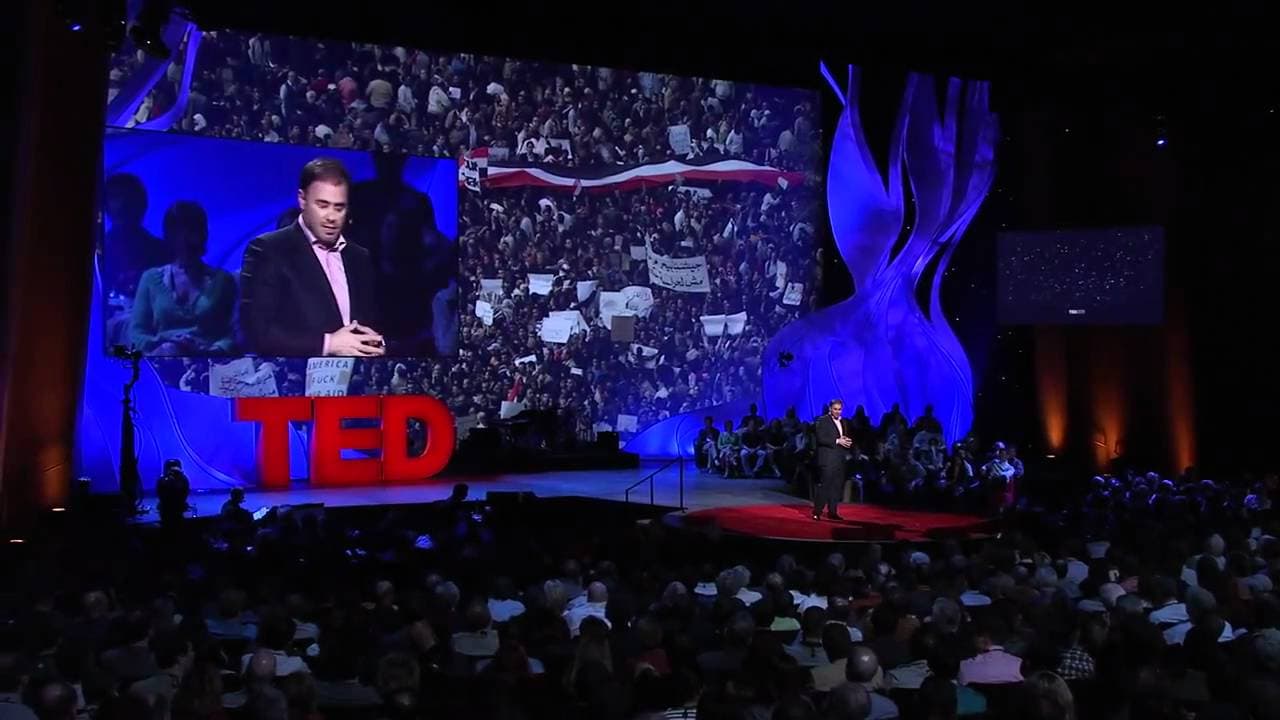
Wadah Khanfar: A historic moment in the Arab world
TL;DR
A journalist reflects on the Arab Spring and the transformative power of the internet and connectedness, highlighting the potential for a new future in the Middle East.
Transcript
few years ago exactly I was in Afghanistan I was covering the war in Afghanistan and I witnessed as a reporter for al-jazeera the amount of suffering and destruction that emerged out of a war like that then two years later I covered another war the war in Iraq I was placed at the center of that world because I was covering the war from the northern... Read More
Key Insights
- 🌍 The Middle East has been plagued by authoritarian regimes and a sense of paralysis for decades, leading to suffering and destruction.
- 📺 Al Jazeera played a significant role in amplifying the voices of the people during the Arab Spring, providing a platform for ordinary citizens to share their stories.
- 🌟 A new generation in the Arab world, inspired by universal values and global understanding, is leading the way towards a new future filled with hope and tolerance.
- 💻 Internet and connectivity have played a crucial role in empowering the youth and allowing them to express their dreams and aspirations.
- 🔓 Change in the Arab world should come from within, reconciling cultural diversity and tradition with universal values, rather than being imposed from outside.
- 📸 Al Jazeera's coverage of the Arab Spring, despite being banned in some countries, allowed the world to witness the magnitude of the revolution and protected the protesters from potential violence.
- 🌍 It is crucial for the West to support the people of the Arab world during this transformative period, embracing the values of democracy and freedom of choice.
- 💪 The youth in the Arab world are the driving force behind the change and are often wiser and more capable than the political and intellectual elite.
Install to Summarize YouTube Videos and Get Transcripts
Explore YouTube Video Summarizer or Get YouTube Transcript Extractor
Questions & Answers
Q: How has the journalist's firsthand experience covering wars influenced their perspective on the Arab Spring?
As a journalist who witnessed the suffering and destruction in Afghanistan and Iraq, the journalist has firsthand experience of the consequences of foreign intervention and the need for meaningful change in the Arab world. This has shaped their perspective on the Arab Spring, highlighting the potential for a new future through peaceful means.
Q: How did the use of social media platforms like Facebook and Twitter contribute to the Arab Spring?
The journalist mentions that social media played a significant role in the Arab Spring, particularly in countries like Tunisia and Egypt. People used platforms like Facebook and Twitter to organize protests, share news and images, and connect with others who could amplify their voices. These platforms allowed for the rapid dissemination of information and helped mobilize large numbers of people.
Q: How did Al Jazeera contribute to the Arab Spring?
Despite being banned from reporting in Tunisia and Egypt, Al Jazeera found ways to cover the events unfolding in those countries. Their correspondents went underground, and ordinary citizens became their reporters, feeding the newsroom with videos, pictures, and news. Al Jazeera amplified the voices of the protesters and broadcasted their stories to the Arab world through their channels. They played a crucial role in documenting and spreading awareness of the revolution.
Q: How did the youth in the Arab world play a significant role in the Arab Spring?
The journalist emphasizes the role of young people in driving the Arab Spring. They describe the youth as being inspired by universal values and connectedness, empowering them to protest and demand change. The journalist believes that this new generation is wiser and more capable of creating positive change than the political and cultural elite. It was the youth who organized themselves into groups and councils to guard the transformation and shape the path towards democracy.
Q: What is the journalist's opinion on the potential outcome of democratic elections in Egypt and the region?
The journalist expresses optimism about the potential outcome of democratic elections in Egypt. They believe that the youth, who have organized themselves and are guarding the transformation, are capable of creating a government that espouses the values they have fought for. The journalist has more faith in the wisdom of the youth than the older political and intellectual elite, seeing them as capable of creating a rational and reasonable change.
Q: How can people in the West support the Arab Spring and make a difference?
The journalist suggests that people in the West can make a difference by connecting with the transformation happening in the Arab world. They mention the increase in access to their news website from various parts of the world, with a significant percentage coming from America. Expressing support and solidarity with the oppressed and weak is an important universal feeling that can help create a better future for all. The journalist encourages the TED community and others in the West to connect and express their support to those at the forefront of the Arab Spring.
Summary & Key Takeaways
-
The journalist reflects on their experiences covering wars in Afghanistan and Iraq, and how foreign intervention worsened the situation for the people.
-
They discuss the impact of living under authoritarian regimes in the Arab world and the desire for real change.
-
The journalist emphasizes the role of the internet and connectivity in empowering a new generation and sparking revolutions in Tunisia, Egypt, and Libya.
Read in Other Languages (beta)
Share This Summary 📚
Summarize YouTube Videos and Get Video Transcripts with 1-Click
Try YouTube Summary with ChatGPT & Claude or YouTube Transcript Generator
Explore More Summaries from TED 📚

Summarize YouTube Videos and Get Video Transcripts with 1-Click
Try YouTube Summary with ChatGPT & Claude or YouTube Transcript Generator