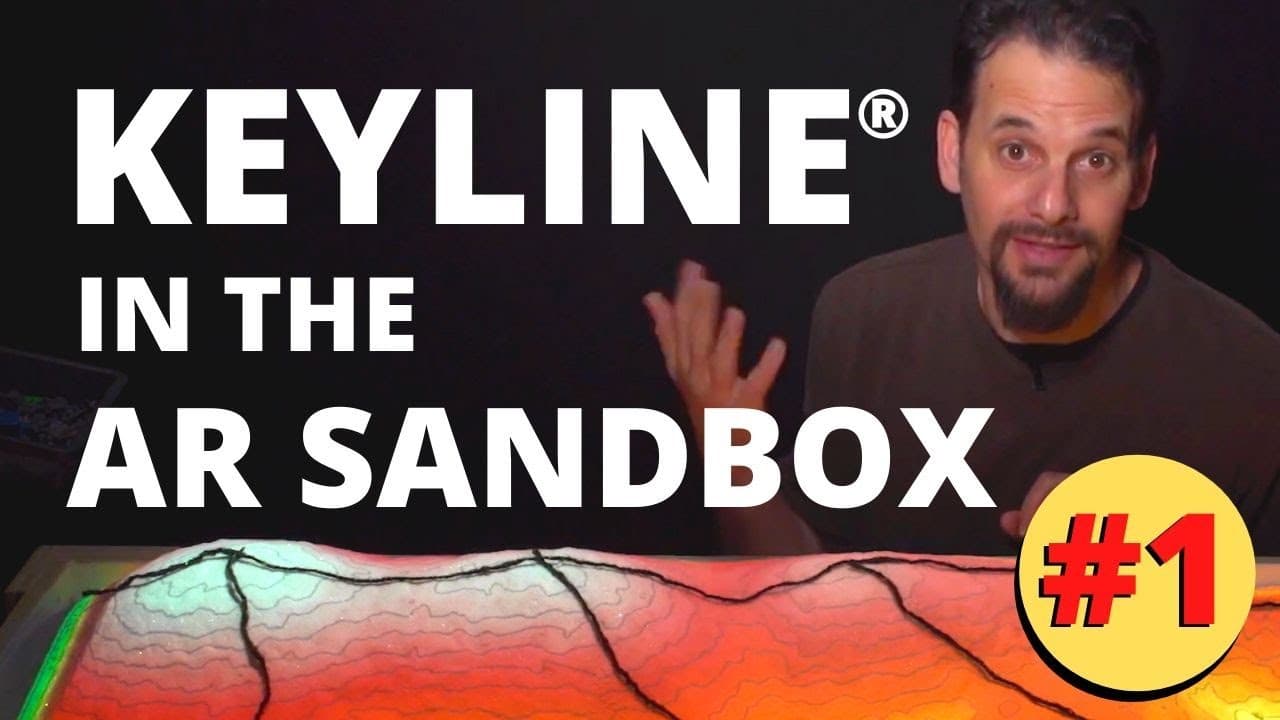
Keyline® in the AR Sandbox #1: Contour Lines and Water Flow
TL;DR
Learning about contour lines, water divide lines, and drainage lines in landscapes to understand water flow and site analysis.
Transcript
for this first in a series of presentations we're going to talk about the waterlines contours divides and drainages so these are the three major water lines within the landscape that we need to recognize in order to understand the shape and the form of the ground that we're working on all this information I'm going to present to you is derived from... Read More
Key Insights
- 🫥 Contour lines represent level lines in a landscape, aiding in understanding elevation variations.
- 💦 Water divide lines, like ridges, separate water flow directions on opposite sides.
- 💦 Water drainage lines show paths where water flows, impacting ecosystem distribution.
- 🤩 Recognizing these water lines is key for effective site analysis and design.
- 😚 Steep slopes have closer contour line spacing, while gentle slopes have wider spacing.
- 💦 Floods occur in lowlands where water concentrates, like floodplains near drainages.
- 🚱 Non-conforming landscapes, like those shaped by glaciers, may not follow standard water line patterns.
Install to Summarize YouTube Videos and Get Transcripts
Explore YouTube Video Summarizer or Get YouTube Transcript Extractor
Questions & Answers
Q: What are the three major water lines in landscapes?
The three major water lines are contour lines (level lines), water divide lines (ridges), and water drainage lines (flow paths).
Q: Why is understanding water lines important for site analysis?
Recognizing water lines helps in understanding landscape shape, water movement, soil distribution, plant growth patterns, and many other ecological factors crucial for design.
Q: How do contour lines differ on ridges and in valleys?
On ridges, contour lines bulge out, while in valleys, contour lines meander around terrain features, with closer spacing on steep slopes and wider spacing on gentle slopes.
Q: Are there exceptions to the typical water line patterns in landscapes?
Yes, landscapes like those shaped by glaciers or coastlines may not follow traditional water line patterns, but most landscapes conform to predictable contour, divide, and drainage lines.
Summary & Key Takeaways
-
Waterlines like contour lines, divides, and drainages are crucial for understanding landscape shape and water movement.
-
Contour lines represent level lines, ridges divide water flow, and drainages show where water flows.
-
Recognizing these water lines is essential for site analysis and design in diverse landscapes.
Read in Other Languages (beta)
Share This Summary 📚
Summarize YouTube Videos and Get Video Transcripts with 1-Click
Try YouTube Summary with ChatGPT & Claude or YouTube Transcript Generator
Explore More Summaries from Andrew Millison 📚



Summarize YouTube Videos and Get Video Transcripts with 1-Click
Try YouTube Summary with ChatGPT & Claude or YouTube Transcript Generator