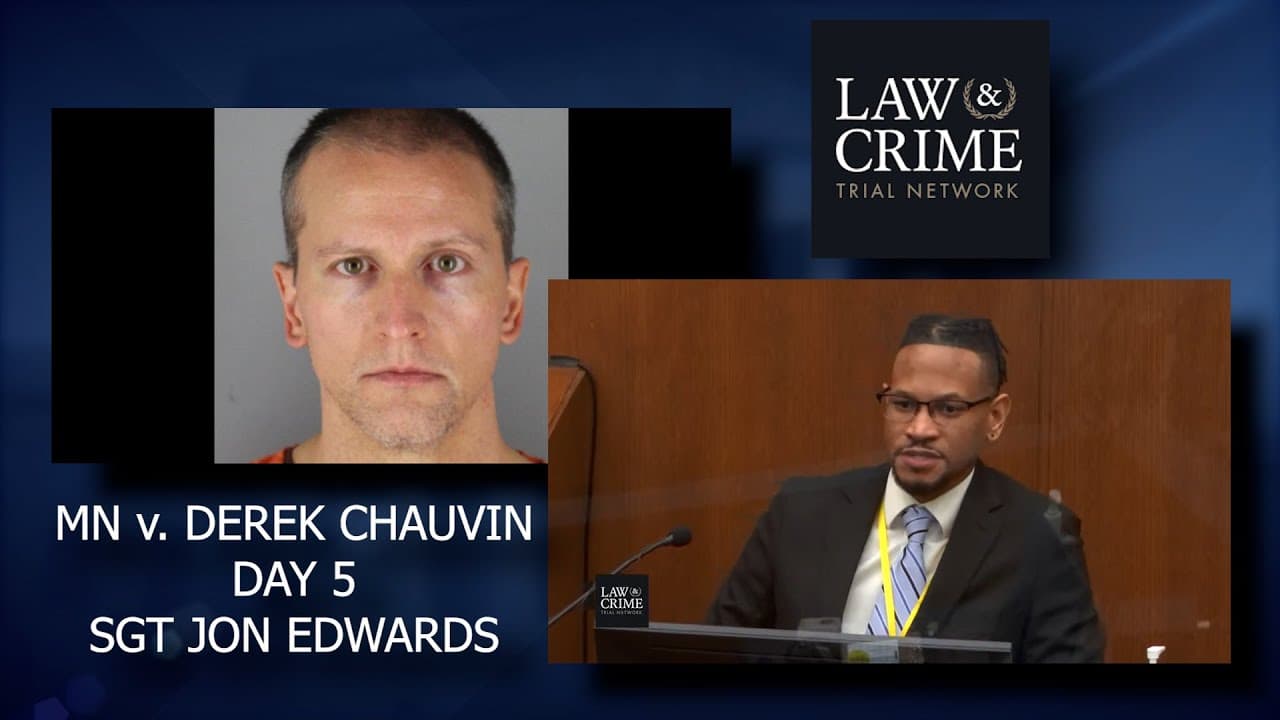
MN v Derek Chauvin Trial Day 5: Sgt Jon Edwards-Responded to Scene, Lt Richard Zimmerman
TL;DR
Police officer recounts involvement in critical incident response and training on use of force policies.
Transcript
hey baby seated good morning everyone we'll proceed with our next witness good morning your honor thank you before i call the state's next witness i'd like to offer two exhibits into the record that were published yesterday exhibits 75 and 267. those are received thank you your honor the state calls john edwards so you swear or firm under penalty o... Read More
Key Insights
- 🥳 Officers must distinguish involved and non-involved parties to manage critical incident responses effectively.
- 🧘 Training emphasizes minimizing the risks of prone positions and handcuffing to prevent breathing constraints.
- 👮 Use of force continuum guides officers in adapting response tactics based on threat levels and situational context.
- 😷 Providing medical intervention promptly is crucial in ensuring the well-being of individuals during police-involved incidents.
- 😷 Collaborative efforts with emergency medical services enhance timely and comprehensive care delivery in critical situations.
- 😷 Compliance with medical care obligations and training protocols is imperative in upholding public safety and officer responsibilities.
- 😒 Effective communication and situational assessment are vital in managing use of force incidents to mitigate risks and ensure adherence to policies.
Install to Summarize YouTube Videos and Get Transcripts
Explore YouTube Video Summarizer or Get YouTube Transcript Extractor
Questions & Answers
Q: How does the officer differentiate between involved and non-involved officers in critical incidents?
The officer determines involvement based on officers' actions and information shared about the incident, requiring specialized handling for those directly implicated.
Q: What training does the officer receive on the prone position and its impact on individuals?
The officer is trained to mitigate risks of the prone position, emphasizing prompt repositioning to alleviate breathing constraints and musculoskeletal strain.
Q: How does the officer approach the use of force continuum in assessing potential threats?
The officer follows a progressive force model based on threat assessment, utilizing verbal skills before physical restraint and escalating only if necessary for self-defense or public safety.
Q: What medical intervention protocols does the officer employ during arrest incidents?
The officer is trained to prioritize medical assistance, including CPR and basic first aid, for individuals in distress regardless of ambulance presence to ensure immediate care delivery.
Summary & Key Takeaways
-
Sergeant witnesses arrest incident at 38th and Chicago involving handcuffed individual.
-
Training includes use of force continuum and medical intervention protocols.
-
Emphasizes duty to provide care and prevent harm in police responses.
Read in Other Languages (beta)
Share This Summary 📚
Summarize YouTube Videos and Get Video Transcripts with 1-Click
Try YouTube Summary with ChatGPT & Claude or YouTube Transcript Generator
Explore More Summaries from Law&Crime Network 📚

Summarize YouTube Videos and Get Video Transcripts with 1-Click
Try YouTube Summary with ChatGPT & Claude or YouTube Transcript Generator