Sand Mandalas Explained, with Losang Samten | Big Think
TL;DR
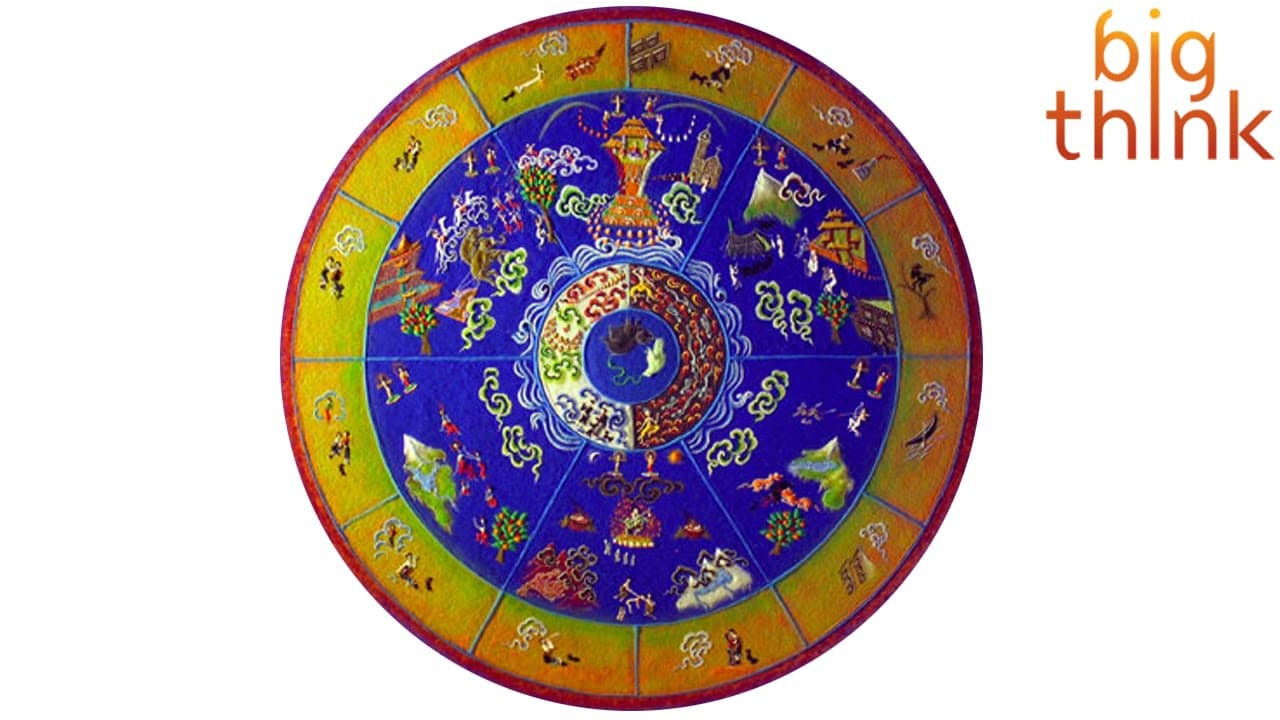
Losang Samten explains the symbolism of the Wheel of Life mandala representing ignorance, greed, and anger in Buddhist philosophy.
Transcript
My name is Losang Samten. I’m from Tibet, born in Tibet and then fled Tibet in 1959 at the age of 5. I came to Nepal first and then eventually came to India. And so I grew up in India and then eventually came to the United States in 1988. Ever since then I’ve been creating a lot of ancient Tibetan sand mandalas. Of course all the mandalas are tradi... Read More
Key Insights
- 💀 The Wheel of Life mandala represents ignorance, greed, and anger as the causes of human suffering.
- 🥰 Samten emphasizes the importance of art in conveying complex philosophical concepts in a relatable manner.
- 🎨 The mandala's design reflects the interconnected nature of existence and the cyclical patterns of rebirth.
- 🧑🏫 Through visual representation, the mandala serves as a powerful tool for teaching fundamental Buddhist principles.
- 🥹 The Wheel of Life mandala holds significant historical and cultural relevance in Tibetan Buddhist tradition.
- 🥋 Samten's innovative use of sand to create the mandala showcases his unique approach to preserving ancient art forms.
- 🫚 The mandala's symbolism provides a profound insight into the human experience and the roots of suffering.
Install to Summarize YouTube Videos and Get Transcripts
Explore YouTube Video Summarizer or Get YouTube Transcript Extractor
Questions & Answers
Q: What are the three central animals in the Wheel of Life mandala, and what do they represent?
The three animals – a snake, pig, and rooster, symbolize ignorance, greed, and anger, respectively. They signify the causes of human suffering according to Buddhist philosophy.
Q: How does the Wheel of Life mandala help convey complex Buddhist teachings to a broader audience?
The intricate design of the mandala visually represents fundamental Buddhist concepts like ignorance, greed, and anger, making it more accessible for people to grasp and reflect upon.
Q: Why does Losang Samten sometimes depict the central animal as a rooster and other times as a pigeon?
Scholars have different interpretations of the original animal in that position, leading Samten to alternate between a rooster and pigeon to avoid conflicts and maintain harmony in his artwork.
Q: How does the Wheel of Life mandala reflect the interdependent nature of existence in Buddhism?
The Wheel of Life mandala illustrates the 12 dependent originations, highlighting the interconnectedness of all aspects of life as a core teaching in Buddhism.
Summary & Key Takeaways
-
Losang Samten, a Tibetan artist, discusses the Wheel of Life mandala and its representation of ignorance, greed, and anger.
-
The mandala's three central animals, a snake, pig, and rooster, symbolize the causes of human suffering.
-
Samten emphasizes the interconnectedness of suffering and the importance of understanding Buddhist teachings through art.
Read in Other Languages (beta)
Share This Summary 📚
Summarize YouTube Videos and Get Video Transcripts with 1-Click
Try YouTube Summary with ChatGPT & Claude or YouTube Transcript Generator
Explore More Summaries from Big Think 📚




Summarize YouTube Videos and Get Video Transcripts with 1-Click
Try YouTube Summary with ChatGPT & Claude or YouTube Transcript Generator